
If you've been looking at small pool options, you've probably come across the term "cocktail pool" alongside plunge pool, spool, and dipping pool, and wondered what the actual difference is. The honest answer is that these terms overlap a lot. The pool industry doesn't have strict definitions for any of them, and many builders use them interchangeably.
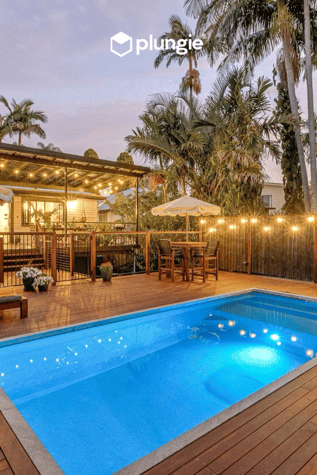
But there are some differences worth understanding, especially around depth, design, and how you'll use the pool. Generally speaking, a cocktail pool is a small, shallow pool designed more for lounging, socializing, and cooling off than for swimming laps. Think of it as the outdoor equivalent of gathering around a kitchen island, except everyone's standing in waist-deep water.
Here's what you need to know about cocktail pools, how they compare to other small pool types, and how to figure out which one actually fits what you're looking for.
Cocktail Pool Basics: Size, Depth, and Layout
There's no industry-standard definition, but most cocktail pools share these characteristics:
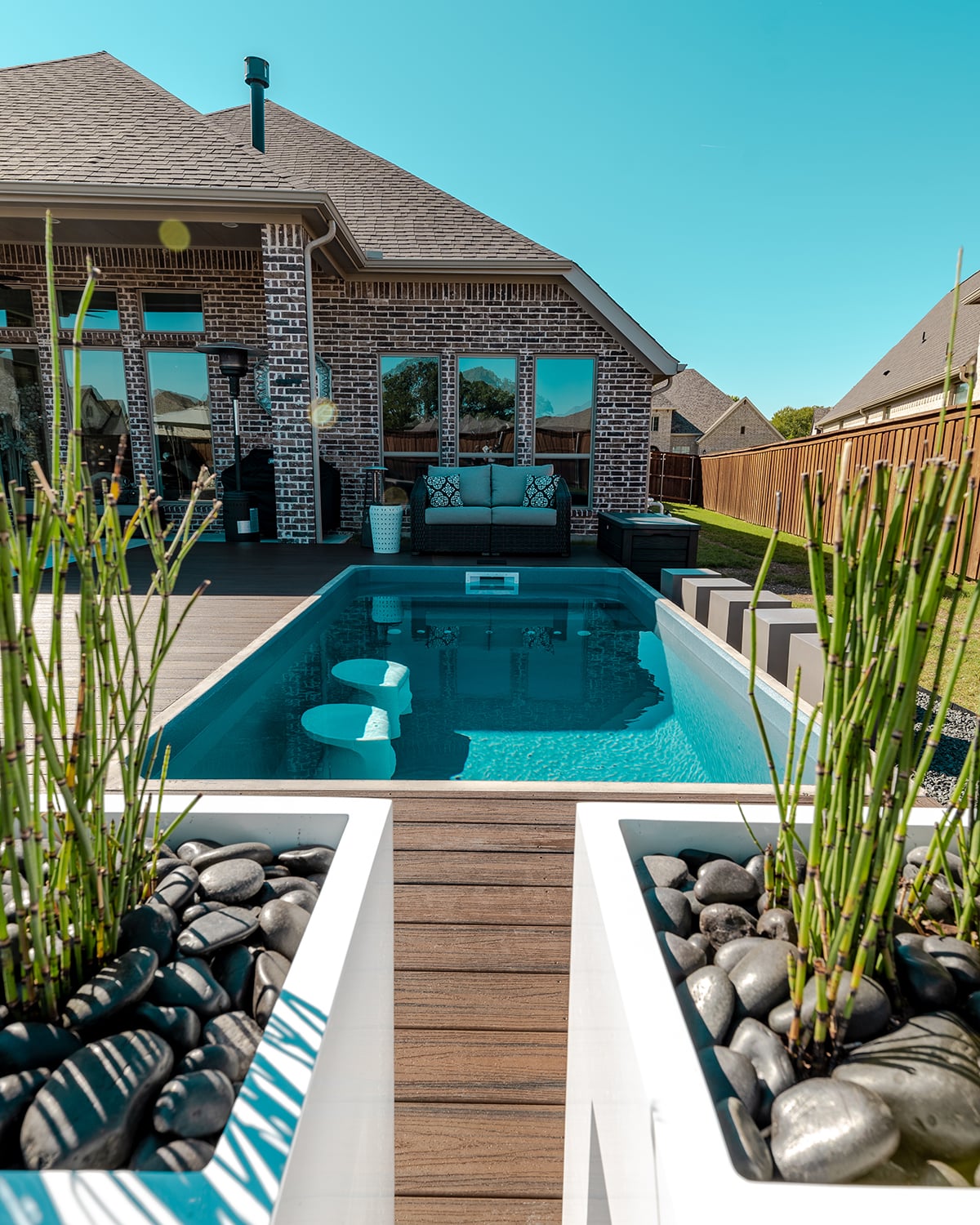
- Size: Typically 8' to 14' in length and 6' to 10' in width, with a water surface area of around 100 to 200 square feet. That's roughly the footprint of a large dining table.
- Depth: Usually 3' to 4' throughout, with no real deep end. The uniform shallow depth is intentional: it's designed so everyone can stand, walk around, and socialize without treading water.
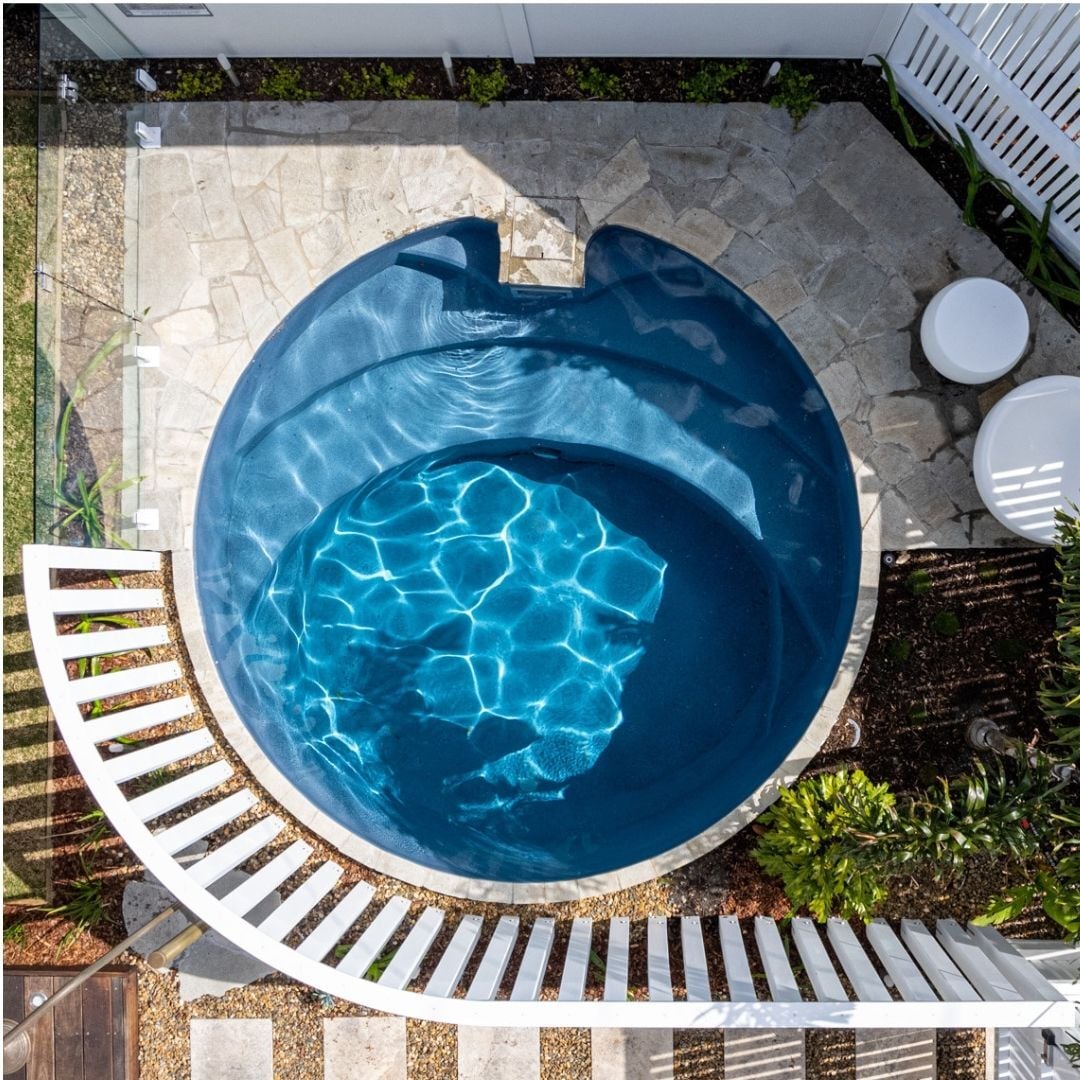
- Shape: Rectangular is the most common, but cocktail pools come in freeform, oval, and geometric shapes depending on the builder and material. Round designs work particularly well in courtyard spaces.
- Layout: Most cocktail pools include generous built-in bench seating around the perimeter. Some feature a tanning ledge (Baja shelf) at one end for lounging in a few inches of water.
What Can You Add to a Cocktail Pool?
Because cocktail pools are designed around the experience rather than exercise, they tend to be more feature-rich than a simple swimming pool of the same size:
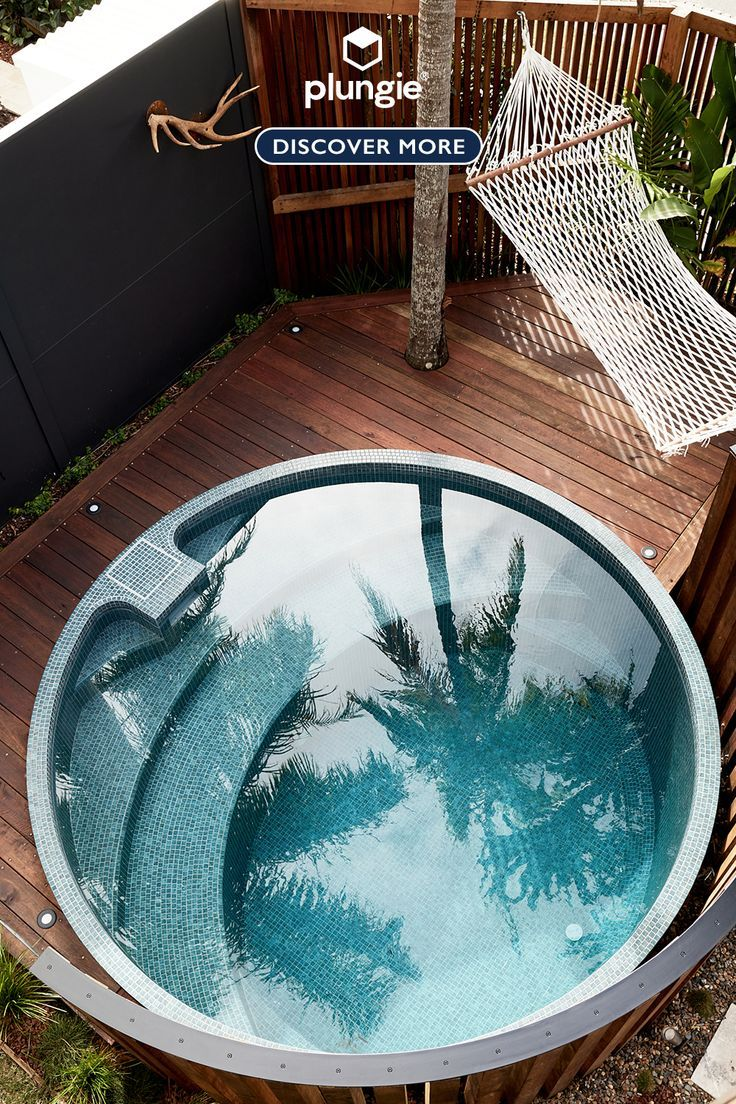
- Built-in seating and tanning ledges: The defining feature of most cocktail pools. Wide bench seats around the interior and a shallow shelf at one end for sun lounging.
- Jets and hydrotherapy: Spa jets turn a cocktail pool into something closer to a spool (spa-pool hybrid). Useful if you want year-round use for relaxation and recovery, not just summer cooling off.
- Heating: Heat pumps or gas heaters extend the usable season well beyond summer. Because the water volume is much smaller than a full-size swimming pool, heating is significantly cheaper to run.
- LED lighting: Color-changing LED pool lights are standard on most builds and create atmosphere for evening entertaining.
- Water features: Spillover walls, scuppers, bubblers, and small waterfalls are popular add-ons that give a cocktail pool a more premium, resort-style feel.
- Fire features: Fire bowls or a fire pit adjacent to the pool are a popular pairing, especially for entertaining-focused designs.
Cocktail Pool vs. Plunge Pool vs. Spool: What's the Difference?
These three terms get used interchangeably online, but there are some real differences worth understanding. They'll affect what you end up building and how you use it.
|
Cocktail Pool |
Plunge Pool |
Spool |
|
|
Primary purpose |
Socializing, lounging, entertaining |
Cooling off, immersion, light exercise |
Year-round relaxation, hydrotherapy |
|
Typical depth |
3' - 4' |
4' - 5'+ |
3.5' - 5' |
|
Typical size |
8' x 10' to 12' x 14' |
7' x 10' to 20' x 10' |
8' x 10' to 12' x 12' |
|
Seating |
Extensive built-in benches |
Bench on one end, rest is open water |
Built-in benches with jets |
|
Heating |
Optional |
Optional |
Usually included |
|
Jets |
Optional |
Rarely |
Usually included |
|
Best for |
Entertaining, small backyards |
Cooling off, exercise, compact yards |
Year-round use, hot tub alternative |
The biggest functional difference is depth. At 3' to 4', a cocktail pool is designed for standing and sitting. You're socializing in the water, not submerging in it. A plunge pool at 4' to 5'+ gives you enough depth for full-body immersion, cooling off properly after a hot day, and low-impact exercise like water aerobics.
If your priority is entertaining, a cocktail pool makes sense. If your priority is actually getting in the water and cooling down, a plunge pool is the better fit. And if you want something that works as both a hot tub and a cool-down pool year-round, a spool covers that ground.
Worth noting: many of the features people associate with cocktail pools (built-in seating, tanning ledges, lighting) can be added to a plunge pool too. The features aren't exclusive to one category. The real decision is about depth and how you plan to use the water.
How Much Does a Cocktail Pool Cost?
Costs vary widely depending on material, features, and your location. Here's a general idea of where things stand, though regional pricing can shift these ranges considerably:
|
Material |
Estimated Installed Cost |
Typical Build Time |
|
Custom concrete (gunite) |
$60,000 - $120,000+ |
6 - 16 weeks |
|
Fiberglass |
$35,000 - $75,000 |
1 - 3 weeks |
|
Precast concrete |
$40,000 - $55,000+ |
~2 weeks |
|
Vinyl liner |
$25,000 - $55,000 |
2 - 3 weeks |
* These are estimated total installed costs including basic equipment. They don't include fencing, decking, landscaping, or permits, which can add significantly to the total depending on your property and preferences.
What Pushes The Price Up?
Custom shapes and freeform designs cost more than simple rectangles. Spa jets and heating add to the base price. Premium interior finishes (tile, pebble, glass bead) cost more than standard plaster. Water features, fire features, and extensive cladding on raised walls all add to the total. On the site side, rock excavation, sloped lots, and limited access are the most common budget surprises.
What Does Maintenance Cost?
Less than a full-size pool across the board. The smaller water volume means fewer chemicals, less energy to heat, and less time to clean. Expect roughly:
- Chemicals: $400 to $900 per year.
- Electricity: $600 to $1,500 per year (more if you heat the pool regularly).
- Cleaning and maintenance: $800 to $1,800 per year with a professional service.
Cocktail Pool Design Ideas
The Sunken Lounge
A rectangular cocktail pool with bench seating on three sides and a tanning ledge on the fourth, set flush with a paver patio. Add a couple of in-pool umbrella holders and you've created an outdoor living room that happens to be filled with water.
The Raised Entertainer
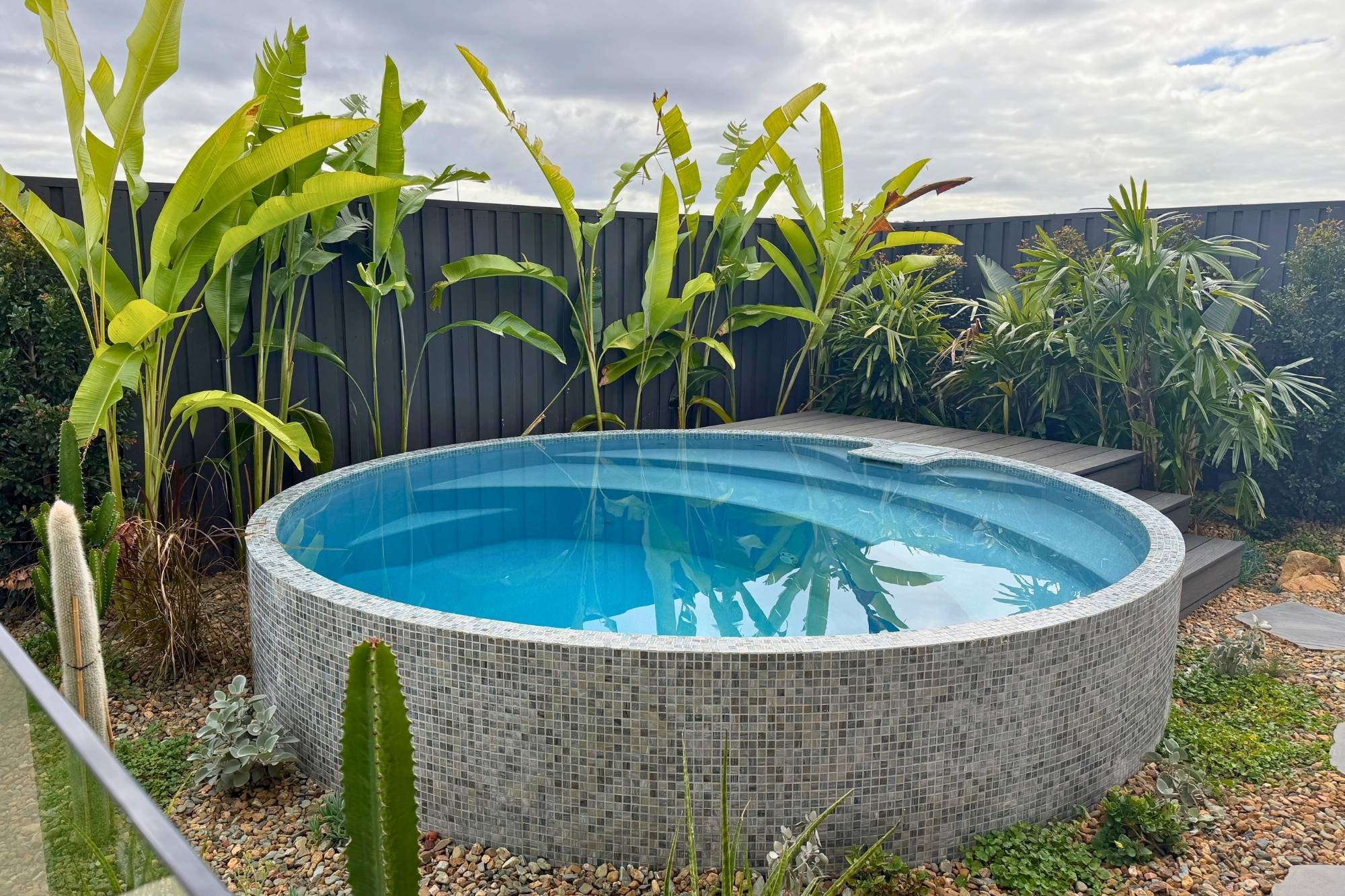
A semi-inground cocktail pool with stone cladding on the exposed walls, surrounded by a timber deck. The raised walls become built-in seating for guests outside the pool, while people inside can sit on the submerged bench. It works especially well next to an outdoor dining or grilling area.
The Courtyard Oasis
For tight urban lots or walled courtyard spaces, a compact round or square cocktail pool with lush planting around the edges creates a private retreat. Frameless glass fencing keeps the space feeling open. This design proves you don't need a big yard to have a pool worth using.
The Spa-Pool Hybrid
A cocktail pool with integrated jets, heating, and built-in bench seating functions as both a cool-down pool in summer and a warm spa in winter. If you'd otherwise buy a separate hot tub and a small pool, a single spool-style cocktail pool might be the smarter use of space and budget.
When a Plunge Pool Might Be the Better Choice
If you've read this far and you're thinking "I like the idea of a cocktail pool, but I actually want to get fully in the water," a plunge pool is probably what you're after.
The extra depth changes what you can do in the water. At 4' to 5'+ compared to a cocktail pool's 3' to 4', you can fully submerge, cool off properly on a hot day, do water aerobics, or use it for cold water therapy. You still get a compact footprint that fits small backyards, and you can add the same features (seating, lighting, heating, jets) that make cocktail pools appealing for entertaining.
Our precast concrete pools, for example, are 4'11" deep with built-in bench seating as standard. They come infour sizes from the 11'5" roundArena to the 20' x 10'Max, and can be installed in-ground, above ground, or semi-recessed. They're manufactured in Texas and craned into your backyard in a single day, with the full project typically wrapped up in about two weeks. For a detailed breakdown of precast concrete pool pricing, see ourconcrete pool cost comparison.
The question isn't really "cocktail pool or plunge pool?" It's "do I want to sit in the water or get in the water?" If the answer is both, a plunge pool with generous bench seating gives you the best of both worlds.
Frequently Asked Questions
Do cocktail pools add value to a home?
Yes. The National Association of Realtors estimates a pool can increase home value by up to 8%. A well-designed cocktail pool that fits the property and neighborhood can offer a strong return, particularly in warm climate markets where pools are expected by buyers.
What is the difference between a cocktail pool and a plunge pool?
The main difference is depth. Cocktail pools are typically 3' to 4' deep and designed for standing, sitting, and socializing. Plunge pools are 4' to 5'+ deep and designed for full-body immersion, cooling off, and light exercise. Both are compact enough for small backyards. Many features (seating, heating, jets, lighting) can be added to either type.
Do cocktail pools need a heater?
They don't need one, but a heater significantly extends the usable season. Because the water volume is much smaller than a full-size pool, heating costs are considerably lower. Heat pumps are the most popular option, typically costing $3,000 to $6,000 for the unit plus installation.
Are cocktail pools cheaper than full-size pools?
Yes, both upfront and in ongoing costs. A cocktail pool is significantly less expensive to install than a full-size swimming pool, and uses less water, fewer chemicals, and less energy to maintain year over year.
How long does it take to install a cocktail pool?
It depends on the material. Custom concrete (gunite) takes 6 to 16 weeks. Fiberglass takes 1 to 3 weeks. Precast concrete takes about 2 weeks. Vinyl liner pools take 2 to 3 weeks. These timelines don't include permitting, which can add several weeks depending on your municipality.
Find the Right Small Pool for Your Backyard
Whether you end up with a cocktail pool, a plunge pool, or something in between, the right choice depends on how you plan to use the water, how much space you have, and what matters most to you.
If you're leaning toward a plunge pool,compare our four models to see which size fits your yard, or browse theProject Gallery to see how other homeowners have designed their outdoor spaces.