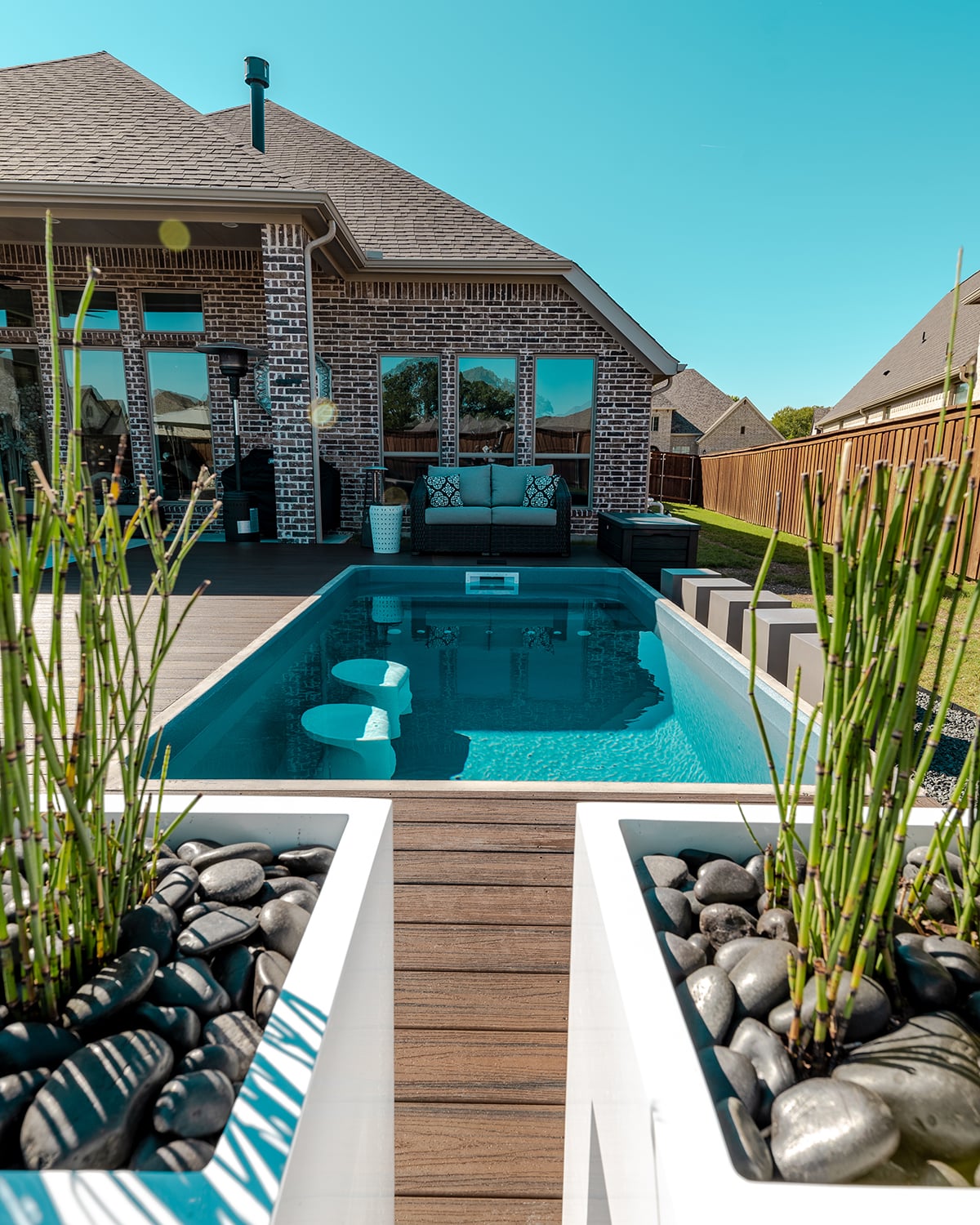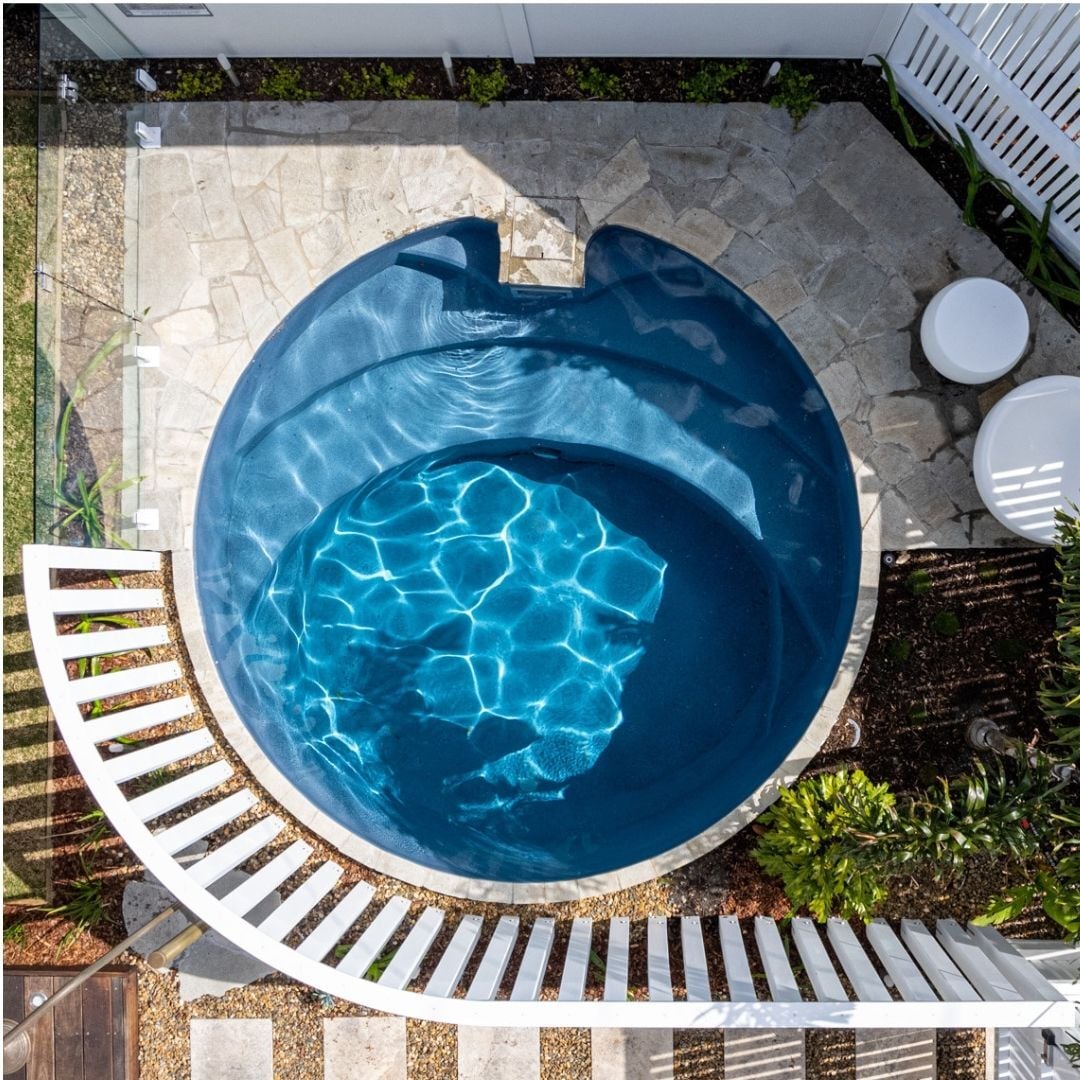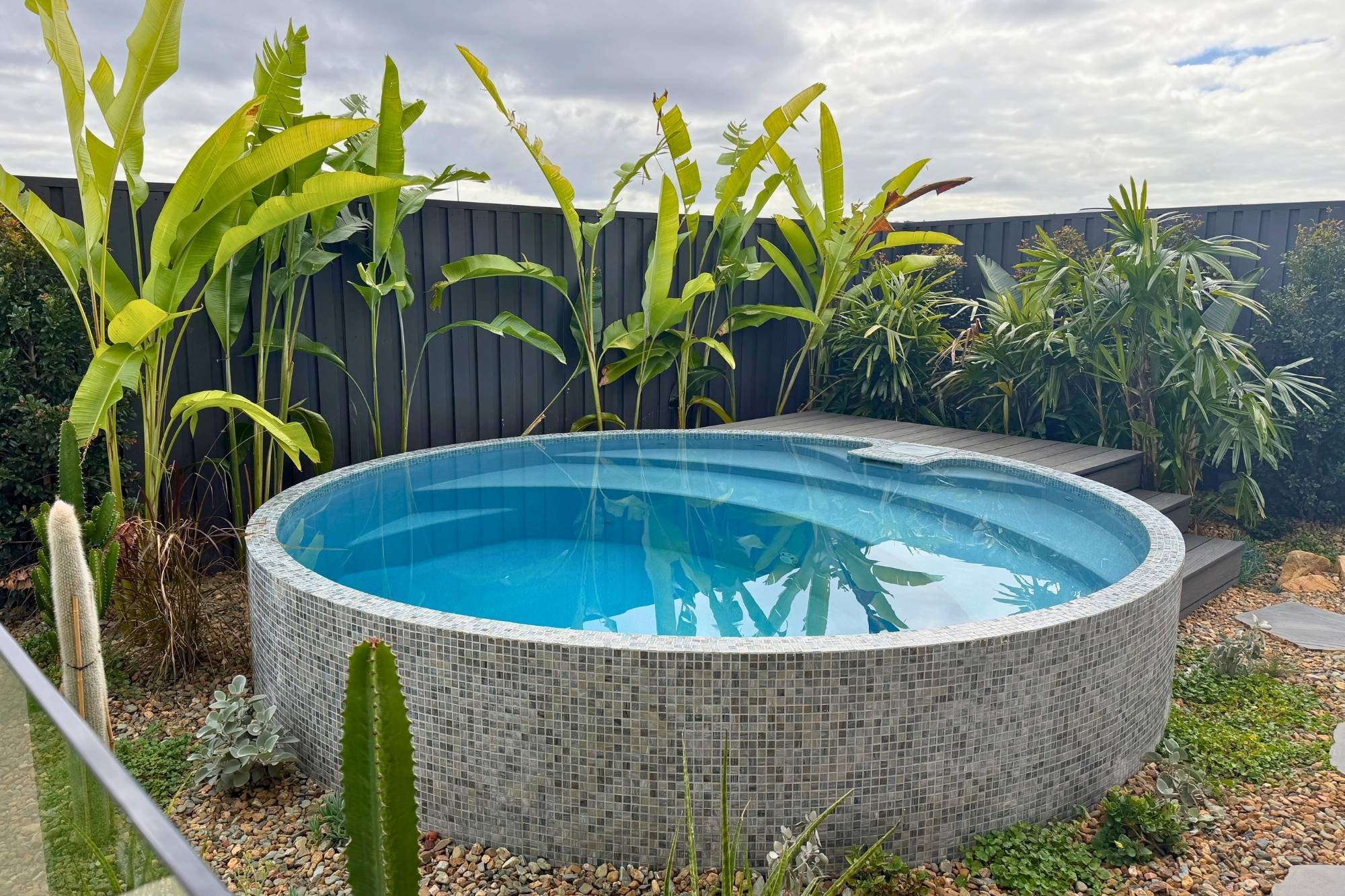

A partial inground pool (also called semi-inground) pool sits partly in the ground and partly above it. That might sound like a compromise, but for a lot of homeowners, it's actually the smartest way to build.
Sloped yard? Rocky ground? Limited excavation access? Don't want a massive hole on your property for months? A partial inground pool solves all of those problems while giving you something that looks every bit as good as a fully inground swimming pool, sometimes better.
Here's what you need to know before deciding if a semi-inground pool is right for your backyard.
What Exactly Is a Semi-Inground Pool?
A semi-inground pool (also called a partial inground pool) is a pool that's installed with part of the structure below ground level and part above it. How much sits above ground varies. Some are sunk with just a foot or two exposed, while others are raised several feet, with the exposed walls becoming a design feature.
There are two very different versions of this, and it's worth knowing which one you're looking at:
-
Above-ground pool kits are installed partially in the ground: These are standard above-ground pools (steel wall, vinyl liner) that are partially buried to look more like an in-ground pool. They're the more affordable option ($7,000 to $25,000 installed), but they're not built to inground structural standards. They typically last 7 to 15 years and have limited design flexibility.
-
In-ground-quality pools are installed semi-recessed: These are concrete (custom or precast) or fiberglass pools built to inground standards but intentionally raised above ground, with the exposed walls clad in stone, timber, tile, or other materials. They cost more ($40,000 to $100,000+), but they're permanent, durable structures with a 25 to 50+ year lifespan. This is where the design possibilities really open up.
Both are technically semi-inground pools, but they're very different products at very different price points. The rest of this article focuses on the inground-quality version, since that's where the real design and practical advantages are.
Why Build a Semi-Inground Pool?
1. Your site makes full excavation difficult or expensive
This is the most common reason. If your yard is sloped, has rocky soil, a high water table, or limited access for heavy equipment, digging a full-depth hole for an inground pool can be complicated and costly. A semi-inground installation reduces how deep you need to dig, which can save thousands on excavation alone.
On a sloped lot, a semi-inground pool can work with the natural grade rather than fighting it. The uphill side of the pool sits at ground level while the downhill side is raised, with a retaining wall or cladding creating a finished look.
2. You want the pool to be a design feature
A fully inground pool is flush with the ground. It looks clean, but it's also flat. A semi-inground pool has visible walls, and those walls become part of the design. Clad them in natural stone for a premium, architectural look. Wrap them in timber for something warmer and more coastal. Tile them for a sleek, contemporary feel.
The raised edge also creates natural built-in seating around the pool. No separate bench or lounge chairs needed, just sit on the wall and dangle your feet in the water.
3. You want a safer construction site
With a fully inground pool, you have an open excavation on your property for weeks (sometimes months with custom concrete). That's a safety concern, especially with kids and pets. A semi-inground pool, particularly a precast concrete one that's craned into place in a single day, minimizes the time your yard is an active construction zone. Add an optional construction cover, and you can continue building around the pool safely.
4. You want to keep your options open
Semi-inground pools can often be decommissioned and removed more easily than fully inground pools if your circumstances change. The exposed structure is more accessible for maintenance and repairs, too.
What Does a Semi-Inground Pool Cost?
Costs depend heavily on which type of semi-inground pool you're building:
|
Type |
Installed Cost |
Lifespan |
Best For |
|
Above-ground kit (partially buried) |
$7,000 - $25,000 |
7 - 15 years |
Budget projects, flat or gently sloped yards |
|
Fiberglass (semi-recessed) |
$45,000 - $90,000 |
25 - 30 years |
Quick install, low maintenance, moderate slopes |
|
Precast concrete (semi-recessed) |
$40,000 - $75,000 |
50+ years |
Sloped lots, architectural design, and durability |
|
Custom concrete (raised with retaining walls) |
$60,000 - $120,000+ |
50+ years |
Fully custom shapes, complex sites, premium design |
What's included (and what's not)
Most semi-inground pool quotes include the pool shell, basic installation, and equipment. What's typically extra:
-
Retaining wall or cladding on exposed walls: $5,000 to $20,000+, depending on material and height. This is the highest variable cost specific to semi-inground pools.
-
Decking: $7,000 to $25,000+. A deck that wraps around a raised pool is one of the most popular design approaches.
-
Fencing: Required in most jurisdictions regardless of pool type. $2,000 to $13,500, depending on material and perimeter length.
-
Electrical: $2,000 to $5,000+ for a licensed electrician.
-
Permits: $100 to $1,800, depending on your city.
-
Landscaping: Varies widely. Semi-inground pools often need less landscaping than fully inground because the raised walls create their own visual structure.
Materials for Semi-Inground Pools
Steel wall with vinyl liner
The most affordable semi-inground option. Steel-wall pools are typically above-ground pool kits designed to handle being partially buried. They use a vinyl liner that needs replacing every 7 to 10 years ($3,000 to $7,500). Not all above-ground pools are rated for semi-inground installation, so check the manufacturer's specifications before buying.
Fiberglass
Fiberglass pools are a popular mid-range option for semi-inground installations. The one-piece shell installs fast, the smooth surface resists algae, and ongoing maintenance is lower than concrete. There is a structural caveat though. Standard fiberglass shells aren't self-supporting and rely on backfill or an engineered support system (retaining walls, bond beams, or rib frames) when installed semi-recessed or raised. Some manufacturers offer purpose-engineered shells that can be raised without backfill, but this is an upgrade rather than a default. The other limitation is that you're restricted to the manufacturer's available shapes and sizes.
Concrete (custom and precast)
Concrete is the most durable and flexible option for semi-inground pools. Custom concrete (gunite or shotcrete) allows any shape and size, but takes 6 to 16 weeks to build. Precast concrete pools are manufactured in a factory and craned into place, making them particularly well-suited to semi-inground installations because the pool shell arrives as a finished, structurally certified unit.
Our precast concrete pools, for example, are built in Texas and can be installed in-ground, above ground, or semi-recessed. The pool arrives with the interior finish already applied, plumbing pre-fitted, and engineering certified. For a semi-inground installation, the pool is craned onto a prepared base, partially backfilled on the buried side, and the exposed walls are finished with your choice of cladding material.
Semi-Inground Pool Design Ideas
The deck-surround
Build a timber or composite deck around and level with the top of the pool so it looks like the pool is set into the deck rather than the ground. From deck level, it reads like a fully inground pool. From the yard below, the raised structure with cladding becomes an architectural feature. This is one of the most popular semi-inground pool designs and works especially well on sloped properties.
The stone-clad feature wall
Use natural stone, stacked stone veneer, or architectural block on the exposed pool walls. This works well when the pool is raised 2 to 4 feet above grade. Add LED strip lighting along the base of the wall or under the pool coping for a premium look at night.
The infinity-edge illusion
On a sloped lot, position the pool so the downhill side has a slightly raised wall with a spillover edge. Water flows over the wall into a hidden catch basin. It's not a true infinity pool (which would cost significantly more), but it creates a similar visual effect at a fraction of the price.
The built-in seating wall
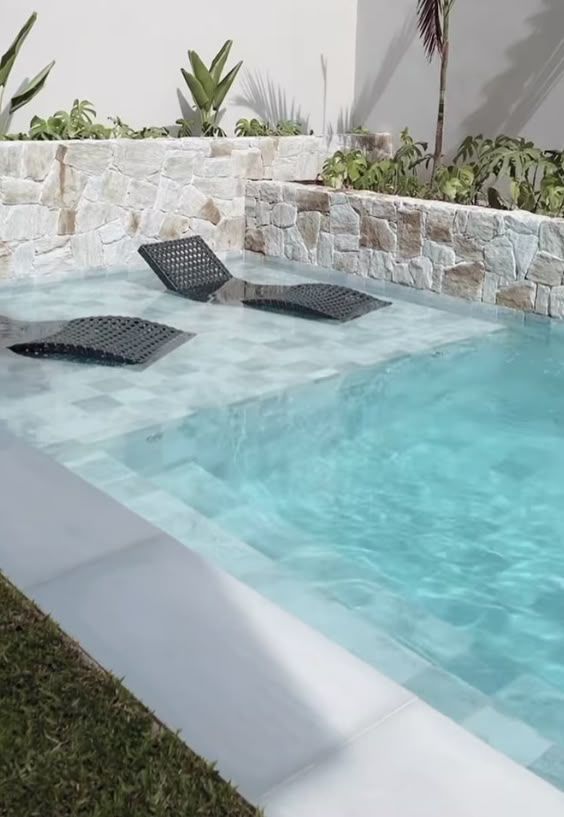
A raised pool wall at bench height (16 to 18 inches above deck level) becomes instant seating around the pool. Add a flat stone or concrete cap on top of the wall, wide enough to sit on comfortably, and you've created an entertaining feature that doubles as the pool's structure.
The planter integration
Run a raised garden bed along one or more sides of the exposed pool wall. The planting softens the look of the wall, and the raised bed and raised pool together create a layered, landscaped effect that works particularly well in modern and contemporary backyards.