

What Is a Plunge Pool?
A plunge pool is a small, deep pool designed for cooling off, low-impact exercise, and entertaining rather than lap swimming. Most plunge pools measure between 10 and 20 feet long, 6 to 10 feet wide, and around 4 to 5.5 feet deep. Adults can stand comfortably in the shallow end, kids can play safely on the built-in ledges, and the compact footprint means a plunge pool fits yards where a traditional in-ground pool would swallow the entire outdoor space.
Request Pricing
Plunge Pools Are Bigger Than People Think
The most common misconception about plunge pools is that they're glorified soaking tubs. They're not. A Plungie Original measures 15 feet by 8 feet with an internal depth of 4'11". That's roomier than most people picture when they hear the words "plunge pool."
Here's what that depth actually means in practice:
- Adults up to around 6 feet tall can stand comfortably with their shoulders out of the water
- Kids have safe standing depth on the built-in bench and step areas
- There's genuine room to float, wade, and move around
- Water aerobics, resistance training, and swim-jet training all work
The bench and step arrangement in every Plungie model doubles as seating, so entertaining in a plunge pool feels less like huddling in a hot tub and more like gathering around a shallow-end conversation zone.
What Can You Actually Do in a Plunge Pool?
The short answer is more than you think. Plunge pools work for daily cooling off, exercise, therapy, and entertaining, often in the same afternoon.
- Cooling off and daily use: In Texas, Florida, and Arizona summers, a plunge pool is a temperature reset. Step in, drop your core temperature, get on with the day. That's the whole point.
- Low-impact exercise: Add a swim jet system and the pool becomes an endless training environment for swimming against resistance. Water walking, aqua aerobics, and resistance training work in any Plungie model without swim jets.
- Hydrotherapy and recovery: Heated year-round with a heat pump, a plunge pool doubles as a warm-water therapy space. Add a chiller, and you've got a cold plunge for post-workout recovery. Want even more? Add a Plungie Hot Tub to your pool. It is on pre-sale now, with first deliveries in January and limited production slots, so it pays to order early.
- Family use: The bench and step layout in every Plungie model gives kids safe standing depth right next to deeper water for adults.
- Entertaining: The sun ledge in the Plungie Max holds two lounge chairs above the waterline. Every model has bench seating that works as an in-water gathering zone.
Plunge Pool Sizes and Depths
Plungie offers four models in the US, each designed for a different footprint and use case.
| Model | Dimensions | Best For |
|---|---|---|
| Arena | 11'5" round | Courtyards and narrow side yards |
| Studio | 12' x 7' | Small suburban backyards |
| Original | 15' x 8' | The classic plunge pool footprint, families |
| Max | 20' x 10' | The world's largest monolithic precast concrete pool with 40 sq ft of built-in bench space and room for lap-style swimming. |
Every model has an internal depth of 4'11", with built-in benches, steps, and interior finish options in six ecoFinish colors.
Plungie will launch a Hot Tub and Ledge soon as companion products for your base pool. Both will go on pre-sale soon, with first deliveries in January and limited production slots.
What Are Plunge Pools Made Of?
Not all plunge pools are built the same way. The material a pool is made from affects how long it lasts, how it's installed, what it costs to maintain, and how it looks in 20 years.
- Precast concrete: Manufactured off-site in a controlled factory environment, delivered as a finished shell, craned into place in a single day. Steel-reinforced, monolithic construction. The Plungie approach. Combines the strength of poured concrete with the predictability of a factory-made product.
- Gunite or shotcrete: Sprayed concrete built on-site over a rebar cage. Fully custom in shape and size, but 8 to 20 weeks of construction, multiple trades, and weather dependent.
- Fiberglass: A pre-molded fiberglass shell dropped into a prepared hole. Faster than gunite, but limited to available shapes, and the surface may need refinishing over time.
- Vinyl liner: A metal or polymer frame with a vinyl liner stretched over it. Lowest upfront cost, but the liner typically needs replacement every 7 to 12 years, and the liner can be punctured.
Above Ground, In-Ground, or Semi-Recessed?
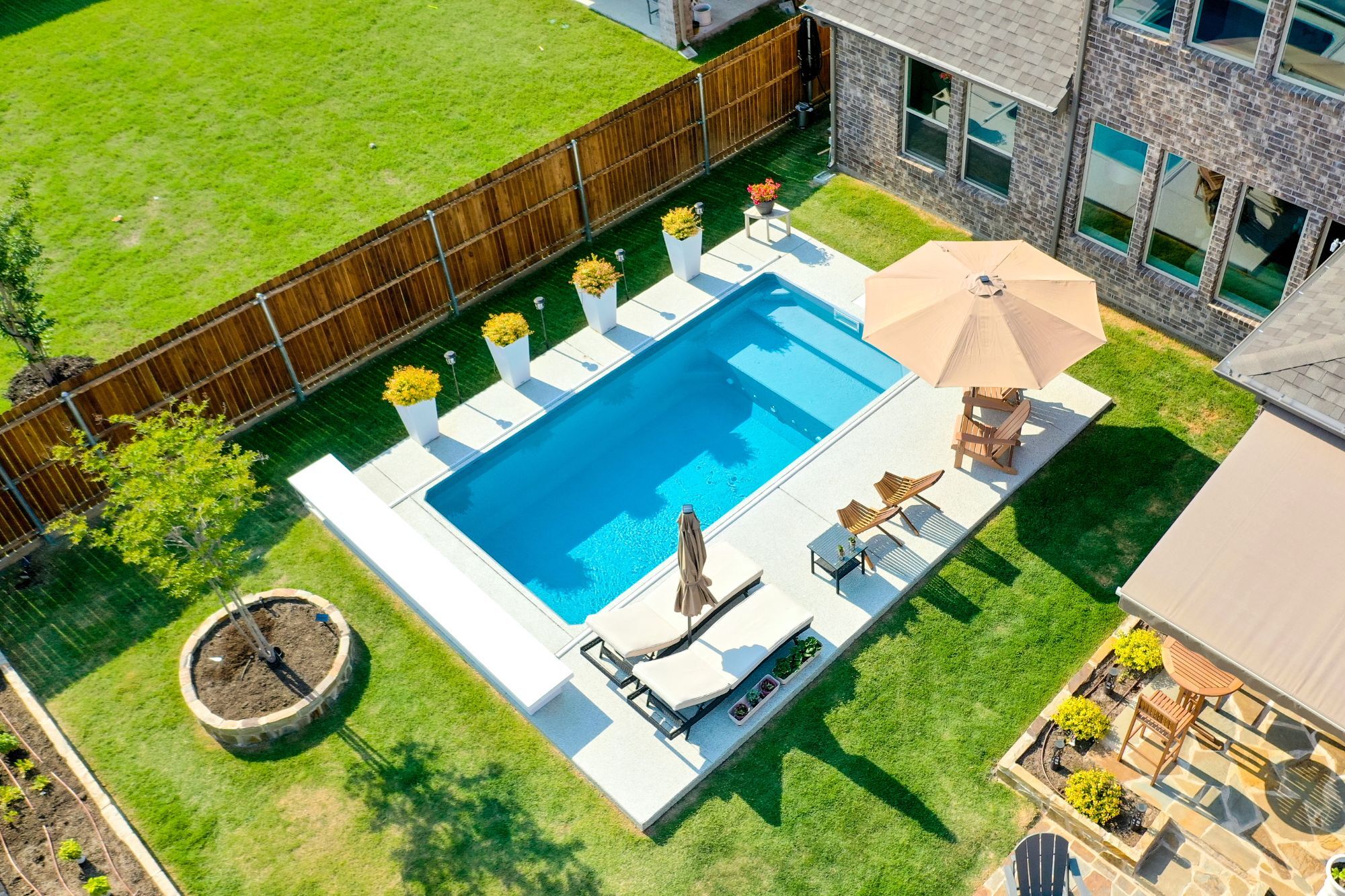
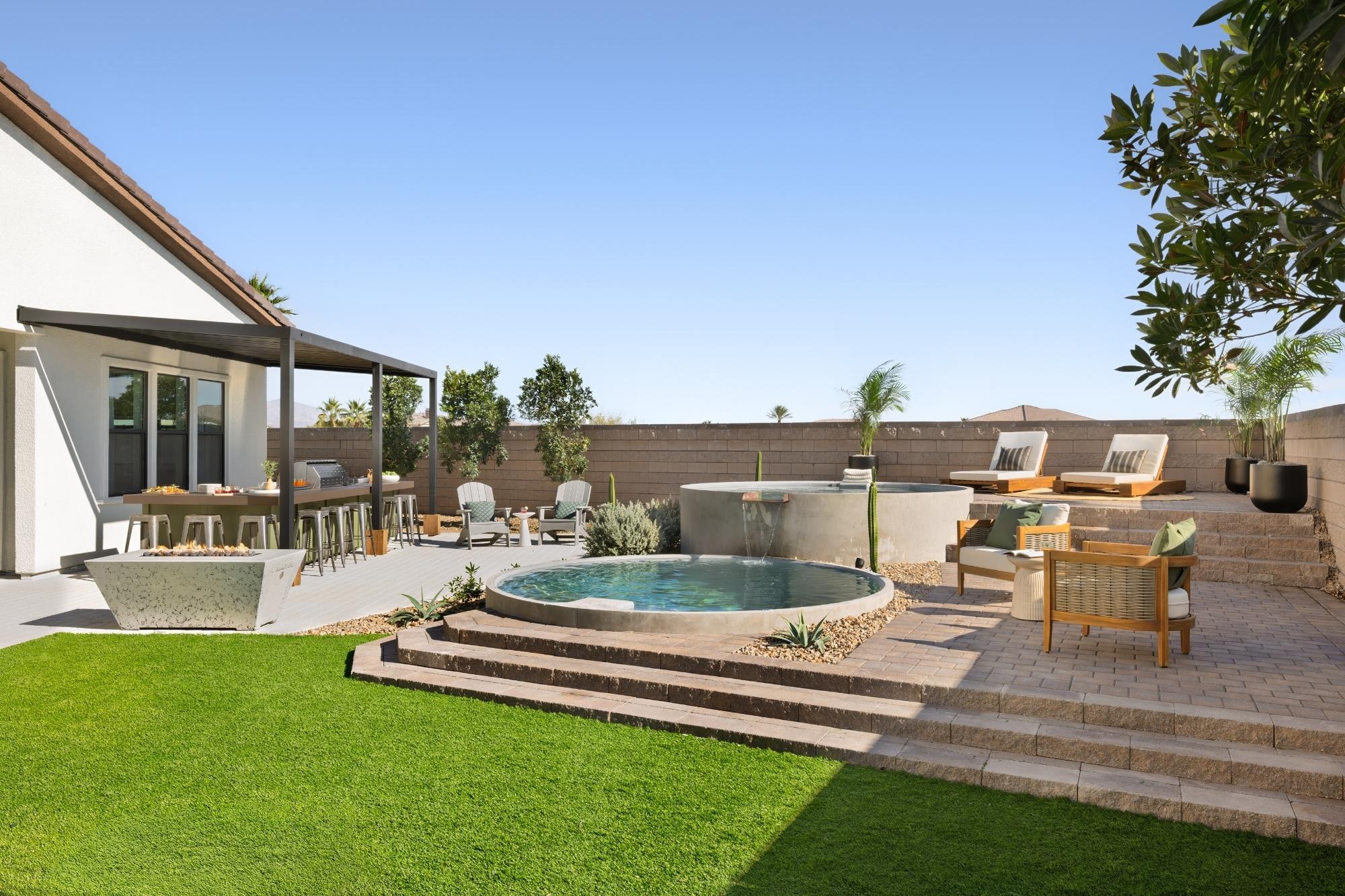
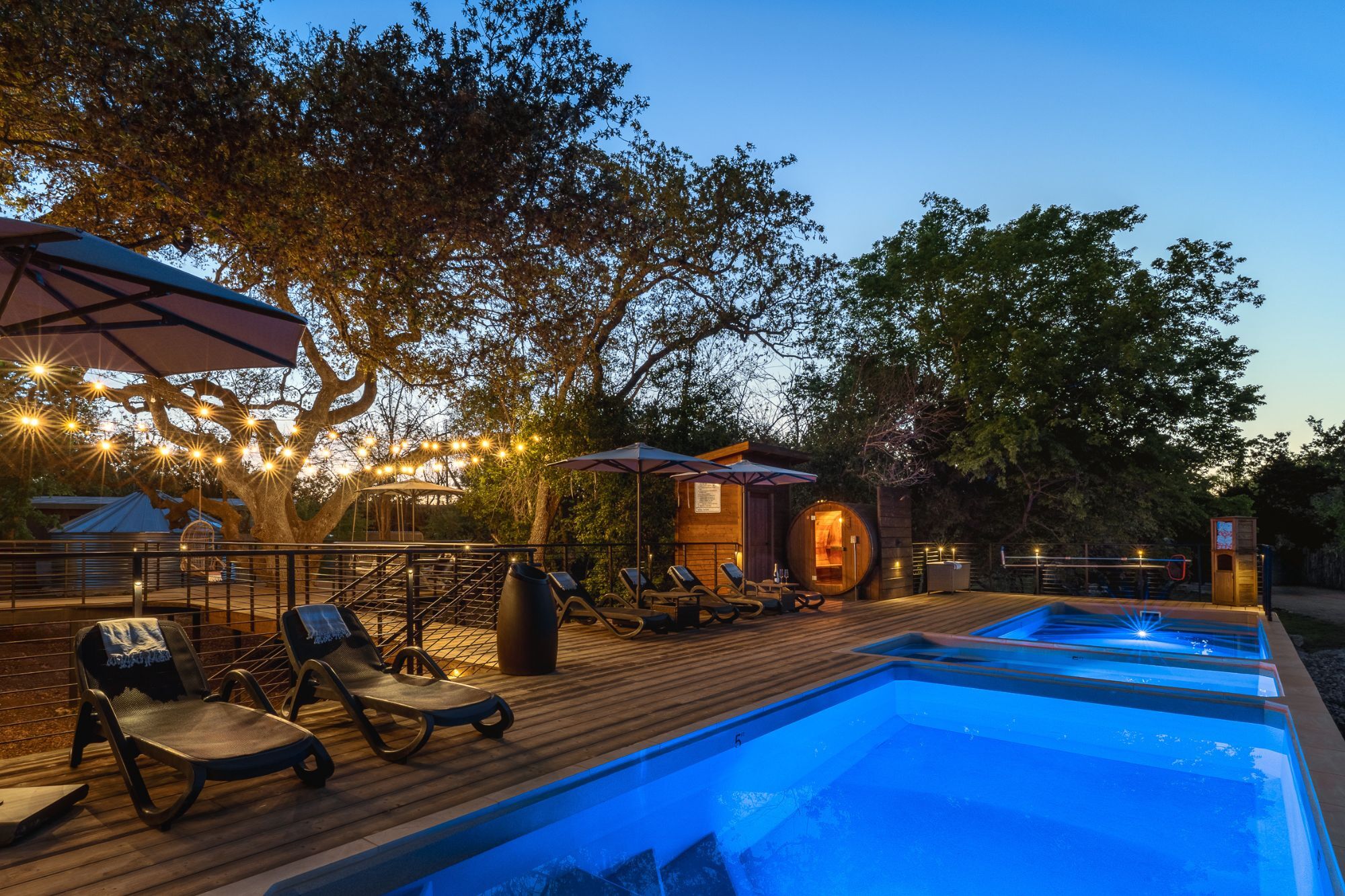
One of the most misunderstood things about plunge pools is that they don't have to be installed in the ground. Every Plungie model can be installed three ways.
- Fully in-ground: The traditional setup. The pool shell sits below grade with the waterline at ground level.
- Above ground: The entire pool sits on a prepared pad above the existing ground. The shell can be clad in timber, stone, or rendered walls to look intentional rather than temporary. This works especially well on sites where excavation isn't practical, on rental properties where reversibility matters, or as a design statement in a modern outdoor space.
- Semi-recessed: Half in, half out. The uphill side sits at ground level, the downhill side is raised. This is often the best solution for sloped yards, where fully excavating would require massive earthworks and retaining structures.
How Plunge Pools Compare to Other Pool Types
Different pool types answer different questions. Here's how a plunge pool stacks up against the alternatives.
| Feature | Plunge Pool | Traditional Inground | Cocktail Pool | Swim Spa | Hot Tub |
|---|---|---|---|---|---|
| Typical length | 10 to 20 ft | 30 to 40 ft | 12 to 15 ft | 12 to 19 ft | 6 to 8 ft |
| Typical depth | 4 to 5.5 ft | 3 to 8 ft variable | 3 to 4 ft | 4 to 5 ft | 3 to 4 ft |
| Primary purpose | Cooling, exercise, entertaining | Lap swimming | Social, cooling | Exercise, therapy | Hot water therapy |
| Install time | 14 days (precast) | 8 to 20 weeks | 8 to 12 weeks | 1 to 3 days | 1 day |
| Suits small yards | Yes | No | Yes | Yes | Yes |
| Property value uplift | Yes | Yes | Limited | Limited | Minimal |
How Long Does It Take to Install a Plunge Pool?
A precast plunge pool takes around 14 days from ground breaking to swimming, compared to 8 to 20 weeks for a traditional gunite pool. That's a significantly shorter on-site build.
The typical Plungie installation timeline:
- Days 1 to 3: Site excavation and preparation. Base pad poured.
- Day 4: Pool shell delivered and craned into place.
- Days 5 to 9: Plumbing, electrical, and equipment connection. Backfill.
- Days 10 to 14: Decking, fencing, and finishing work. Fill and commission.
Permits and inspections add time on either side of this window, and complex sites (steep access, tight lot lines, extensive landscaping work) can extend the schedule. But the core install stays roughly consistent because the pool itself arrives finished. Installs can be handled by Plungie's Authorized Installer network.

Plungie Install Guide
Every step of a Plungie installation, from site prep to first swim.
Request the Install GuideHow Much Does a Plunge Pool Cost?
Fully installed plunge pool prices in the US typically range from $60,000 to $110,000+, depending on model, site conditions, and finishing choices. That range covers the pool itself, delivery, crane placement, site preparation, plumbing and electrical, decking, and fencing.
Factors that move the number:
- Site access: Tight lots requiring larger cranes or specialized delivery add cost
- Site conditions: Sloped yards, rock, or poor soil bearing all affect excavation
- Finish choices: ecoFinish color, coping material, decking material
- Add-ons: Heating, swim jets, automation, lighting, water features
Do Plunge Pools Add Value to a Home?
According to the National Association of Realtors, an in-ground pool can add up to 8% to a home's resale value in warm-climate markets. Plunge pools sit in a sweet spot for property value because they deliver the lifestyle benefits of a full pool without dominating the yard.
The value calculation is regional. Pools add measurable value in Florida, Texas, Arizona, and California. In colder states, the return is smaller.
Plunge Pool Myths, Debunked
Myth 1: Plunge pools are just for cooling off
A plunge pool with a heater works year-round for therapy and relaxation. With a chiller, it becomes a cold plunge. With swim jets, it's a resistance training pool. A plunge pool is closer to a multi-purpose backyard fixture than a summer-only feature.
Myth 2: You can't actually swim in a plunge pool
You can't do full-length laps, but you can absolutely swim. Add a swim jet system, and you get an endless resistance current. Even without jets, a Plungie Max at 20 feet long gives you real swimming length for shorter laps.
Myth 3: Plunge pools are only for tiny backyards
Plunge pools work brilliantly in tight yards, but they're also a design choice for larger properties where a homeowner wants a plunge as one feature among many rather than one massive pool dominating the space.
Myth 4: Above-ground pools are always cheaper-looking
An above-ground Plungie clad in timber, stone, or rendered walls looks intentional and architectural. The "above-ground pool" stereotype comes from vinyl-liner kit pools, not precast concrete installations.
Myth 5: Precast means limited design flexibility
Six interior finish colors, three install types, and dozens of coping and decking options mean two Plungie pools of the same model can look completely different. The shell is fixed; everything around it is fully customizable.
Frequently Asked Questions
For more detail, visit our FAQs page.
Yes. Every Plungie model can be installed above ground, semi-recessed, or fully in-ground. Above-ground installations work well on sites where excavation isn't practical, on sloped yards, and as a design choice in modern outdoor spaces. The precast shell is clad in timber, stone, or rendered walls to give the pool a finished, intentional look. Because Plungie pools are self-contained precast shells rather than pools poured on-site, an above-ground installation is structurally identical to an in-ground one.
Both are concrete pools, but they're built differently. Gunite is sprayed on-site over a rebar cage and takes 8 to 20 weeks to complete. Precast concrete pools like Plungie's are manufactured off-site in a controlled factory environment and delivered as a finished shell. Installation from ground breaking to swimming is around 14 days. Both materials offer 50+ year lifespans when properly maintained, but precast removes the weather delays, curing time, and on-site variability that come with gunite construction.
Compact rectangular plunge pools work best for tight suburban yards because they make efficient use of limited space while preserving room for outdoor living. Plungie's round Arena model, at 11'5" across, fits courtyards and narrow side yards. The Studio (12' x 7') and Original (15' x 8') fit most standard suburban backyards. For yards with unusual dimensions, semi-recessed installations can work with existing grade rather than requiring extensive earthworks.
Yes. Precast concrete pools are manufactured under controlled factory conditions with steel reinforcement and consistent concrete mix ratios. Because the shell cures in a factory rather than in variable weather, there's less risk of cracking, uneven curing, or waterproofing failures compared to on-site poured concrete. Plungie pools carry a 10-year structural warranty on the shell.
The terms overlap but describe different things. A cocktail pool is typically a US term for a shallow, small, social pool designed for standing, wading, and drinking rather than swimming. A plunge pool is deeper, designed for cooling off, exercise, and therapy in addition to social use. Thanks to their built-in bench seating, plunge pools also double as social gathering spaces.
Yes. A heat pump or gas heater keeps a plunge pool at 82 to 90 degrees year-round in most US climates. Because plunge pools hold less water than traditional pools, they heat faster and cost less to maintain at temperature. In colder climates, a thermal cover and enclosure extend the swimming season significantly.
See Every Plungie Installation
Every Plungie project starts with a homeowner asking the same question: will this work in my yard? The project gallery is the fastest way to answer it, showing real installations across the US in every install type, on every kind of site.