
A plunge pool can completely change how you use your outdoor space. Whether you're working with a tight city lot or a sprawling suburban yard, these smaller pools deliver the same refreshing dip and the same "ahhh" moment without eating up your entire backyard.
Here are some of our favorite plunge pool design ideas to get you thinking about what's possible in your own space.
1. The Modern Minimalist


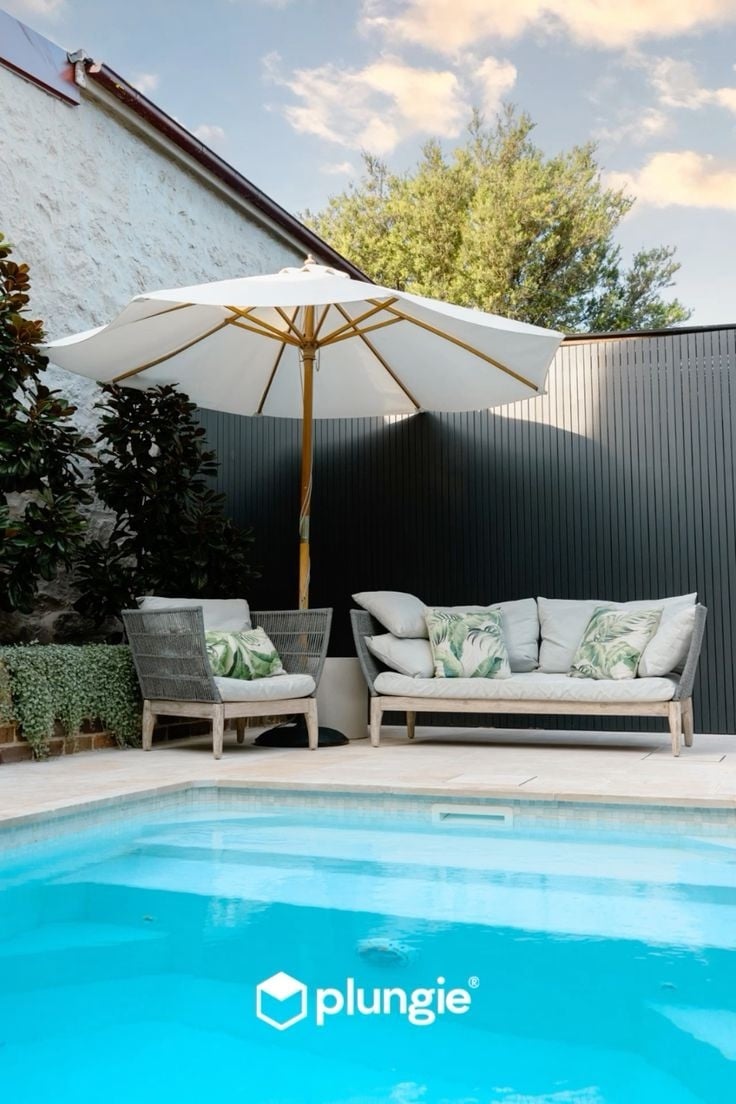
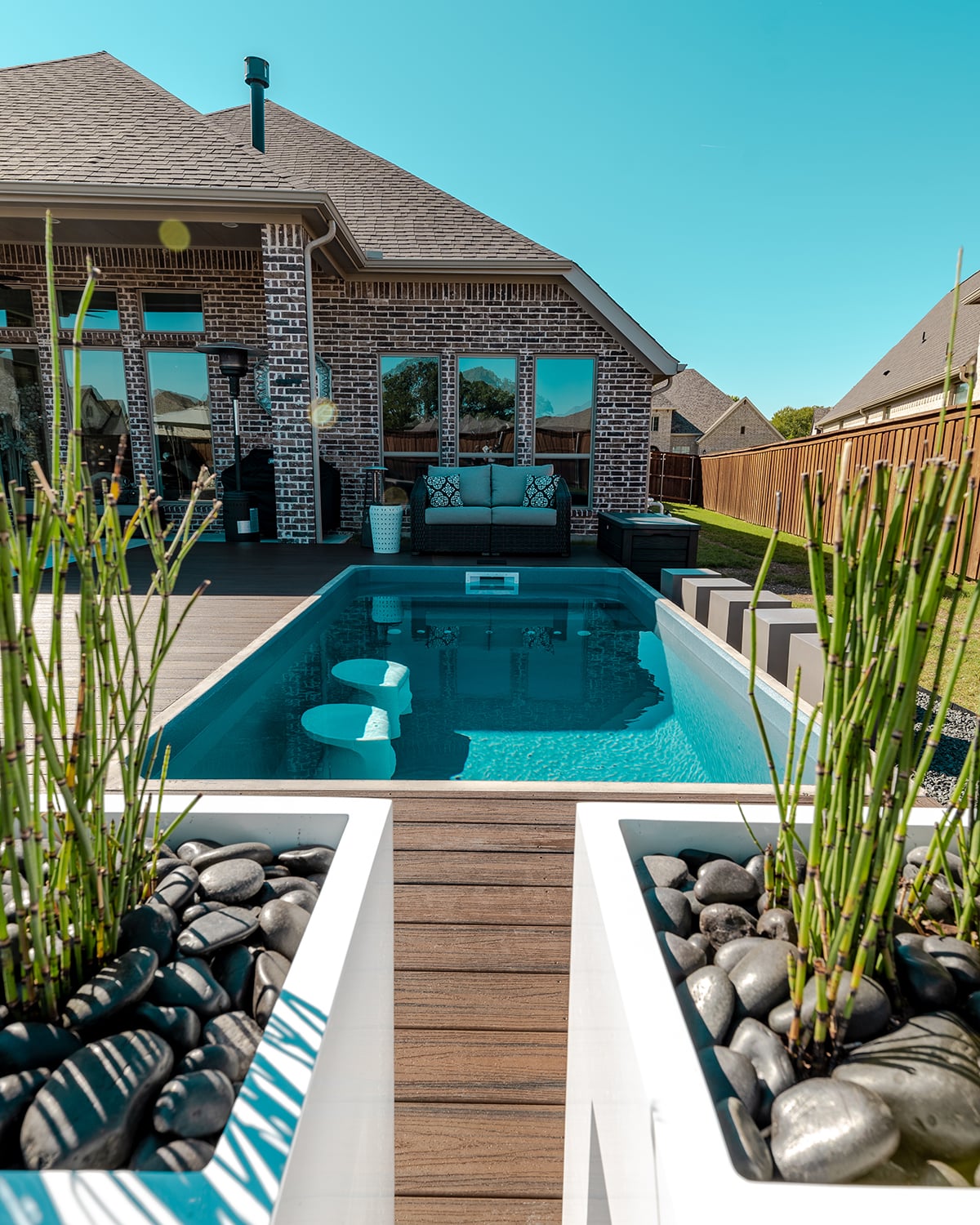
Strip it back to the essentials: a rectangular concrete plunge pool sitting flush with a paved patio. Add a timber deck on one side with a couple of low-profile lounge chairs, and keep the planting minimal. One or two feature pots, max. The less you put around a modern plunge pool, the better it looks.
This style works particularly well with precast concrete pools that have straight edges and a clean finish, like Plungie's Original (15' x 8'). The crisp geometry sits naturally alongside contemporary architecture.
2. The Small Backyard Hero
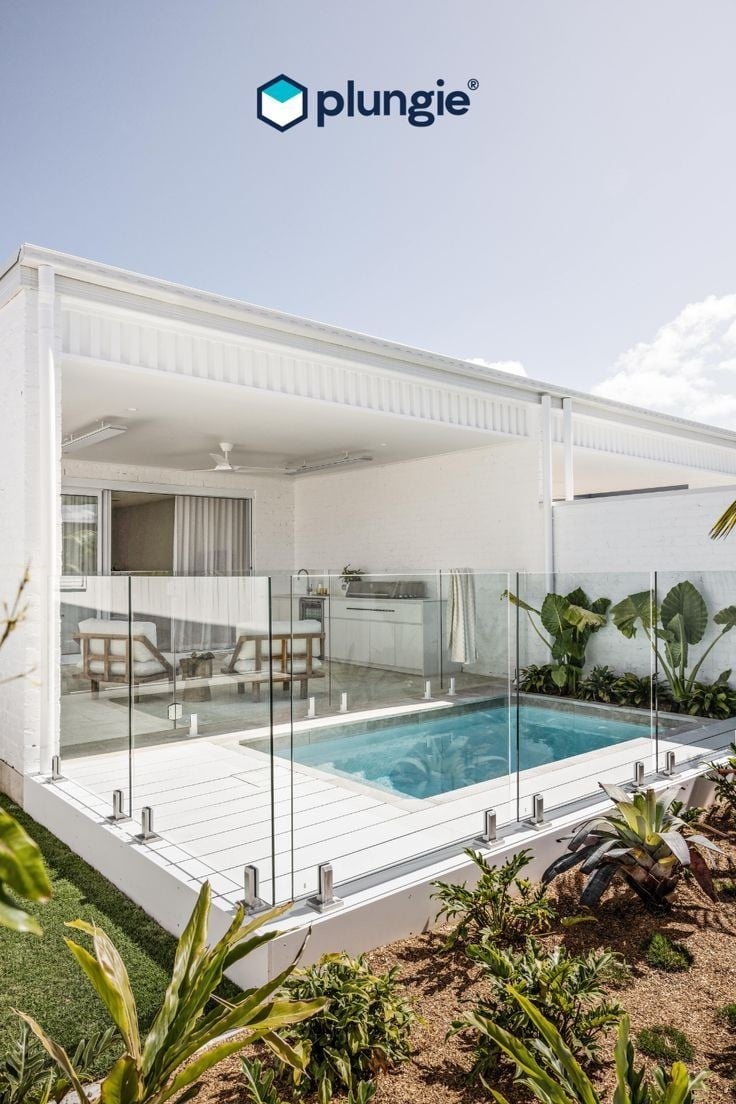

Short on space? That doesn't mean you're short on options. A compact plunge pool tucked into a corner of your yard, surrounded by low plantings and a stone patio, can make even the smallest outdoor area feel like a private retreat.
Smaller rectangular pools like thePlungie Studio (12' x 7') are designed with exactly this in mind. They fit into front yards, side yards, and tight backyards without forcing you to choose between a pool and a lawn.
3. The Natural Oasis
Think lush greenery spilling over stone walls, timber decking that wraps around the water's edge, and native plants softening every corner. A plunge pool designed with natural materials and plenty of greenery feels less like a pool area and more like a hidden swimming hole you stumbled across on vacation.
Use natural stone coping, add some ornamental grasses, and let the landscaping do the heavy lifting. The pool itself stays simple while everything around it creates the atmosphere.
4. The Above-Ground Statement
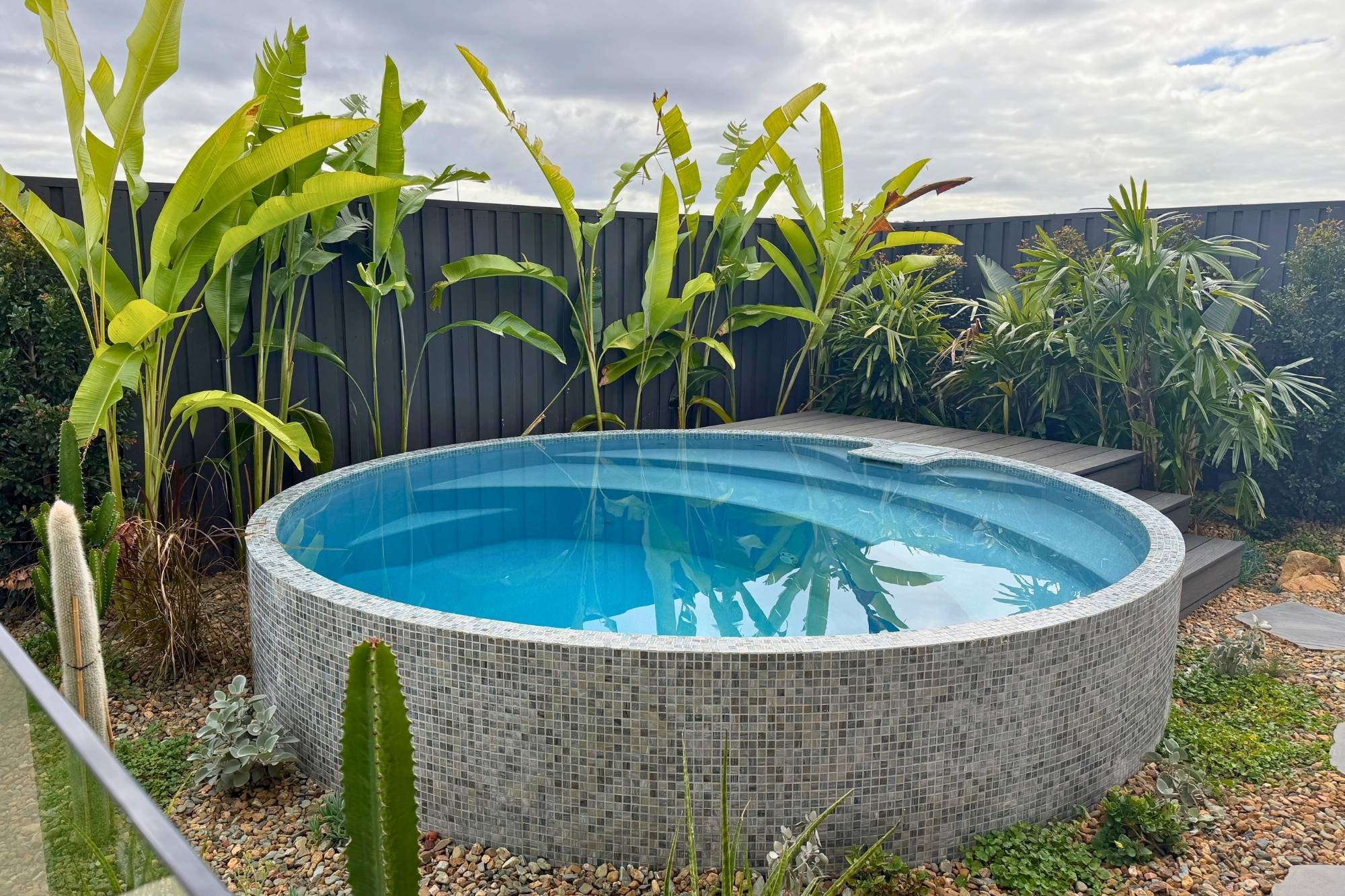
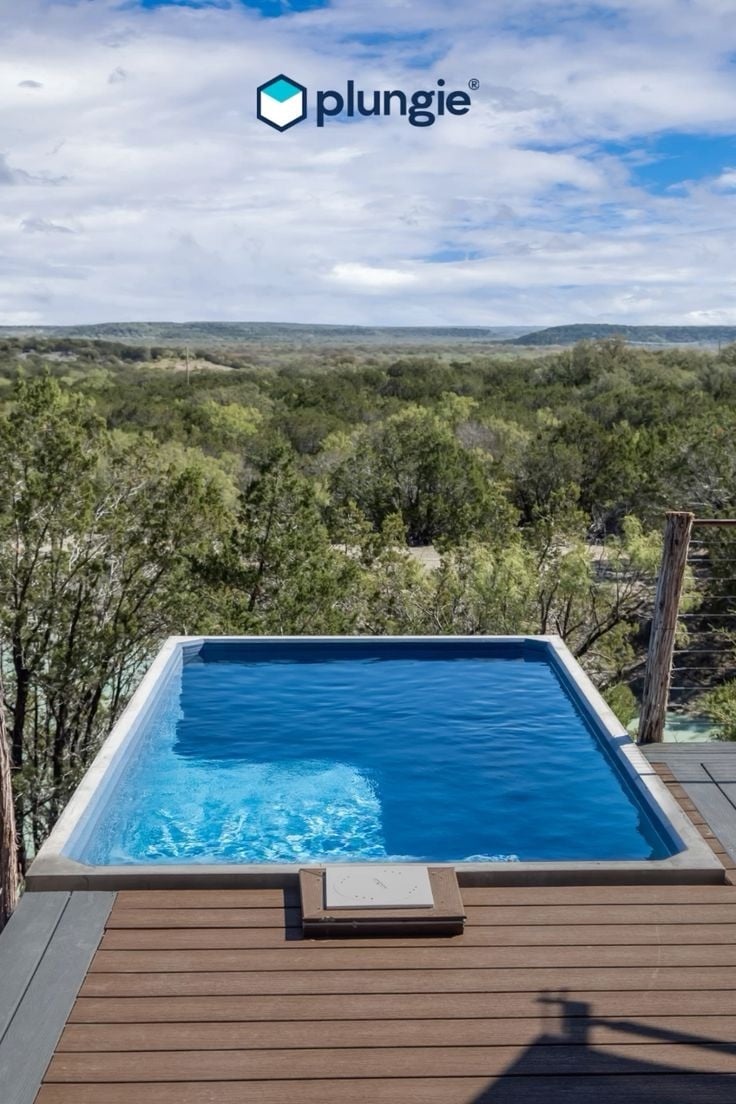
Who says a plunge pool has to go in the ground? Semi-recessed and above-ground installations are having a serious moment right now. A raised concrete pool with wood or stone cladding on the exterior becomes an architectural feature in your yard, not just something you swim in.
This design works especially well on sloped lots or properties where digging deep isn't practical. It also gives you built-in seating around the pool's edge, which is great for entertaining.
5. The Resort-Style Entertainer

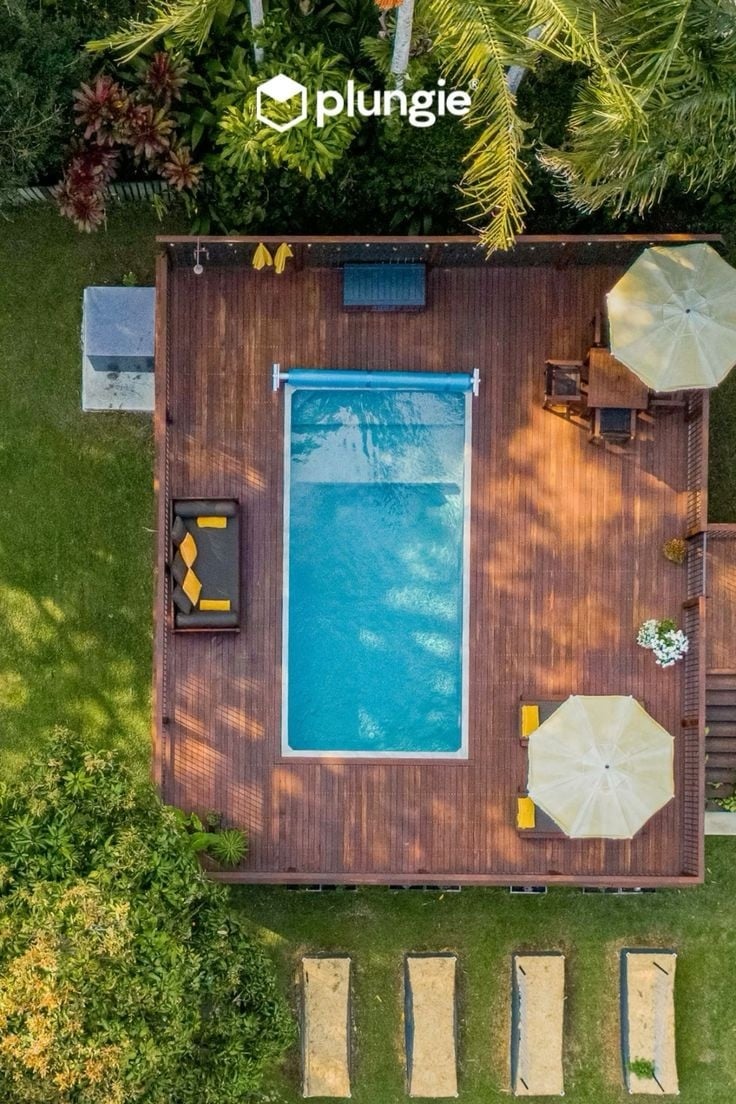
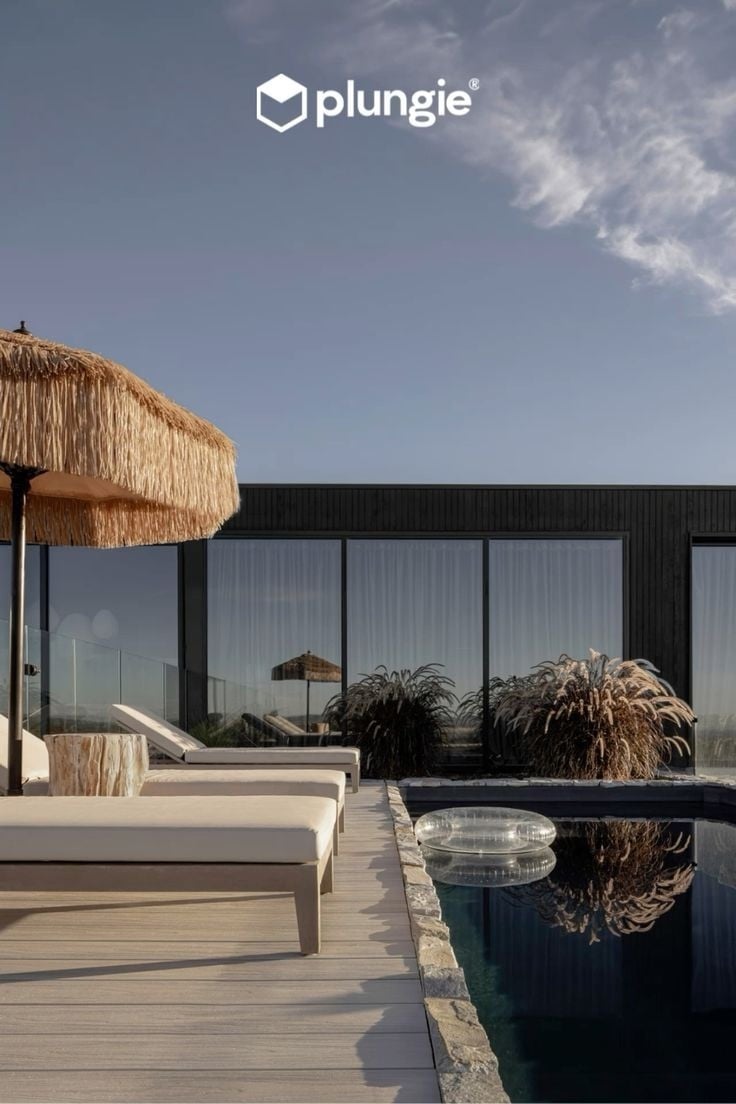
If your backyard is the gathering spot for friends and family, design your plunge pool as the centerpiece of a larger outdoor living area. Position it next to an alfresco dining space, add a fire pit on one side, and create a lounge zone on the other.
Larger plunge pools in the 20' range, like thePlungie Max, give you the most water space in the category. Big enough for a group to cool off in summer, but still compact compared to a traditional swimming pool.
6. The Round Plunge Pool
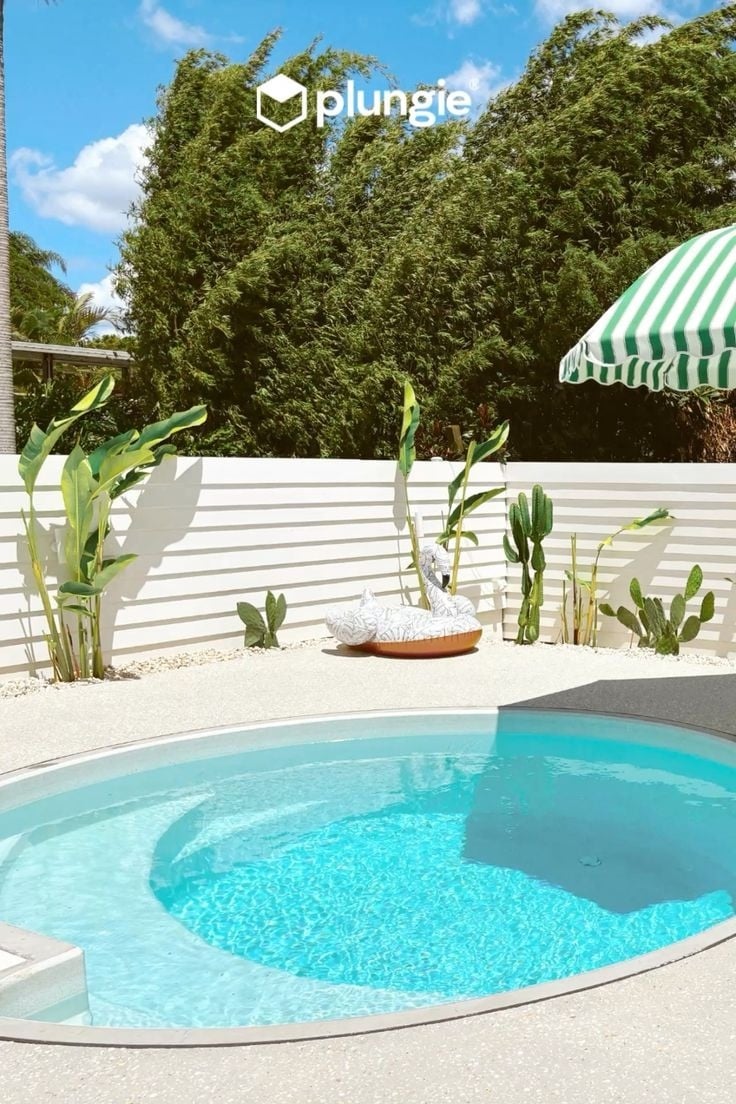
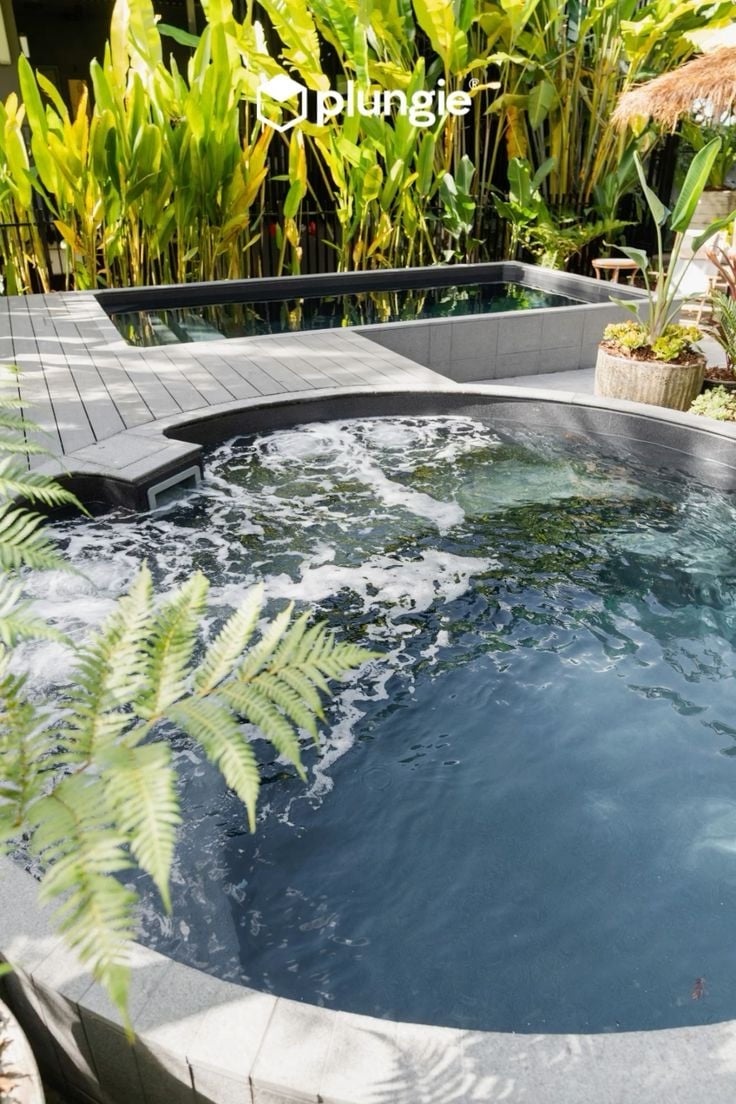

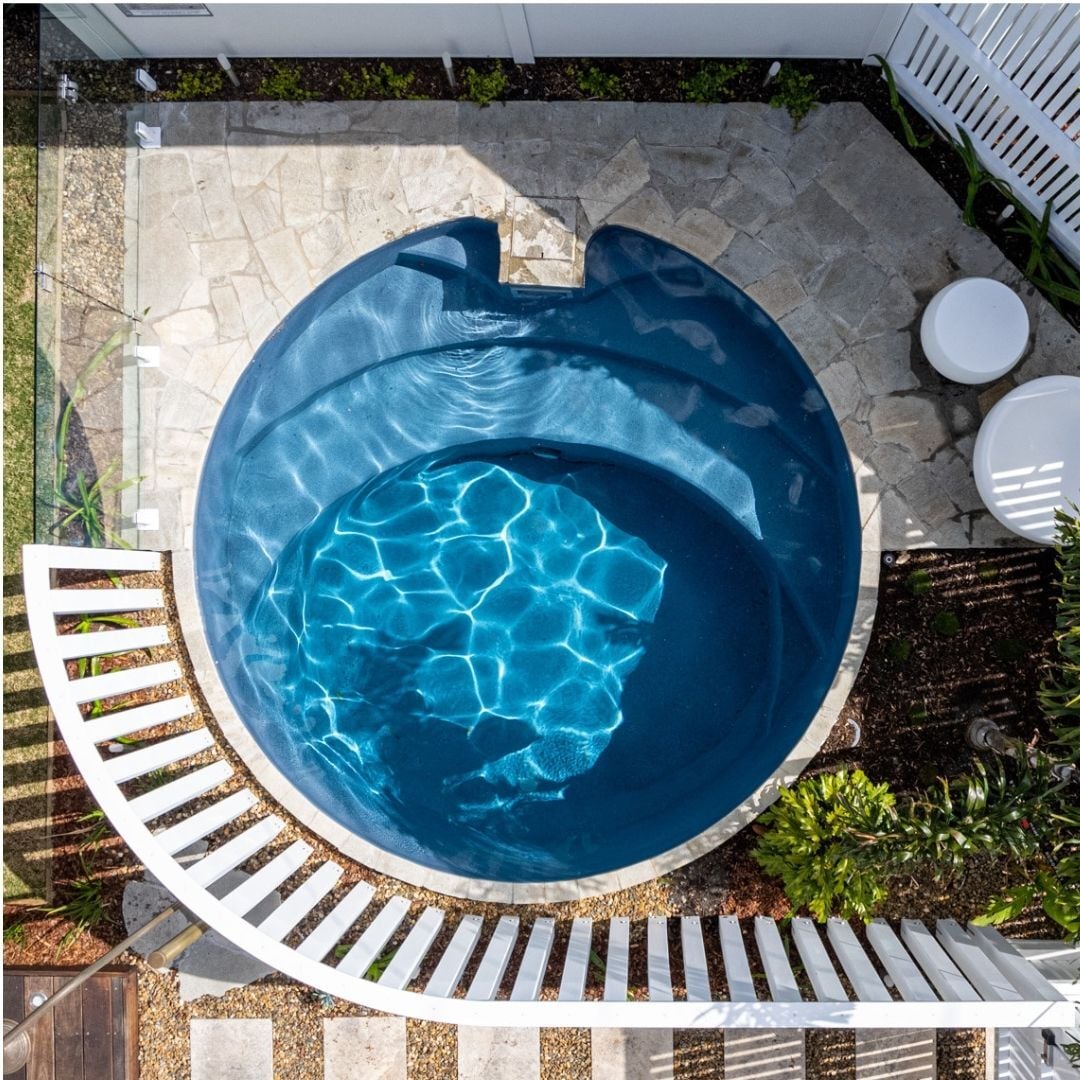
Round plunge pool designs are becoming increasingly popular, and for good reason. The circular shape creates a spa-like feel, softens the look of your outdoor area, and fits neatly into corners or courtyards where a rectangular pool would feel forced.
Round concrete pools, such as Plungie's Arena (11'5" diameter), are well-suited to architecturally designed homes and smaller yards where a softer shape makes more sense.
7. The Tropical Retreat
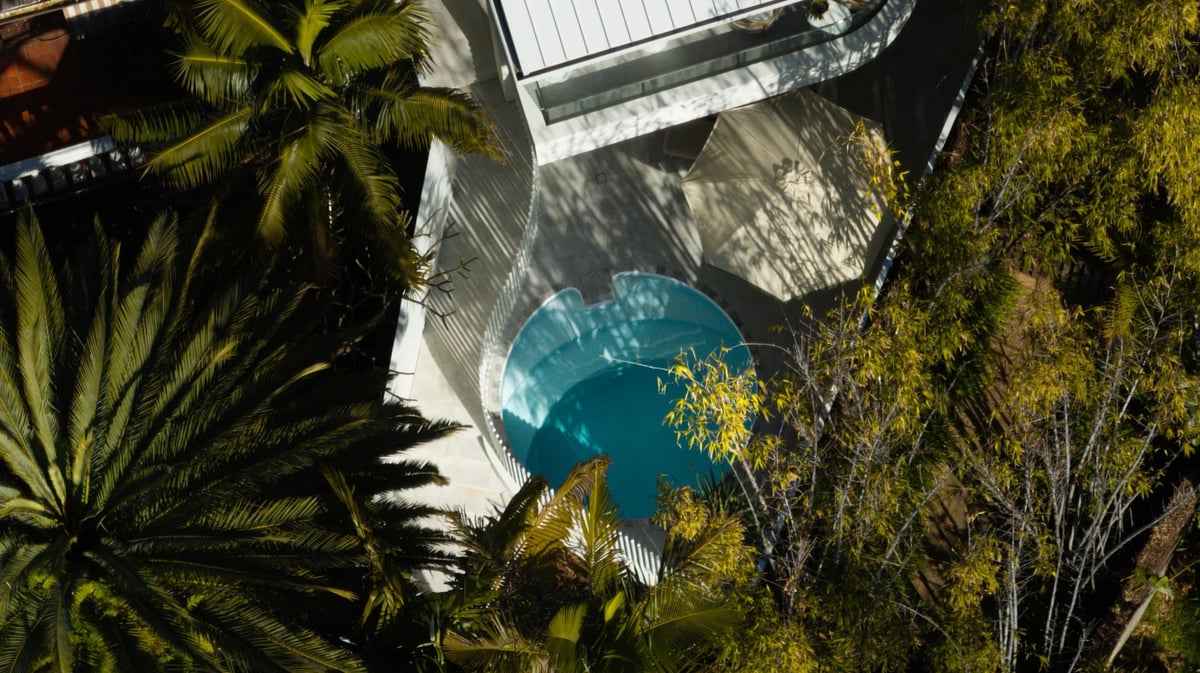
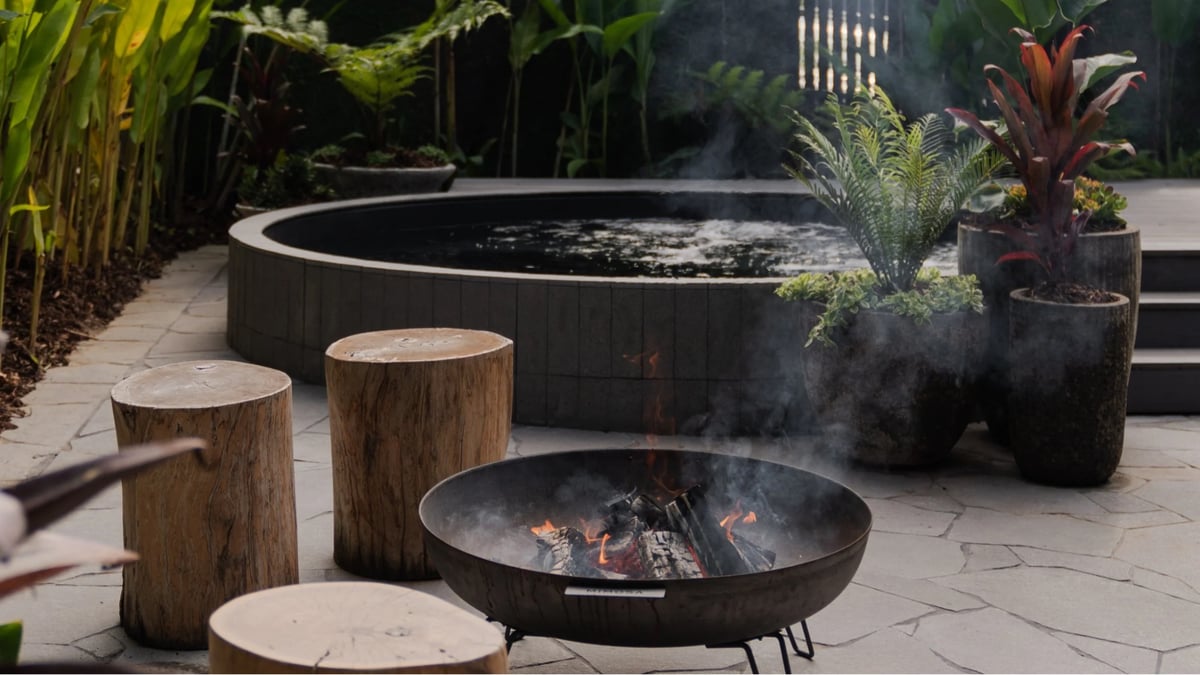
Bold tiles, lush palms, and warm-toned hardscaping can turn a basic backyard into something that feels like Bali. Choose a deep blue or lagoon-colored interior finish for your plunge pool, surround it with tropical plants, and add some outdoor cushions in rich earth tones.
Interior pool coatings make a big difference here. Deep blues and lagoon tones create that inviting water color that sets the whole mood. If you're going tropical, the pool finish is where it starts.
Things to Consider Before You Decide
Before you get too deep into the design side, there are a few practical things worth thinking about:
Size
Plunge pools are typically between 7' and 20' long and around 5' deep. That's enough for lounging, cooling off, water aerobics, and casual swimming, but they're not built for laps. Brands like Plungie offer pre-built options in set sizes, which can actually simplify the planning process since dimensions, engineering, and specifications are already locked in.
Materials
Concrete plunge pools (including precast options) tend to be the most durable and customizable. Fiberglass is another popular option, though it offers less flexibility in design. Vinyl is the most budget-friendly, but it doesn't hold up as well long-term.
Installation method
An in-ground pool creates the most seamless look. Semi-recessed and above-ground installations offer more flexibility and can work better on certain sites. Precast concrete pools can be craned into place in a single day, which cuts down significantly on construction time compared to traditional builds.
Surroundings
Your pool is only as good as the space around it. Budget for decking, paving, or a patio area. Think about fencing requirements in your area, equipment placement, and how much yard space you want to keep for lawn or garden.
Frequently Asked Questions
Is it cheaper to build a plunge pool than a regular swimming pool?
Generally, yes. Because plunge pools are smaller, they require fewer materials, less excavation, and less ongoing maintenance. A custom in-ground plunge pool typically costs between $20,000 and $50,000, depending on materials and site conditions. Precast concrete options can bring that cost down further since the pool arrives ready to install, cutting out weeks of on-site construction labor.
What are the disadvantages of a plunge pool?
The obvious one is size. You're not going to swim laps in a plunge pool. They're built for cooling off, relaxing, low-impact exercise, and entertaining, not for distance swimming. Depending on your local regulations, you'll still need pool fencing and permits, so the compliance side of things is similar to a full-size pool. And while maintenance costs are lower overall, you'll still need filtration, chemical balancing, and regular cleaning.
How deep should a plunge pool be?
Most plunge pools sit between 4 and 5 feet deep. That's deep enough to fully submerge and cool off, but shallow enough to stand comfortably. If you're planning to use your plunge pool for cold water therapy or water aerobics, that depth range works well for both.
What's the average cost of a plunge pool?
It varies widely based on materials, installation method, and your location. As a rough range: fiberglass plunge pools start around $15,000 to $25,000, concrete (custom-poured on-site) can run $30,000 to $60,000+, and precast concrete pools fall somewhere in between, with the added benefit of faster installation and consistent quality. Don't forget to budget for site prep, equipment, decking, and fencing on top of the pool itself.
Is a plunge pool worth it?
For most homeowners, especially those with small to mid-sized backyards, a plunge pool is well worth considering. You get the lifestyle benefits of a pool (cooling off in summer, a space for entertaining, potential property value increase of up to 8% according to the National Association of Realtors) without the footprint, cost, or maintenance demands of a traditional swimming pool.
Find Your Fit
Not sure which size or style suits your space? Browse thePlungie Project Gallery for real installations across the country, orcompare pool models to see dimensions side by side.