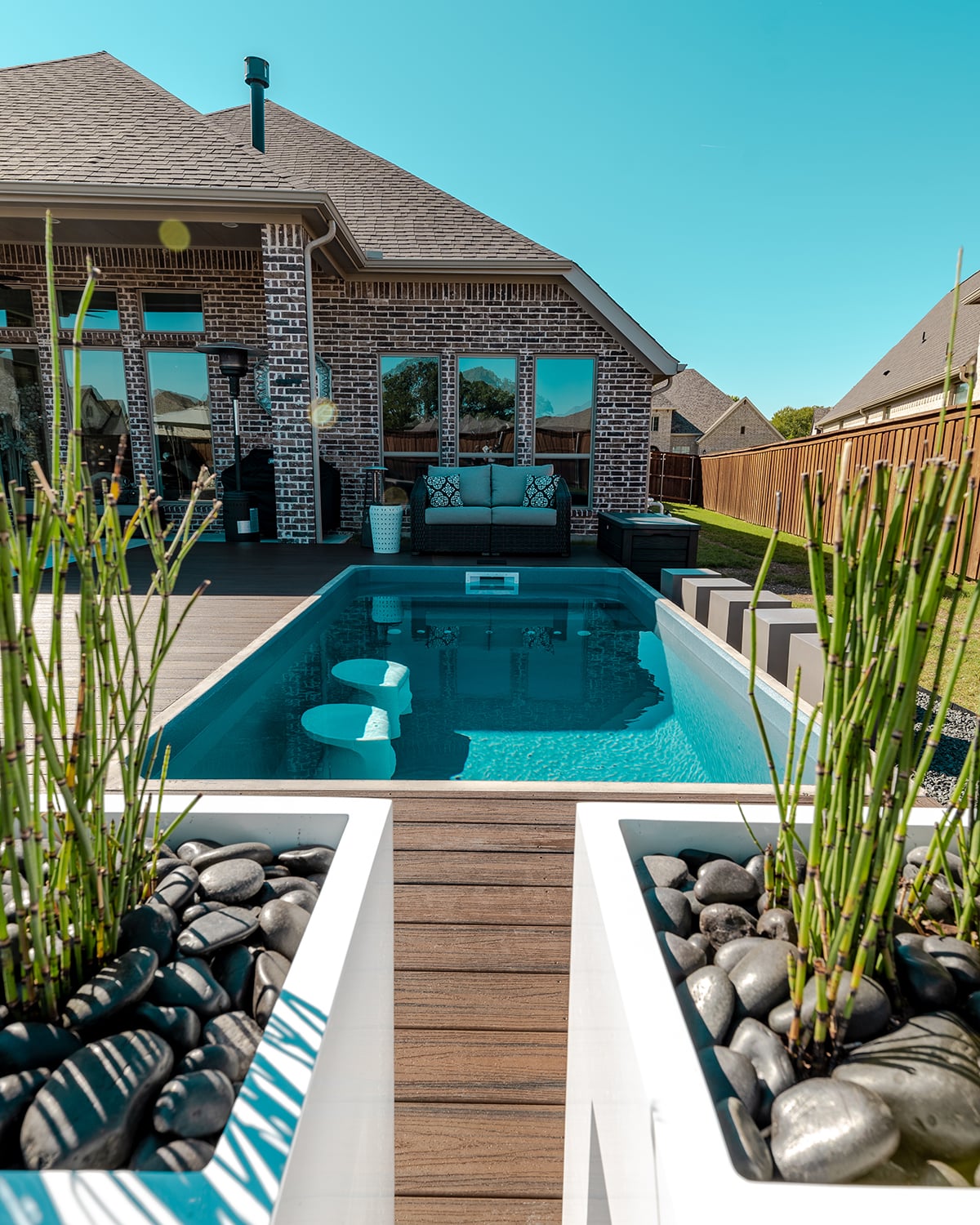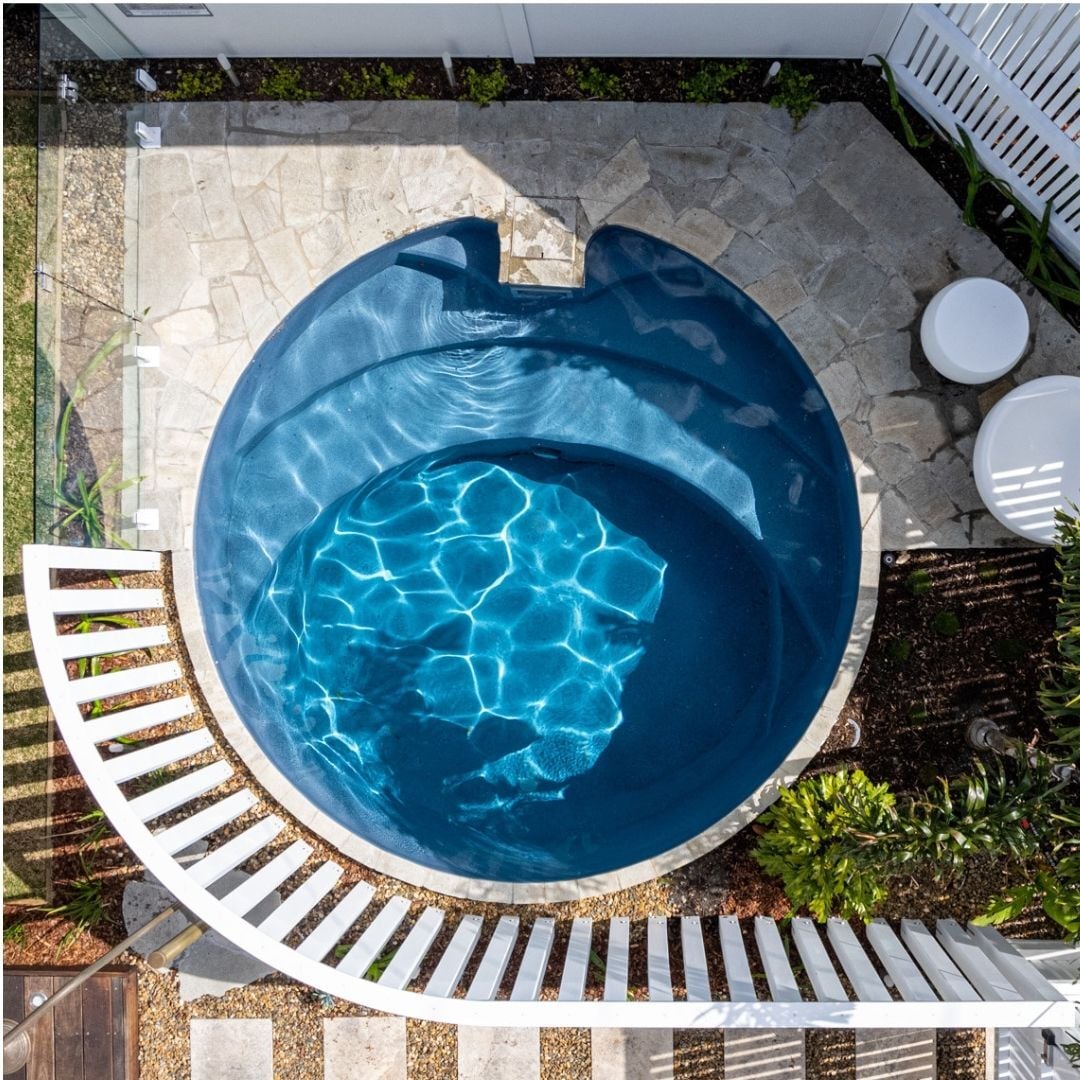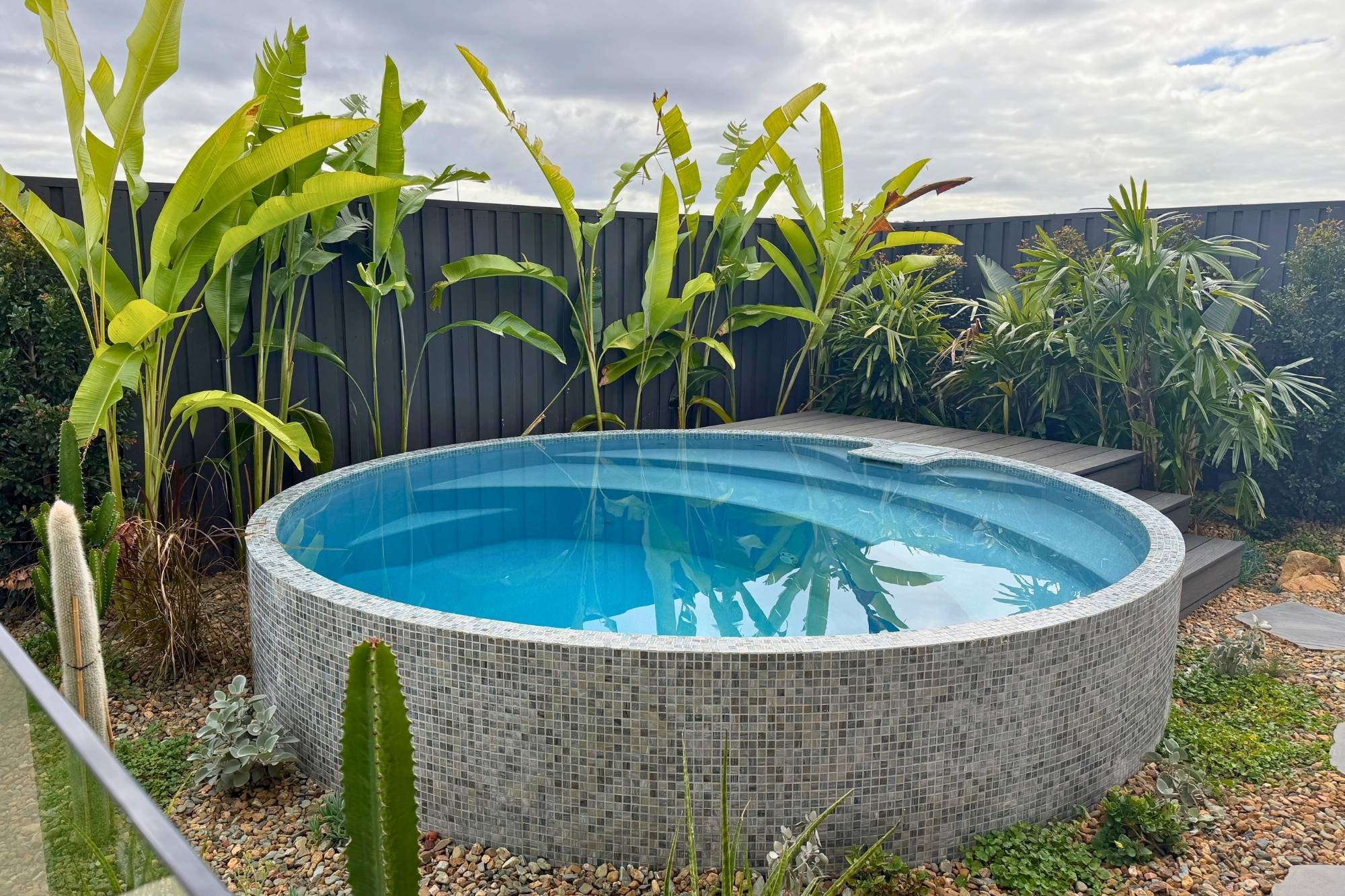

A plunge pool in Texas typically costs between $40,000 and $75,000 fully installed, based on Plungie's published pricing for their US market. That range covers the pool shell, delivery from the Alvarado manufacturing facility, crane placement, base pad, plumbing, electrical, and equipment. If you're weighing a plunge pool against other pool types, full-size custom concrete pools run $80,000 to $150,000+, and vinyl liner pools start around $35,000. Texas-specific factors like soil type, climate control needs, and where you build in the state all affect the final number.
Pool Costs in Texas by Type
There are four main pool types available in Texas. Each has a different price range, install timeline, and long-term cost profile.
|
Pool Type |
Fully Installed Cost |
Install Timeline |
|
Custom concrete (gunite/shotcrete) |
$50,000 to $150,000+ |
8 to 20 weeks |
|
Precast concrete (Plungie) |
$40,000 to $75,000 |
Around 14 days |
|
Fiberglass |
Industry average $40,000 to $85,000 |
3 to 6 weeks |
|
Vinyl liner |
Industry average $35,000 to $80,000 |
4 to 8 weeks |
Custom Concrete (Gunite/Shotcrete)
Fully custom in shape and size, built on-site over 8 to 20 weeks. Steel-reinforced concrete sprayed into an excavated hole, waterproofed, and finished with plaster or aggregate. Custom concrete pools cost $50,000 to $120,000 for the pool itself, and often $80,000 to $150,000+ by the time the project is complete with decking, fencing, and equipment. The most expensive option and the longest to build.
Precast Concrete Plunge Pools
Manufactured off-site in a controlled facility and delivered as a finished shell. Plungie's US manufacturing facility is in Alvarado, Texas, which keeps freight distances short for the entire state. Plungie pools cost $40,000 to $75,000 fully installed, including delivery, crane placement, plumbing, electrical, and finishing. Install runs around 14 days from site prep to swimming, which is over 74% faster than a traditional pool build.
Fiberglass Pools
Pre-molded shells dropped into a prepared excavation. Faster than gunite, but shape and size options are limited to whatever the manufacturer produces. Fiberglass pools are prone to surface chalking and osmotic blistering over time, and Texas heat can accelerate both. Industry pricing sits between $40,000 and $85,000 fully installed depending on shell size, site conditions, and finishing.
Vinyl Liner Pools
A steel or polymer frame with a vinyl liner stretched over it. Lowest upfront cost but liners need replacement every 7 to 12 years, which adds $4,000 to $8,000 per replacement to the lifetime cost. Vinyl liners can also puncture, and the harsh Texas sun degrades them faster than milder climates. Industry pricing runs $35,000 to $80,000 fully installed.
[Concrete Pool Cost Breakdown]
What's Included (and What Isn't) in Your Pool Price
When a pool company quotes you a price, it's important to know what's actually in the number. Plungie's published range of $40,000 to $75,000 covers a fully installed pool. That means the pool shell, delivery, crane placement, base pad, plumbing, electrical, and equipment. Standard cost items outside the pool price on any Texas build include:
- Permits and city inspections
- Excavation and spoil removal
- Retaining walls or engineering for sloped sites
- Decking, coping, and pavers
- Pool fencing (required under Texas state law and local municipal codes)
- Landscaping around the pool
- Lighting, heating, chilling, and automation add-ons
For custom concrete builds, the pool price you're quoted is often just the shell. Everything else is billed separately as the project progresses, which is why final numbers can end up 30% to 50% higher than the original quote.
Texas-Specific Factors That Affect Pool Cost
Building a pool in Texas isn't the same as building one in California or Florida. A few regional factors shift the final cost in ways that surprise homeowners who haven't built before.
Soil Types
Texas soil varies dramatically by region. DFW and much of North Texas sit on expansive clay that swells and shrinks with moisture, which adds engineering requirements and cost to any in-ground pool. Houston and the Gulf Coast have sandy soil with a high water table, which affects excavation depth and drainage. The Hill Country around Austin and San Antonio is often rocky, which slows excavation and increases costs. Precast concrete shells like Plungie's are engineered to work across all three soil conditions with pre-engineered specifications.
Climate Control Add-ons
Texas summers average 20 to 30 days above 100°F in the major metros. Without a chiller, pool water can reach uncomfortable temperatures in July and August. Texas winters are mild but real, and a heat pump extends the swimming season year-round. Expect to add $3,000 to $8,000 for a chiller or heat pump depending on pool size and equipment tier.
Permits and Inspections
Permit costs and inspection requirements vary across Texas cities. Houston, Dallas, and Austin all have different fee structures and inspection schedules. Some suburbs require additional HOA approvals that add weeks to the timeline.
Freight Distance
Plungie's Texas manufacturing facility in Alvarado sits between Dallas and Fort Worth, roughly three hours from Austin, four hours from Houston, and five hours from San Antonio by freight. Shorter freight distances keep delivery costs down for Texas builds compared to other US states.
Pool Cost by Texas Metro
Where you build in Texas affects both the total cost and the type of pool that suits the site.
Dallas-Fort Worth
DFW is one of the fastest-growing metros in the US. High-growth suburbs like Frisco, McKinney, Prosper, Allen, and Southlake are being built on smaller lots than the previous generation. Median US lot sizes have decreased 18% between 2010 and 2020, according to the US Census Bureau, and that squeeze is felt across DFW's new-build communities. A plunge pool is the proportionate answer to the available space in most new subdivisions. DFW's expansive clay soil adds engineering costs to in-ground builds.
Houston
Houston's outdoor living season runs almost 12 months, and the city's culture is built around backyard entertaining. Inner-city lots in Montrose, the Heights, Midtown, and West University are tight, while suburban estates in The Woodlands, Katy, Sugar Land, and Pearland offer more space. The sandy soil and high water table around Houston affect excavation depth and drainage design.
Austin
Austin's Hill Country geography means sloped lots are common across the western suburbs and neighborhoods like West Lake Hills and Rollingwood. Sloped sites often benefit from semi-recessed or above-ground pool installation, which can eliminate the retaining walls and earthworks that in-ground builds require on hillsides. Tight infill lots in East Austin and Mueller suit compact plunge pool footprints.
San Antonio
San Antonio's rocky Hill Country soil affects excavation costs for any in-ground pool. New-build communities in Boerne, New Braunfels, and Alamo Heights are following the same tightening lot-size trend seen across Texas. San Antonio's proximity to Alvarado keeps freight costs low for precast concrete pool delivery.
Running and Maintenance Costs for a Texas Pool
Ownership costs are a real part of the pool cost picture. Plunge pools cost significantly less to run than full-size pools because there's less water to filter, heat, and treat.
- Chemical costs: A plunge pool uses roughly a third of the chemicals a full-size pool needs. Expect $40 to $80 per month across a typical Texas swimming season.
- Energy costs: A variable-speed pump on a plunge pool draws less power than a full-size pool pump. Expect $30 to $80 per month depending on equipment tier and heating use.
- Heating and cooling: Running a heat pump year-round in Texas adds $50 to $150 per month during colder months. A chiller for summer adds a similar figure during the hottest weeks.
- Water top-up: Texas heat drives high evaporation rates. Plan on topping up your pool weekly during summer, particularly in Houston where humidity accelerates evaporation counterintuitively through the wet-bulb effect.
- Total monthly running cost: Adding the line items above, most Texas plunge pool owners spend $70 to $160 per month year-round on chemicals and energy, with heating and cooling adding seasonally on top. A full-size traditional pool typically runs $250 to $500+ per month.
Is a Pool Worth It in Texas?
Texas is arguably the best US market for pool ROI. The outdoor season is long, the property market values pools, and buyer demand for pools in Texas resale listings is high.
According to the National Association of Realtors, a pool can add up to 8% to a home's resale value in warm-climate markets. "Pool" is also the #1 most searched term on realtor.com. In competitive Texas metros like Austin, Dallas-Fort Worth, and Houston, a pool is a feature buyers are actively filtering for at the point of purchase.
The lifestyle case is stronger. A pool in Texas earns its keep across nine to twelve months of the year rather than sitting unused for half of the calendar. When you factor in daily use during summer, weekend entertaining, and property value uplift at resale, the total return picture looks very different to states with a three-month swimming season.
Our Full Analysis on Pool Property Value
How to Save Money on a Pool Build in Texas
There are three genuine ways to reduce the cost of a Texas pool build without cutting corners on quality.
- Choose precast concrete over custom gunite: Custom concrete pools carry the highest labor cost of any pool type. A precast shell arrives finished, which eliminates the weeks of on-site labor, weather delays, and multiple trades that drive up traditional build costs.
- Install semi-recessed on sloped lots: In-ground installation on Hill Country slopes often requires expensive retaining structures and drainage engineering. Semi-recessed and above-ground installations work with the existing grade, which reduces earthworks costs significantly.
- Consider owner-builder or BYOB: Plungie's Bring Your Own Builder approach lets you engage a general contractor or install as an owner-builder rather than paying a specialist pool company's project management markup. This can save 15% to 25% on the total build cost depending on your local contractor market.
- Avoid the lowest-bid trap: Extremely low quotes on any pool build are usually a sign of missing scope, undercapitalized contractors, or corners cut on materials. Get three quotes minimum, verify contractor licensing with the Texas Department of Licensing and Regulation, and be wary of upfront cash requests over 25% of the total build.
Frequently Asked Questions
What's the cheapest type of pool in Texas?
Vinyl liner pools have the lowest upfront cost in Texas, typically $35,000 to $80,000 fully installed. However, vinyl liners need replacement every 7 to 12 years at $4,000 to $8,000 per replacement, and Texas heat and UV exposure can shorten that lifespan. Over a 20-year ownership period, a precast concrete pool often works out cheaper because there are no liner replacements, resurfacing costs, or structural repairs.
Is it cheaper to build a pool in Texas than other states?
It can be, depending on the pool type and where in Texas you build. Precast concrete pools from Plungie are cheaper to install in Texas than in most other US states because the manufacturing facility is in Alvarado, which cuts freight distance and cost. Labor rates in Texas metros are competitive with other Sun Belt states but generally lower than California, New York, and other high-cost markets. Custom gunite pool costs in Texas are comparable to other major US pool markets.
How much does a Plungie pool cost in Texas?
A Plungie plunge pool costs $40,000 to $75,000 fully installed in Texas. The four US models available are the Arena (11' 5" round), Studio (12' x 7'), Original (15' x 8'), and Max (20' x 10'). Price varies by model, ecoFinish choice, add-ons like heating or swim jets, site conditions, and any decking or fencing work included in the scope.
Do pools add value to a home in Texas?
Pools add measurable value to homes in warm-climate US markets including Texas. The National Association of Realtors reports pools can add up to 8% to home resale value, and "pool" is the #1 most searched term on realtor.com. In Texas's fastest-growing metros where outdoor living is a core part of the lifestyle, pools are actively filtered for by buyers at the point of purchase.
Get a Quote for Your Texas Pool
Three ways to move forward on your Texas pool build.