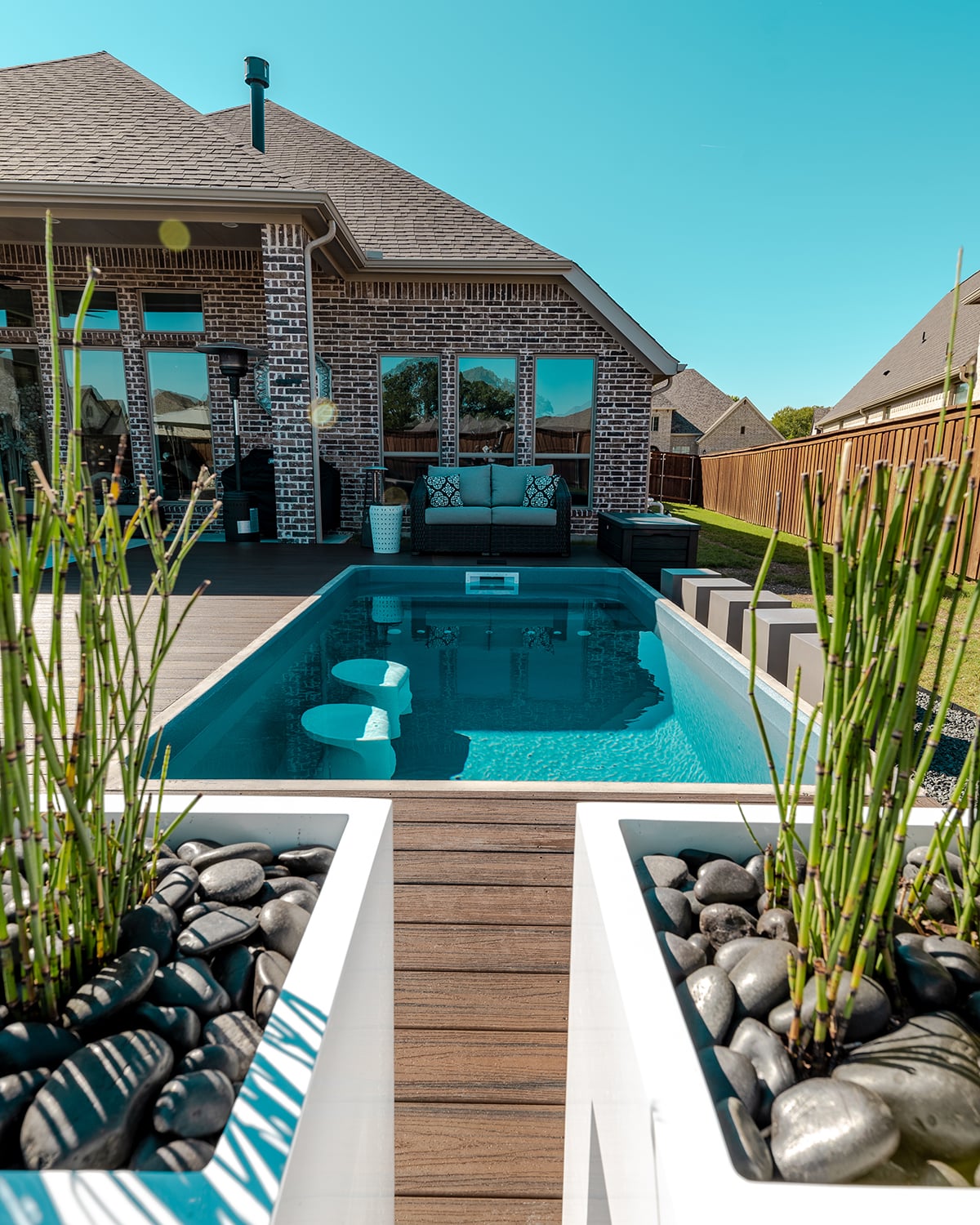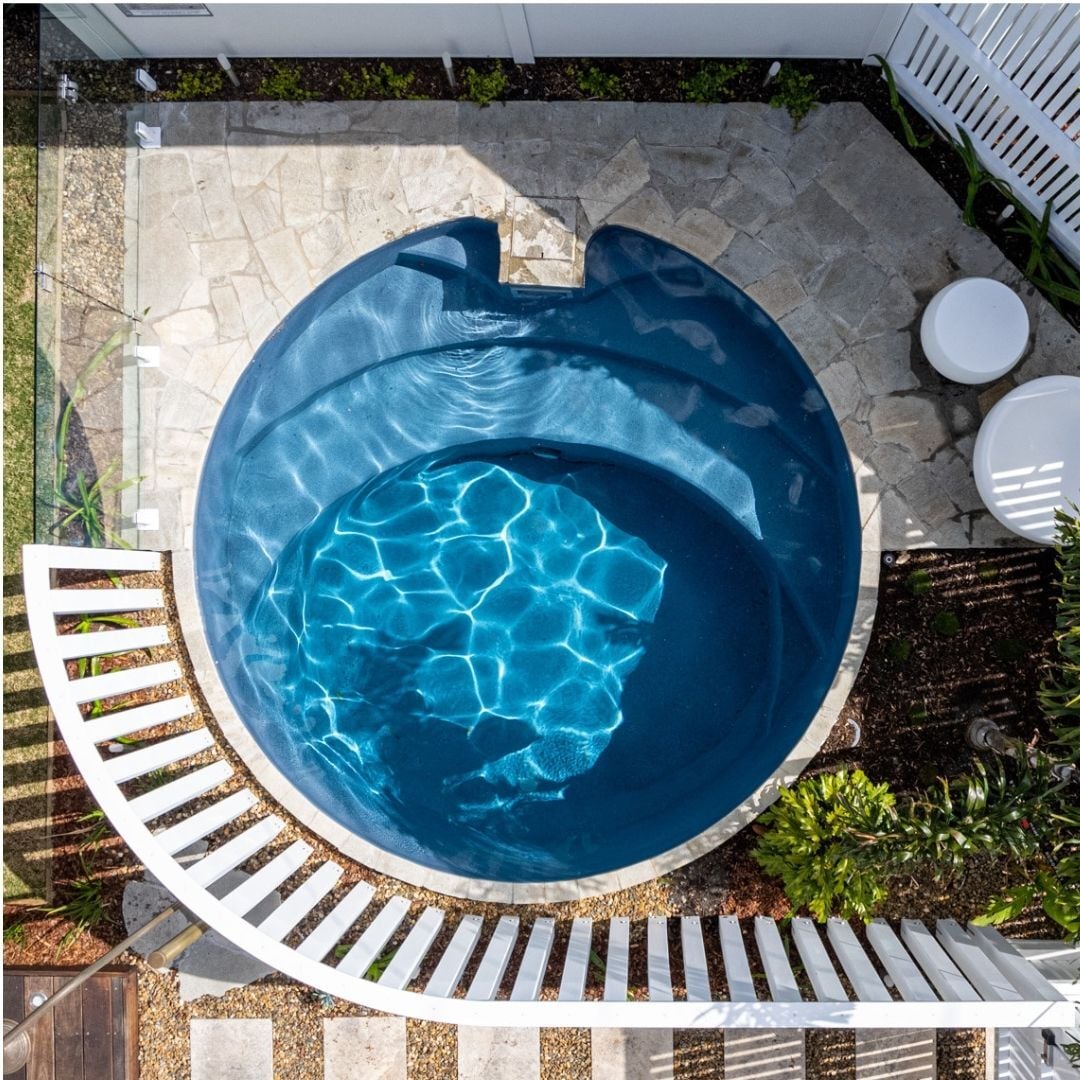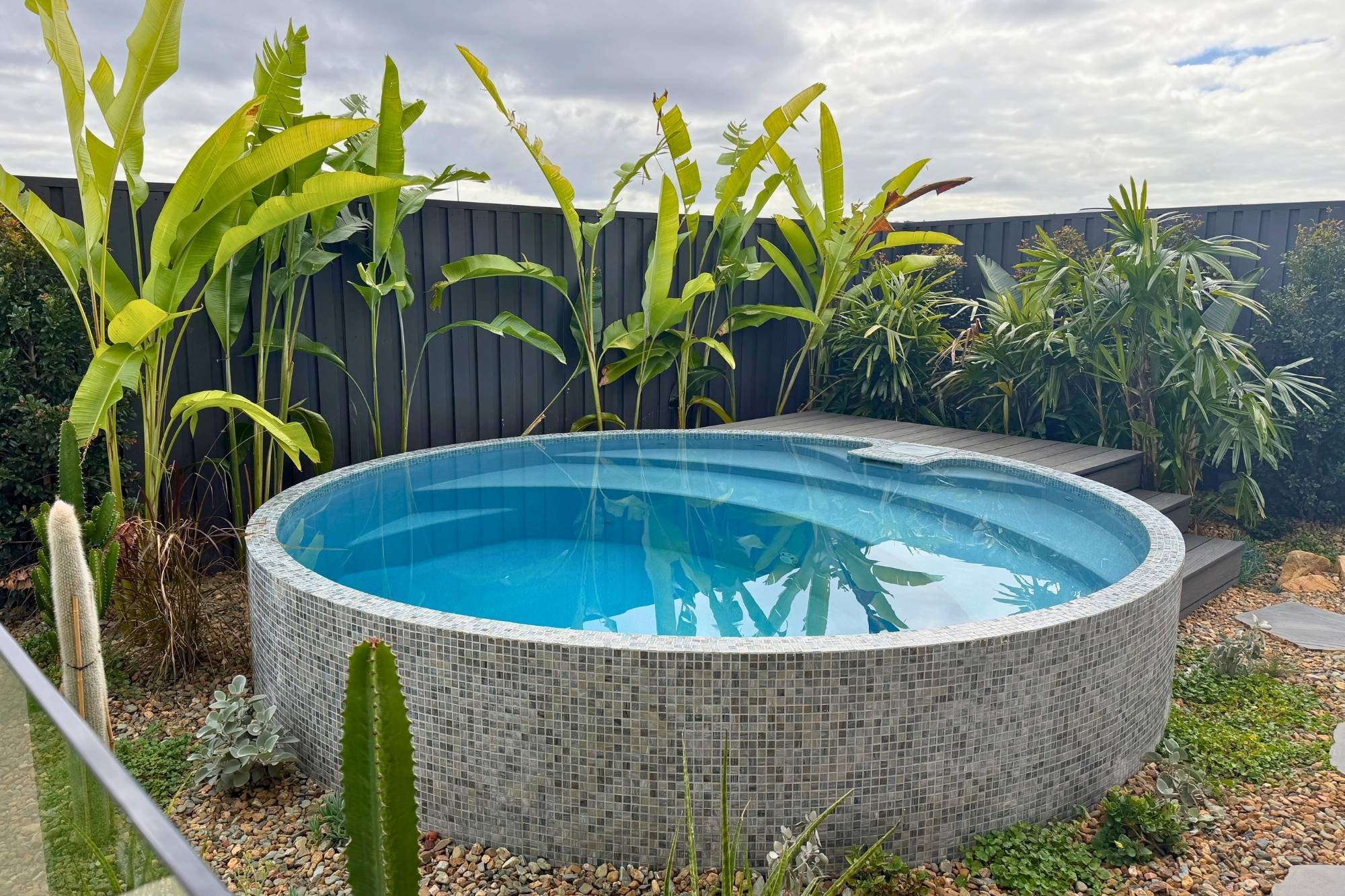

A pool can absolutely add value to your home, but how much depends on where you live, what kind of pool you build, and how well you look after it. The answer isn't one number. It's a range, and the factors that push it up or down are worth understanding before you commit.
What the data consistently shows is that pools add both financial value and lifestyle value. The financial return varies (and we'll get into the specifics below), but the lifestyle return is something almost every pool owner agrees on: it changes how you use your home, how you entertain, and how your family spends time together.
Here's what you need to know to make a confident decision.
How Much Value Does a Pool Add?
According to the National Association of Realtors' 2023 Remodeling Impact Report, the average inground pool installation costs around $90,000 and recovers roughly 56% of that cost at resale. That's about $50,000 back on a $90,000 spend.
In percentage terms, most industry sources put the figure at 5% to 8% of your home's total value. On a $500,000 home, that's $25,000 to $40,000. On a $300,000 home, it's $15,000 to $24,000.
Realtor.com data from 2025 found that homes with pools were listed at a 54% premium over comparable non-pool homes. Listing price isn't the same as the value the pool itself added (pool homes tend to be larger and in more desirable neighborhoods), but it tells you something about how buyers perceive pool properties.
The financial return on a pool will vary based on your specific situation. But the lifestyle return, how it changes the way you live in and enjoy your home, is consistently high across almost every market.
When a Pool Adds the Most Value
Not every pool adds the same amount. These are the conditions where a pool is most likely to work in your favor at resale:
-
Warm climates with year-round (or near year-round) use: In Sun Belt states like Texas, Florida, Arizona, and Southern California, pools are expected by a large segment of buyers. In these markets, not having a pool can actually put you at a disadvantage against comparable homes that do. The NAR data and Redfin's metro-level analysis both show that warm-climate markets consistently return a higher percentage of pool investment at resale.
-
Neighborhoods where pools are common: If most homes on your street have a pool, yours needs one to compete. Appraisers set value based on comparable sales, so when the comps have pools, the data supports a premium for yours.
-
Higher-end homes: Buyers shopping at the upper end of the market expect outdoor amenities. A well-designed pool with quality surrounds fits naturally into a premium property and reinforces its positioning.
-
Well-maintained, modern pools: A clean, functional pool with up-to-date equipment is an asset. Condition matters more than the mere fact of having a pool. A well-kept pool signals to buyers that the rest of the home has been looked after, too.
When a Pool May Not Add as Much Value
There are some situations where the return is lower, and it's worth being aware of them so you can plan accordingly:
-
Cold or seasonal climates: In the northern US, where the swimming season is three to four months, some buyers see a pool more as a maintenance commitment than an amenity. The ROI in these markets tends to be lower, and some buyers may prefer more yard space over a pool they can only use part of the year.
-
Small yards where the pool dominates: If the pool leaves very little usable yard, some families may see that as a trade-off. Choosing a compact pool that leaves room for lawn, garden, or play space can help here. This is one of the reasons smaller plunge pools have become popular on tighter lots.
-
Older or neglected pools: A pool that needs significant work (resurfacing, new equipment, structural repairs) can become a negotiating point that brings offers down. If you're planning to sell, getting the pool into good condition before listing makes a real difference.
-
Overbuilt pools relative to the home: A $150,000 custom pool on a $400,000 home creates a mismatch. The general guidance is to keep pool spending proportional to your home's value, typically under 10-15%.
How Appraisers Value Pools
Appraisers use the sales comparison approach: they look at what similar homes with pools sold for compared to similar homes without them, and the difference is what the pool is "worth."
If your neighbor's home (with a pool) sold for $450,000 and an equivalent home on the same street (without a pool) sold for $425,000, the appraised value of the pool is $25,000. The original cost of the pool doesn't factor into this calculation.
Above-ground pools are generally not included in appraisals. They're considered personal property (like furniture) rather than a permanent improvement.
Semi-inground pools can be included if they're professionally installed with integrated decking, proper permitting, and a permanent appearance.
Inground pools (concrete, fiberglass, and vinyl liner) are the type most consistently recognized by appraisers as adding value, though the credited amount is typically below replacement cost.
The Ongoing Costs to Factor In
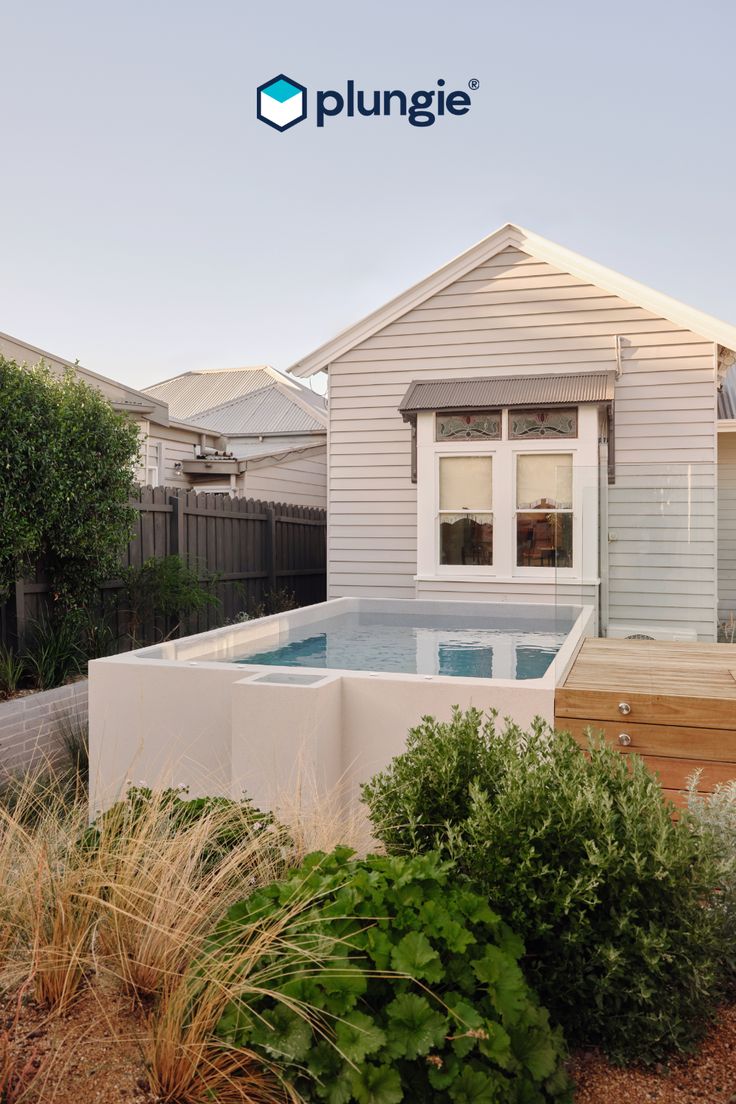
The resale premium is one side of the equation. The other is what you spend on owning the pool:
-
Installation: $35,000 to $120,000+, depending on pool type and material. Custom concrete (gunite) is the most expensive, followed by fiberglass and precast concrete, with vinyl liner the most affordable.
-
Annual maintenance: $1,000 to $2,500 per year for chemicals, cleaning, and professional service.
-
Utilities: $800 to $2,500 per year for the pump, filter, and heating.
-
Insurance: Pool ownership typically increases homeowners' insurance by $50 to $100+ per year.
-
Property taxes: A pool that increases your home's assessed value can also increase your annual property tax bill.
-
Resurfacing and repairs: Concrete pools need resurfacing every 10 to 15 years ($8,000 to $15,000). Vinyl liners need replacing every 7 to 10 years ($3,000 to $7,500).
Smaller pools cost less across all of these categories because there's less water to heat, treat, and maintain. That's one of the practical reasons compact pools and plunge pools have become increasingly popular: the lifestyle benefit is similar, but the ongoing costs are meaningfully lower.
Is a Pool Worth It?
For most homeowners, the answer is yes, but not purely for financial reasons. The data shows that pools rarely pay for themselves in full at resale. Other home improvements (kitchen remodels, bathroom updates, energy-efficient upgrades) typically deliver a tighter ROI on paper. But pools consistently score higher than any other outdoor project on owner satisfaction. NAR's survey data shows homeowners gave inground pools a joy score of 10 out of 10, the highest possible rating.
The people who are happiest with their pool decision are usually the ones who planned to stay in the home for years, wanted the pool for their own use, and treated the resale bump as a welcome bonus rather than the reason.
How to Protect as Much Value as Possible
If you're going ahead with a pool and want to set yourself up well for resale:
-
Keep the design classic: Rectangular and geometric shapes with clean lines and neutral finishes appeal to the broadest range of buyers. Highly personalized designs can narrow your audience at resale.
-
Stay proportional: A well-designed pool in the $40,000 to $60,000 range will likely return a higher percentage of its cost than a $150,000 custom build with features only you love.
-
Get permits: An unpermitted pool is a dealbreaker for appraisers, insurers, and many buyers.
-
Maintain it: A pool in great condition is an asset. If you plan to sell, invest in cleaning, equipment updates, and any needed resurfacing before listing.
-
Choose durable materials: Concrete pools (including precast) last 50+ years, which means they're more likely to still be in good condition when you sell. Fiberglass lasts 25 to 30 years. Vinyl liners need the most frequent replacement.
-
Consider the build timeline: Precast concrete pools like Plungie are installed in about two weeks compared to 6 to 16 weeks for custom concrete. If you're factoring a pool into a broader renovation or want to start enjoying it sooner, the shorter timeline makes a practical difference. For a full breakdown of what different pool types cost, see our concrete pool cost comparison.
Frequently Asked Questions
Do inground pools add more value than above-ground pools?
Yes. Above-ground pools are considered personal property and are rarely included in appraisals. Only inground pools (concrete, fiberglass, vinyl liner) and professionally installed semi-inground pools are treated as permanent improvements that can contribute to property value.
Is it harder to sell a house with a pool?
It depends on the market. In cold-climate areas or neighborhoods where pools are uncommon, a pool can narrow your buyer audience. In warm-climate markets with family-oriented buyers, a pool can speed up the sale and attract more interest. Pool condition plays a big role too: a well-maintained pool is a selling point, a neglected one is a red flag.
Does a pool increase home insurance costs?
Yes. Most homeowners' insurance policies increase by $50 to $100+ per year with a pool, due to added liability exposure. Some insurers may require specific safety features (fencing, covers, alarms) as a condition of coverage.
How does climate affect whether a pool adds value?
Climate is the single biggest factor. In Sun Belt states where pools can be used most of the year, the financial return is highest. In northern states with short swimming seasons, the return is lower, and a pool may be seen as a maintenance commitment by some buyers. That said, pools still add lifestyle value in seasonal climates for the months they are in use.
What pool features add the most value?
Clean, functional equipment; a well-maintained interior surface; quality decking or patio surrounds; proper fencing; and energy-efficient systems (variable speed pumps, LED lighting, saltwater chlorination) all contribute to perceived value. Classic designs tend to return more at resale than highly customized features.
Make the Decision That's Right for You
A pool is one of the few home improvements that most people describe as life-changing, even when the financial return is modest. If you're building one, build it for the years you'll spend enjoying it, and treat the resale value as a welcome bonus.
If you're exploring your options, compare our four pool models to see what fits your yard and budget, or browse the Project Gallery for real installations.