

An above-ground pool is any pool that sits fully or partly above natural ground level instead of being dug into it. In Australia, that covers everything from a steel-frame kit pool you set up in a weekend to a permanent fibreglass or precast concrete pool craned onto a prepared pad.
Prices vary just as widely, from a few thousand dollars for a basic kit pool to something much closer to in-ground pricing for a permanent, architectural above-ground pool, which still comes with far less excavation and a much shorter build.
Here's how the options compare, what they cost, the rules you need to follow, and how to make an above-ground pool look like it was always meant to be there.
What is an above-ground pool?
An above-ground pool is installed on top of the ground, or partly above it, rather than in an excavated hole. There are two broad groups:
- Temporary or relocatable pools: inflatable, steel-frame and modular kit pools with a vinyl liner. Cheap, quick to set up, and easy to pull down when you move.
- Permanent above-ground pools: fibreglass and precast concrete shells engineered to sit above ground for the long haul, usually clad, decked or landscaped so they read as a built-in feature.
A third option sits in between: semi-recessed, where the pool is partly in the ground and partly above it. It's the go-to on sloping blocks.
Types of above-ground pools
| Type | What it is | Permanence | Best for |
| Inflatable / steel-frame kit | Vinyl liner on a steel or inflatable frame | Temporary, relocatable | Renters, short-term use, tight budgets |
| Modular vinyl-lined | Steel or resin wall panels with a vinyl liner, often with coping | Semi-permanent; liner needs replacing | Budget family pools |
| Fibreglass | One-piece shell with structural ribbing for above-ground support | Permanent | Sloping blocks, raised decks |
| Precast concrete | Factory-made monolithic concrete shell, craned into place | Permanent | Architectural installs, sloping or difficult sites, any install type |
Kit and vinyl-lined pools
The cheapest way into a pool. You'll find steel-frame and inflatable pools at most big retailers, and Australian-made modular pools from specialist manufacturers. The trade-off is lifespan: the vinyl liner wears out and needs replacing, and the overall structure isn't built to last like a fibreglass or concrete shell.
Fibreglass above-ground pools
Fibreglass shells need extra structural ribbing to stand above ground without the surrounding soil holding them in place. They're lighter than concrete and quicker to install than a custom build, but you're choosing from a fixed range of shapes.
Precast concrete above-ground pools
A precast concrete pool is cast in a factory as a single piece, then delivered and craned onto your prepared site. Because the shell is engineered as a structure in its own right, the same pool can go fully in-ground, semi-recessed or fully above ground. You get the strength and permanence of concrete without months of on-site construction.
How much does an above-ground pool cost in Australia?
What you'll pay comes down mostly to the type of pool you choose, as these published ranges show:
| Type | Indicative cost | Source |
| Basic kit / inflatable pool | From a few thousand dollars | hipages, via Canstar |
| Australian-made modular pool | From around $2,300 (round) to $6,250+ (square end), before installation and extras | Affordable Pools starting prices |
| Permanent above-ground pool | Around $10,000 to $20,000 | Spa World |
| Above-ground vinyl liner, fully installed | Around $10,000 to $35,000 | Spa World |
| Fibreglass above-ground (vs inground) | Typically adds $10,000 to $40,000 over a standard inground install, depending on engineering, retaining and access | Compass Pools Melbourne |
| Plungie precast concrete | Request a price list | Plungie |
On top of the pool itself, budget for:
- Site preparation: levelling, plus a compacted base or slab for the pool to sit on.
- Pool fencing: required for any pool that can hold more than 300mm of water (more on that below).
- Decking, cladding or landscaping: this is what turns an above-ground pool into a backyard feature.
- Equipment: filtration, plus heating if you want to stretch the swim season.
Above-ground vs inground pools
| Above-ground | Inground | |
| Excavation | Minimal or none | Full excavation |
| Build time | Days to weeks | Weeks to months for custom builds |
| Sloping blocks | Often easier and cheaper (semi-recessed or raised) | Usually needs retaining walls |
| Look | Ranges from obvious kit pool to architectural feature | Flush with the landscape |
| Fencing | Required over 300mm of water | Required over 300mm of water |
| Lifespan | Kit pools are shorter-lived; fibreglass and concrete are built to last | Built to last |
The short version: if budget is the only driver and the pool is temporary, a kit pool does the job. If you want something permanent that adds to the home, look at fibreglass or precast concrete, and decide between in-ground, semi-recessed or above ground based on your site.
Do above-ground pools need a fence in Australia?
Yes, across Australia, any pool or spa that can hold more than 300mm of water needs a compliant safety barrier, and that includes above-ground, inflatable and portable pools. Barriers are built to AS 1926.1, with each state adding its own rules on top.
The core requirements are consistent:
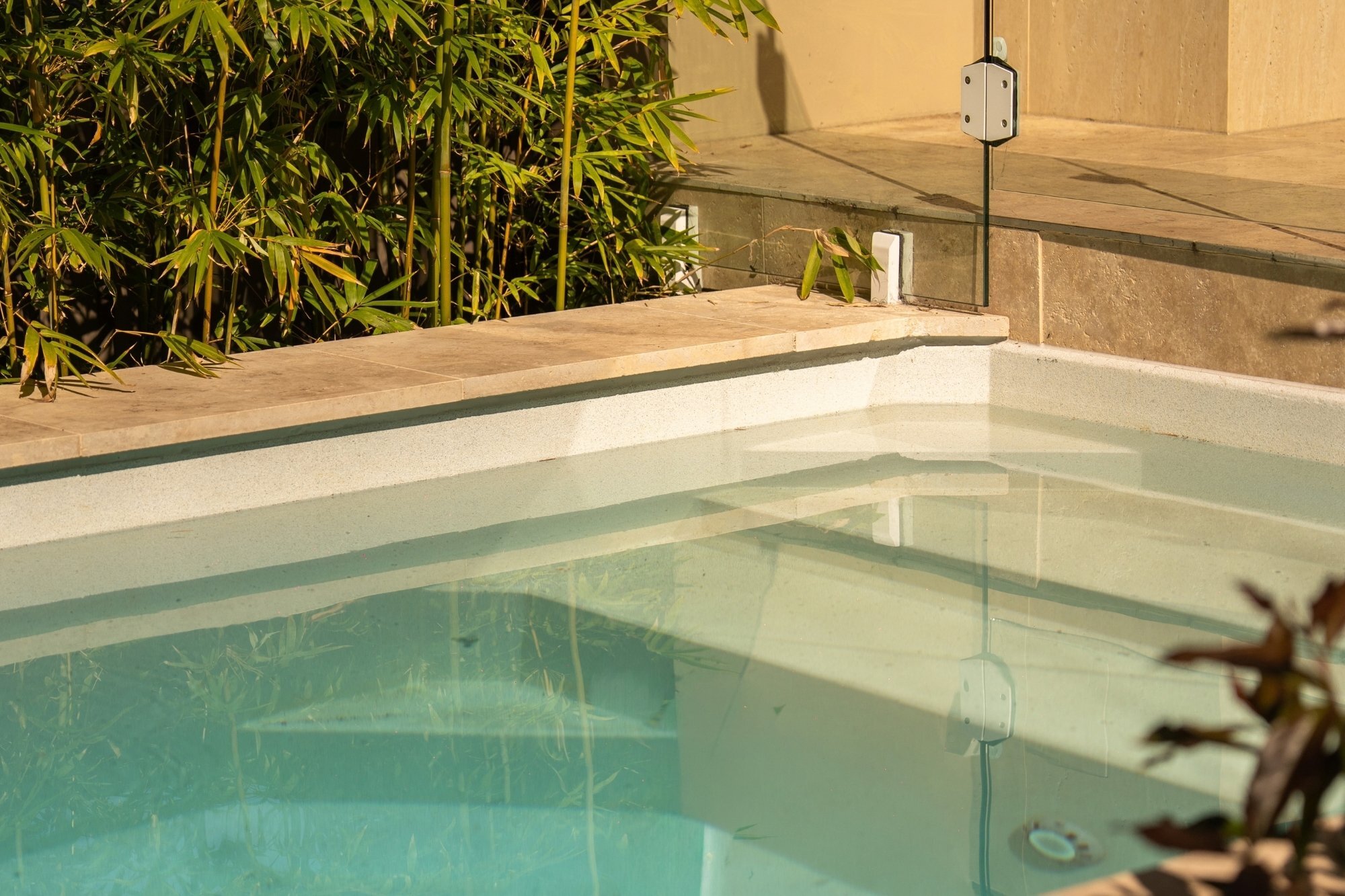
- Minimum barrier height of 1.2m.
- No gaps wider than 100mm, including the gap at the bottom.
- A non-climbable zone around the outside of the barrier.
- Self-closing, self-latching gates that swing away from the pool.
In some states, the wall of an above-ground pool can form part of the barrier if it's tall enough and has nothing climbable on the outside. Queensland, for example, allows this when the wall is at least 1.2m high with no external bracing. Rules vary, so always check with your local council or a pool safety certifier before you finalise the design.
Do you need council approval for an above-ground pool?
In most cases, you will, because a pool that can hold more than 300mm of water is generally treated like any other pool. Expect to need a building permit or approval through your council or a private certifier, plus a final pool safety inspection before you swim.
In Queensland, for example, permanent pools need building approval, must be recorded on the QBCC pool register, and need a pool safety certificate before they can be used.
When an above-ground pool makes the most sense
On the right site, an above-ground pool is often the smartest option rather than a compromise, particularly when you're working with:
- Sloping blocks. A semi-recessed or raised pool turns the slope into a design feature instead of an expensive retaining problem.
- Rock, reactive soils or a high water table. When digging deep is impractical or expensive, going up makes more sense than going down.
- Small yards and courtyards. A raised pool can double as seating, so the pool edge does two jobs in a tight space.
- Renovations and tight timelines. Less excavation means less mess, fewer trades on site and a faster finish.
How to make an above-ground pool look built-in
Plenty of people still picture an above-ground pool as a faded blue wall sitting in the middle of the lawn, but a well-designed one today looks nothing like that. These are the moves that make the difference:
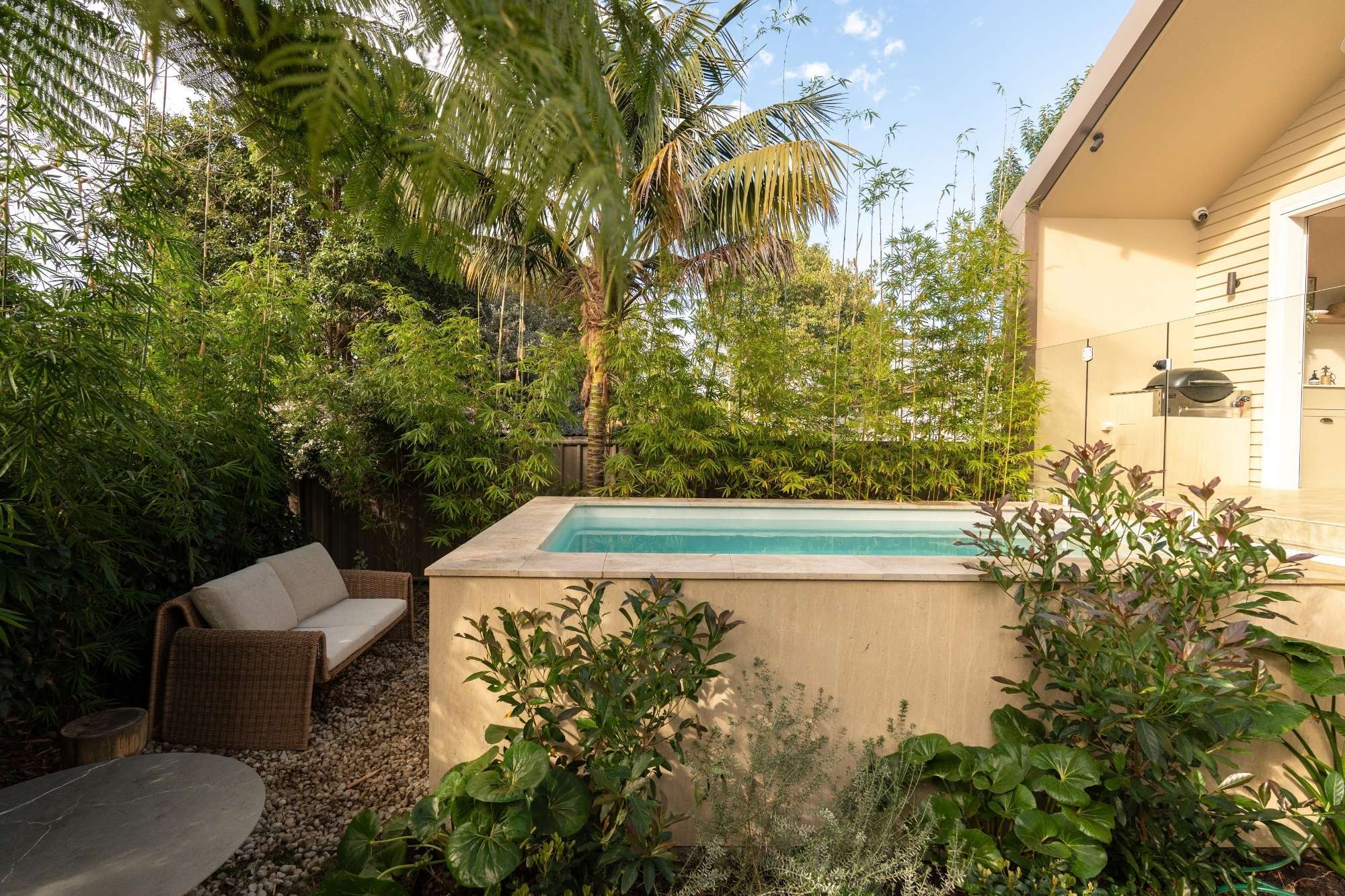
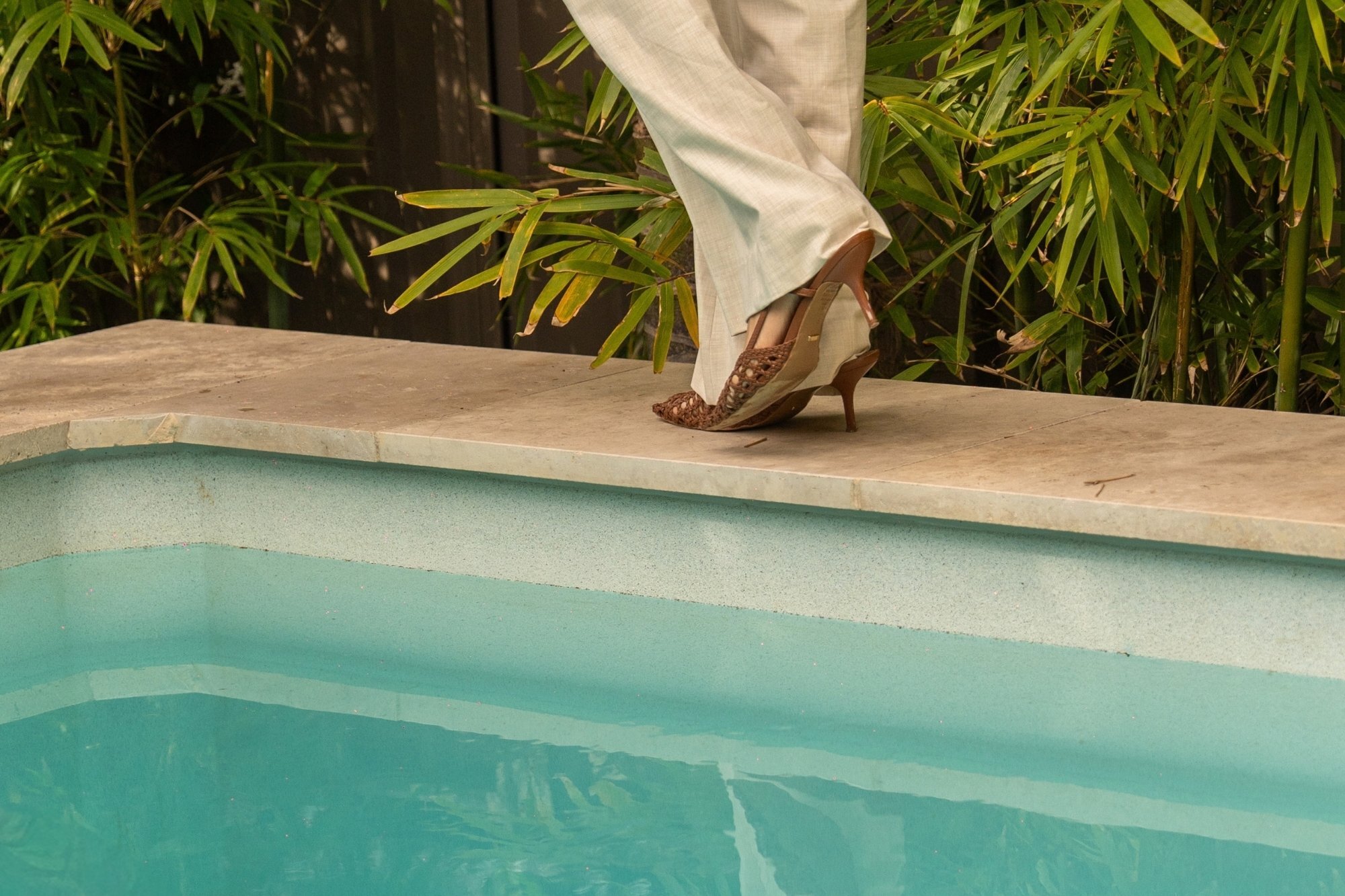
- Clad it. Timber, render, stone or tiles turn the pool walls into a feature, and when the cladding matches the house, the pool reads as part of the architecture.
- Deck up to it. A deck on one or more sides gives you a flush pool edge where you need it and a raised wall where it adds interest.
- Use the edge as seating. At the right height, the pool wall doubles as built-in bench seating.
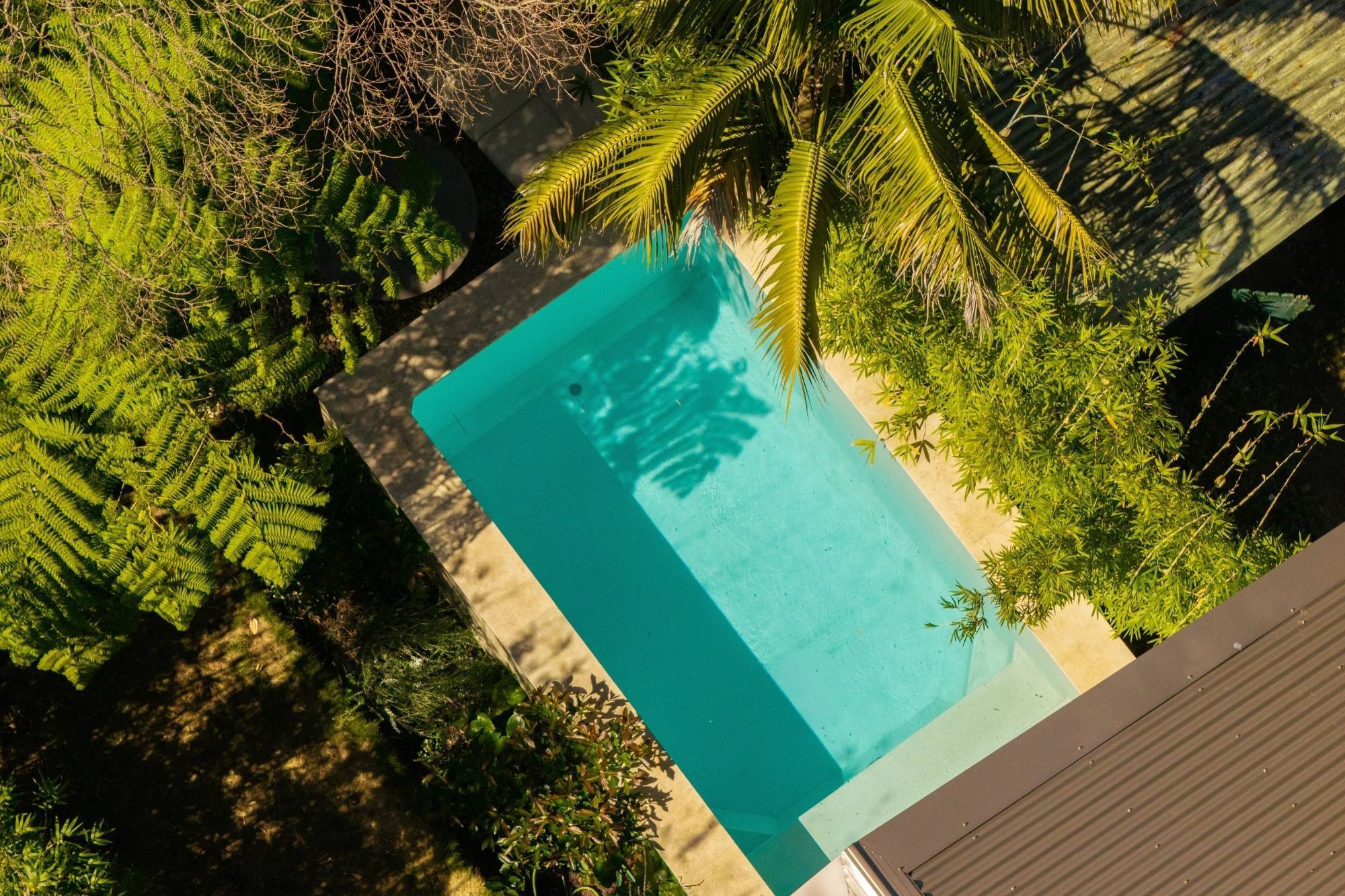
- Landscape around it. Planting at the base softens the walls and ties the pool into the garden. Our pool landscaping ideas cover what works in Australian conditions.
The precast concrete option: above ground, without the compromise
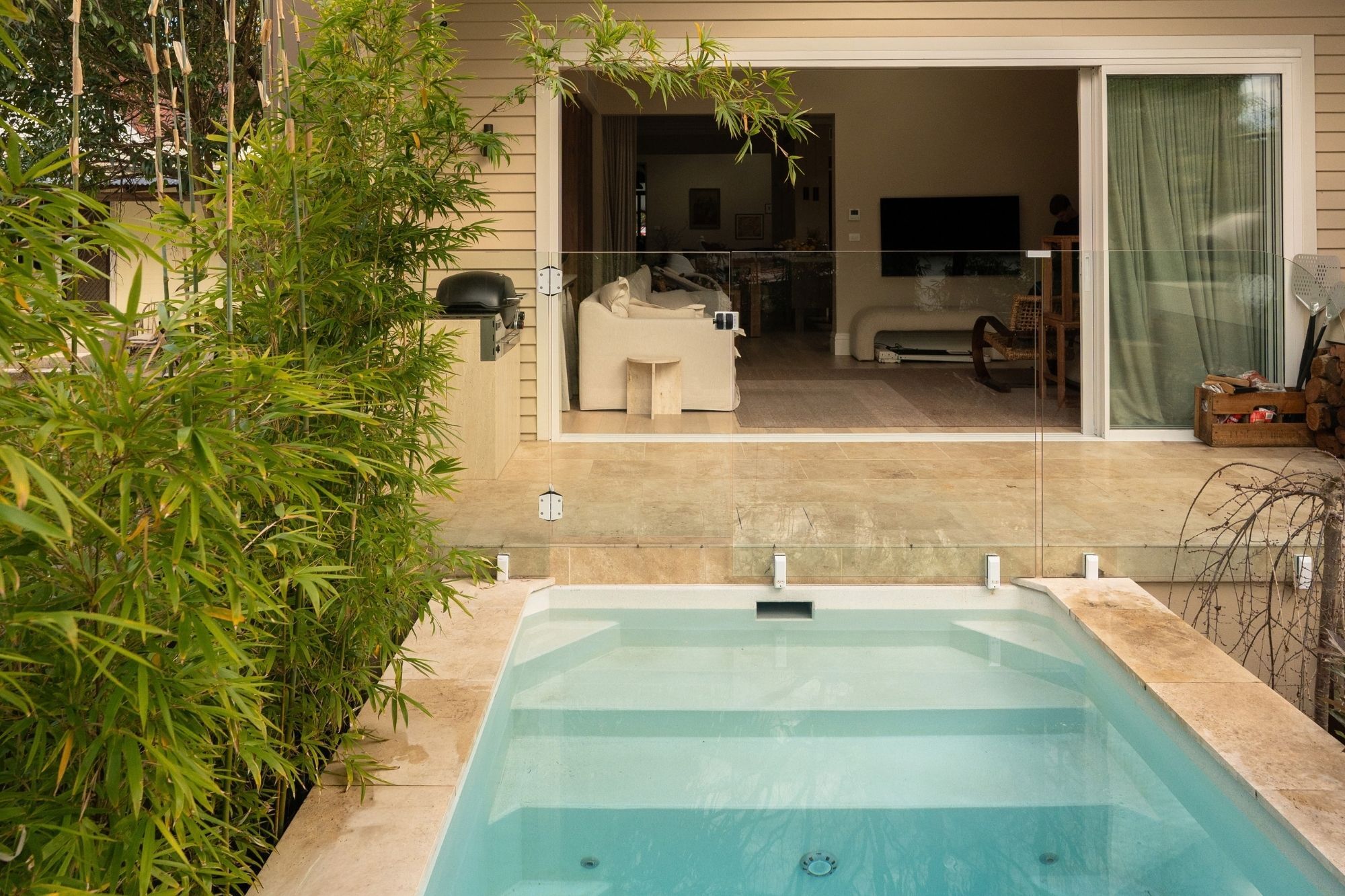
Plungie pools are precast concrete, manufactured in Brisbane and craned onto site as a complete monolithic shell. Because each shell is engineered to stand on its own, every Plungie can be installed in-ground, semi-recessed or fully above ground, so you choose the install that suits your site rather than the other way around.
- Six sizes, from the 2.2m x 2.2m Quad and 3.6m x 2.2m Studio through to the 4.6m x 2.5m Original and 6m x 3m Max, plus two round pools: the new 2.4m Orb (available December 2026) and the 3.5m Arena, our largest round plunge pool. Both make a striking above-ground feature. You can compare every model side by side.
- ecoFinish interior as standard, or a raw concrete shell if you'd rather tile it yourself.
- Installed over 74% faster than a traditional pool and ready to install in as little as 10 days, with the pool craned in and plumbed in a day.
- Tested at a NATA-accredited facility and backed by a 10-year warranty.
- A 61% lower carbon footprint than a traditional concrete pool, verified by an independent lifecycle assessment.
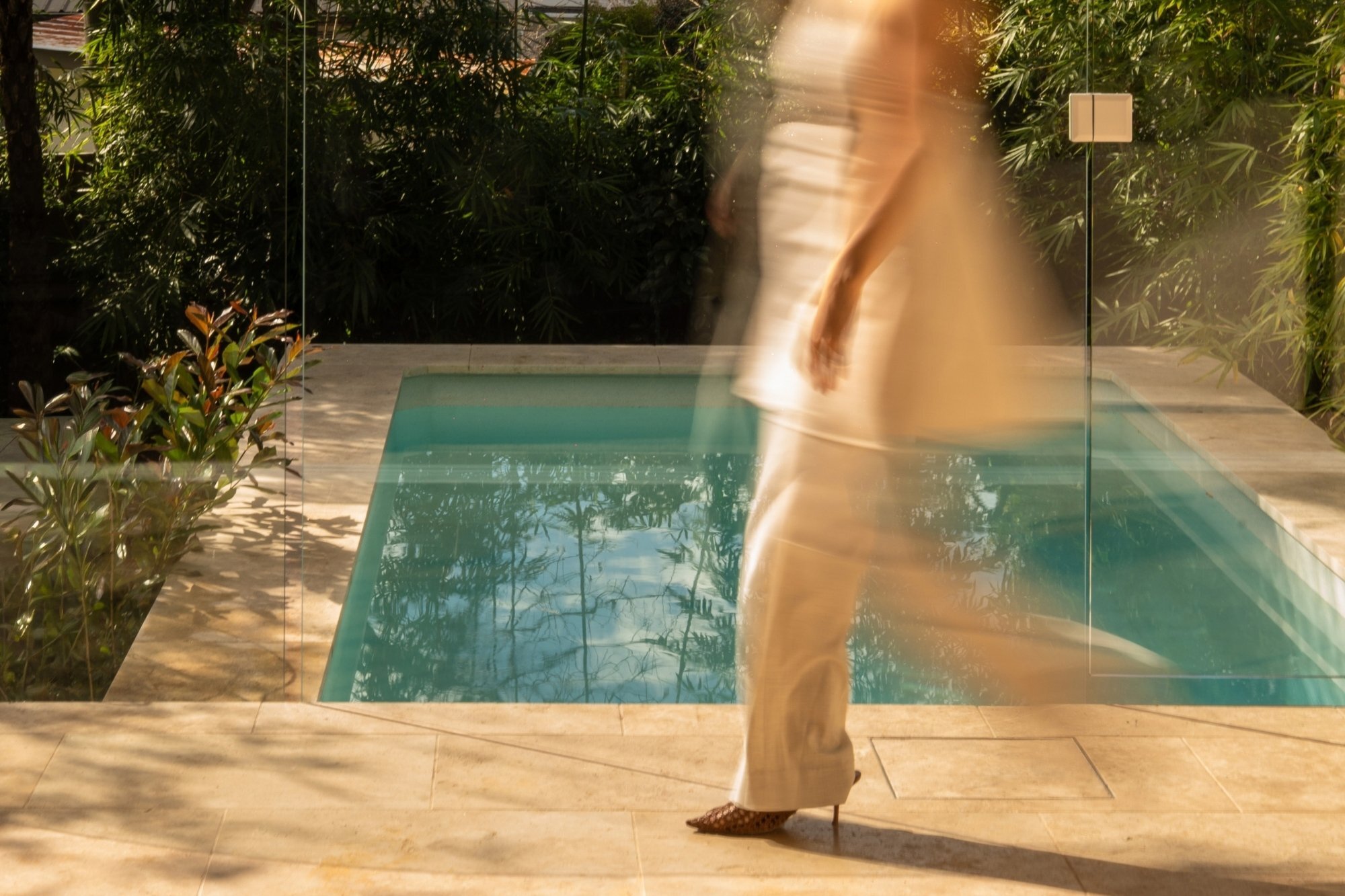
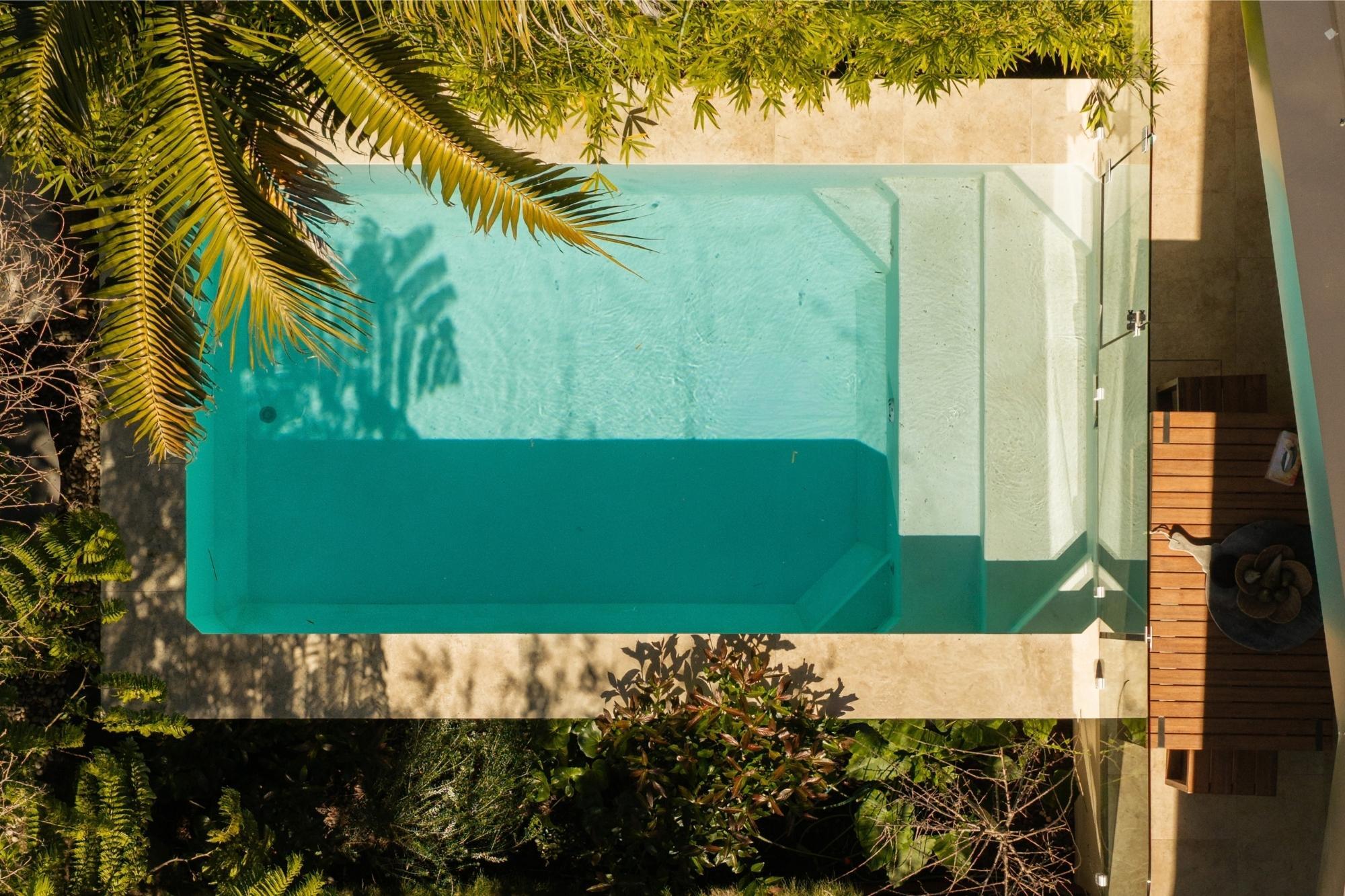
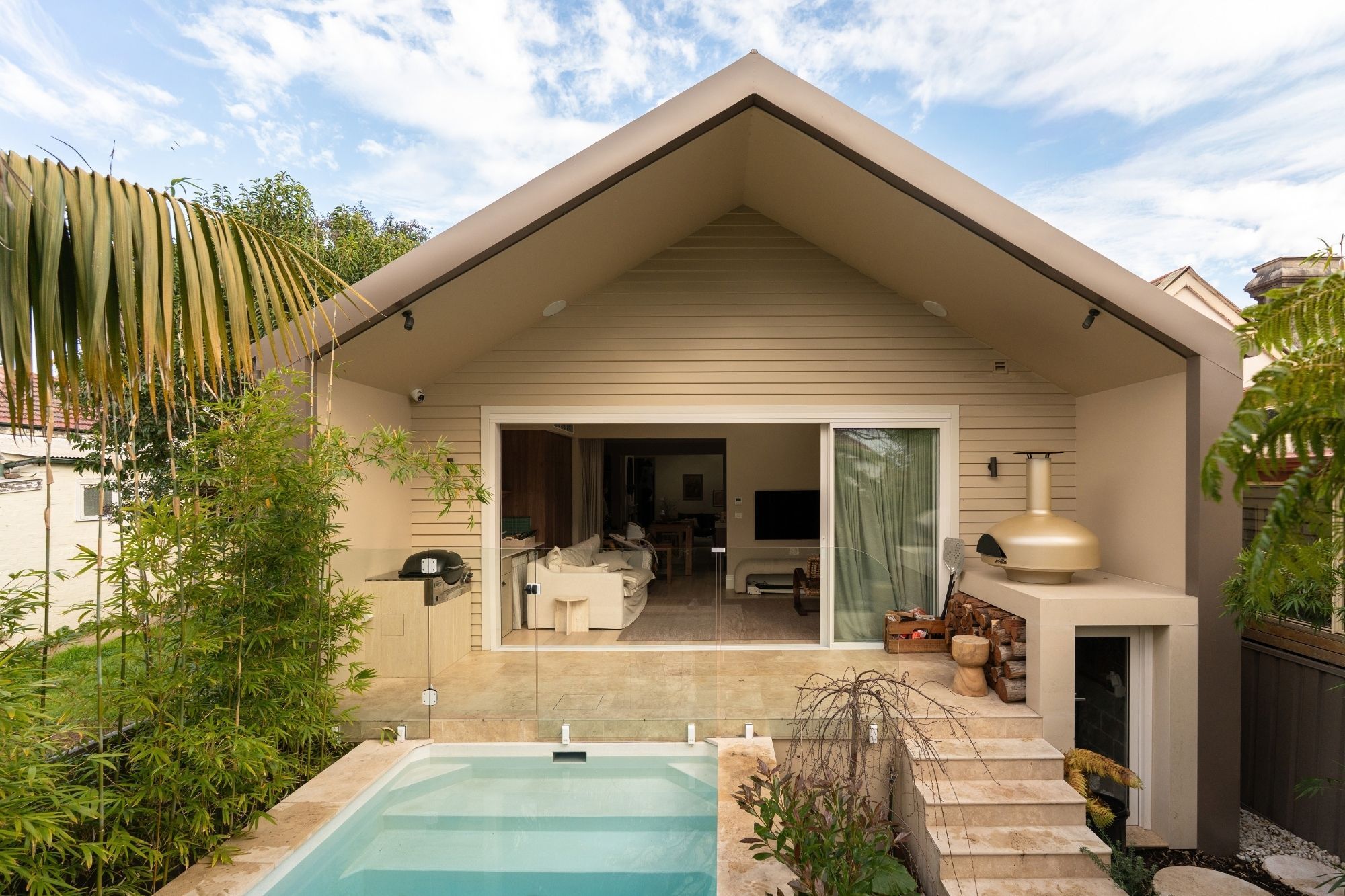
If you want to see it in practice, The Block 2023 winners Steph and Gian Ottavio chose an above-ground Plungie Original for their own family home, the Japandi Estate, finished in Kona Coast with warm beige cladding. The Epizõ Wellness Hub takes the same idea into a commercial bathhouse, and you'll find plenty more above-ground installs in our Project Gallery.
Frequently asked questions
How much does an above-ground pool cost in Australia?
A basic kit pool can start from a few thousand dollars, while a permanent above-ground pool typically costs around $10,000 to $20,000 or more, depending on size, material and site works (Spa World). Fibreglass and precast concrete options cost more but are built as permanent structures. For Plungie pricing, request our price list.
How long does an above-ground pool last?
It depends on the material. Kit and vinyl-lined pools have the shortest lifespan, and their liners need replacing every few years. Permanent fibreglass and precast concrete above-ground pools are built to last as long as an in-ground pool. Every Plungie comes with a 10-year warranty.
Do above-ground pools need a fence in Australia?
Yes. Any pool that can hold more than 300mm of water needs a compliant barrier, including above-ground and inflatable pools. Barriers must be at least 1.2m high and meet AS 1926.1 plus your state's rules.
Can you put an above-ground pool on a sloping block?
Yes, and it's often the best option. A semi-recessed install sits the pool partly into the slope, so the high side is flush with the ground and the low side becomes a clad feature wall, without the cost of major retaining.
Can a concrete pool be installed above ground?
Yes, if it's engineered for it. A precast concrete shell like a Plungie is designed as a standalone structure, so it can be installed in-ground, semi-recessed or fully above ground.
Can I install an above-ground pool myself?
Kit pools are designed for DIY, but permanent pools still need approvals, a compliant barrier and a final safety inspection. Plungie is the manufacturer and supplier, so you can use your own qualified builder, one of our Plungie Partners, or in some states install it yourself as an owner-builder.
Ready to go above ground?
If you've got a slope to work with, a tight courtyard or a backyard you'd rather not dig up, going above ground could be the easiest way to get the pool you actually want. Grab our price list to compare sizes and costs, or find a Plungie installer near you to talk through your site.


