

The pool itself is the easy part. Once the installation is done, the landscaping is what turns a slab of water into a destination. Get it right and the whole backyard feels considered, year-round. Get it wrong, and the pool looks like an afterthought stranded on the lawn.
At Plungie, we work with homeowners, designers and builders across Australia delivering precast plunge pools into compact backyards, established gardens, new builds and renovations. We see what works around a pool and what does not, particularly in the Australian climate, where the planting palette, paving choices and seasonal use all need to handle hot summers, sharp winters and the odd drought year.
Here are ten landscaping ideas worth working into the design brief, with practical notes for what holds up in Australian conditions.
1. Plan The Planting Palette First
Before you choose a single paver or pour the concrete, sketch out how you actually live in the space. Where the sun lands in summer and winter, which way the prevailing wind blows, where you want privacy and where you want sightlines. The planting palette flows from those decisions.
Once you know how the space behaves, group the palette around three layers: structural plants that hold the design year-round, mid-layer shrubs that bring colour and texture, and lower plantings or groundcovers that knit the whole thing together. Two or three carefully repeated plant species will read more considered than ten different one-offs.
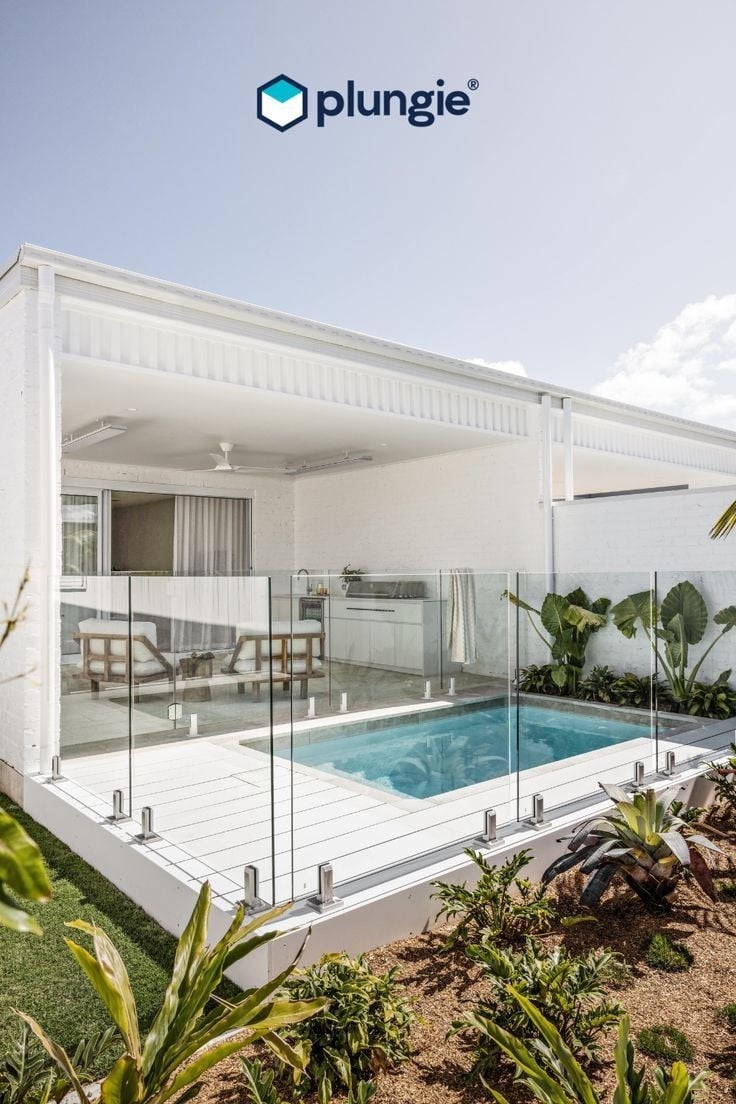
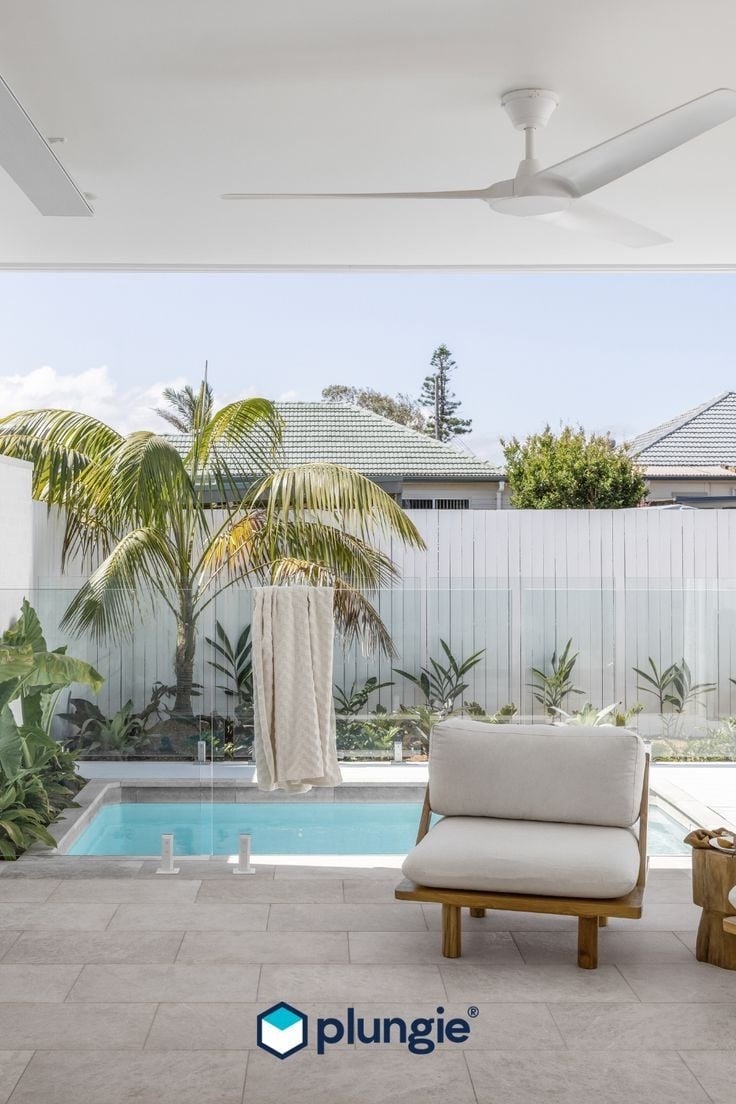
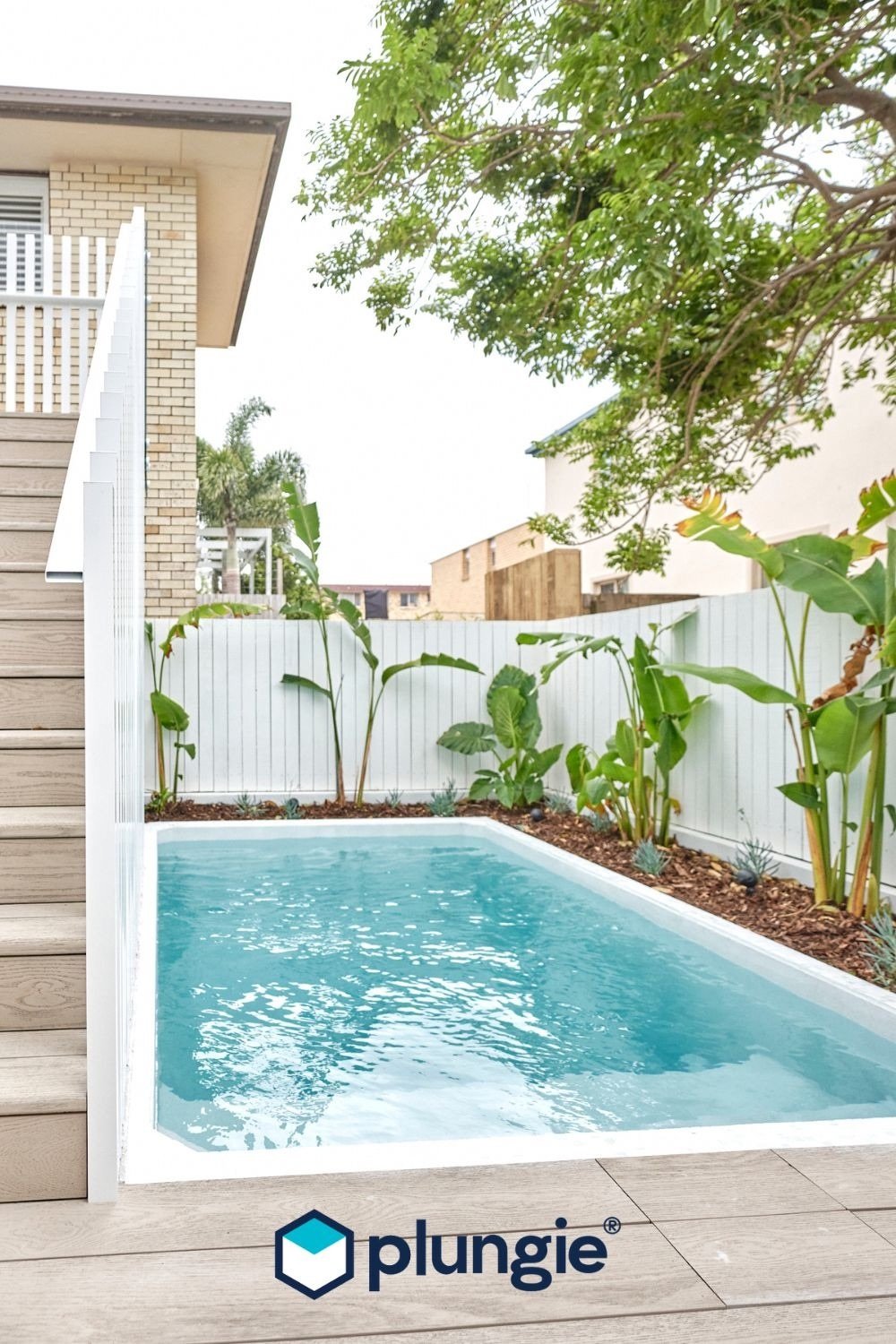
2. Lean Into Australian Natives For Low-Maintenance Impact
Native plants are the obvious win for pool landscaping in Australia. They are built for our climate, they handle heat and dry spells, and most need a fraction of the water and feeding that imported species demand. They also bring birds and pollinators into the backyard, which lifts the whole sensory feel of the space.
Strong picks include lomandra (clumping grass that takes neglect well), kangaroo paw (bold flower spikes in summer), grevilleas (constant flowering, attract honeyeaters), bottlebrush (filtered screening, good for privacy), and dianella (low blue-green foliage with purple berries). For a more architectural look, dwarf coastal banksia or compact callistemon work beautifully against modern hardscape.
3. Tropical Planting For Resort-Style Surrounds
If the look you are after is holiday-resort, lean tropical. Palms, frangipani, cordylines, philodendrons and elephant ears all deliver that lush, layered, year-round green that reads "vacation house" the moment you walk into the backyard.
The catch is the climate match. True tropicals thrive from south-east Queensland upwards, with the NSW/QLD border around Tweed Heads as the practical cutoff. Coastal NSW sits in subtropical territory and can still carry many of the softer species with a bit of care around shelter, drainage and winter cover. Once you drop below Sydney, hardier substitutes hold the look better: cycads in place of palms, strelitzia (bird of paradise) in place of bananas, and structural agaves or yuccas for sculptural form. Pair them with a dark pool finish, and the resort feeling lands easily.
4. Choose Pool Decking That Suits Our Conditions
The surroundings around the pool get walked on barefoot, sat on wet, and exposed to summer UV that destroys cheaper materials in a few seasons. The decking decision is one of the most expensive to undo if you get it wrong, so it is worth taking time at the spec stage.
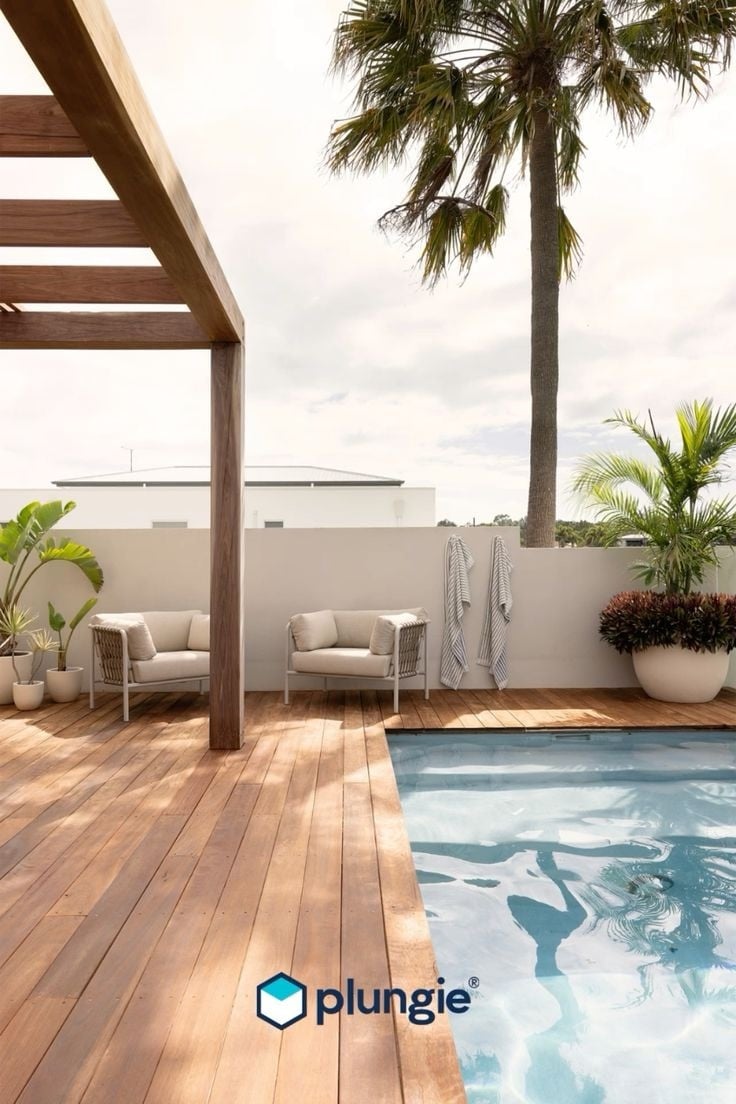
Composite decking is increasingly the go-to for modern pool surrounds in Australia. It does not splinter, it does not fade as fast as natural timber, and the slip-rated boards perform well around water. Hardwood timber decks (spotted gum, ironbark, blackbutt) still look beautiful and weather to a soft silver-grey if you let them, but they need annual oiling to hold their original tone.
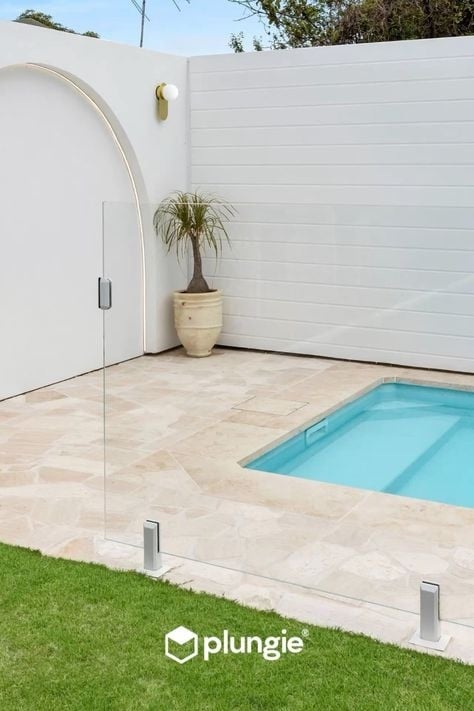
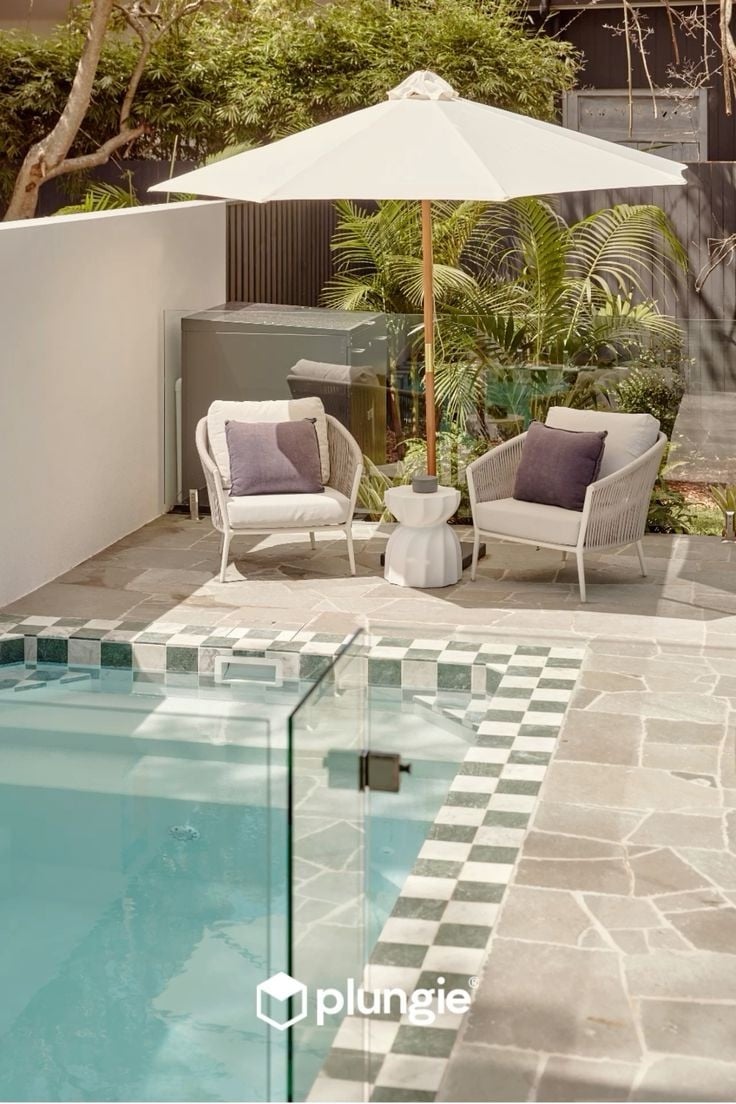
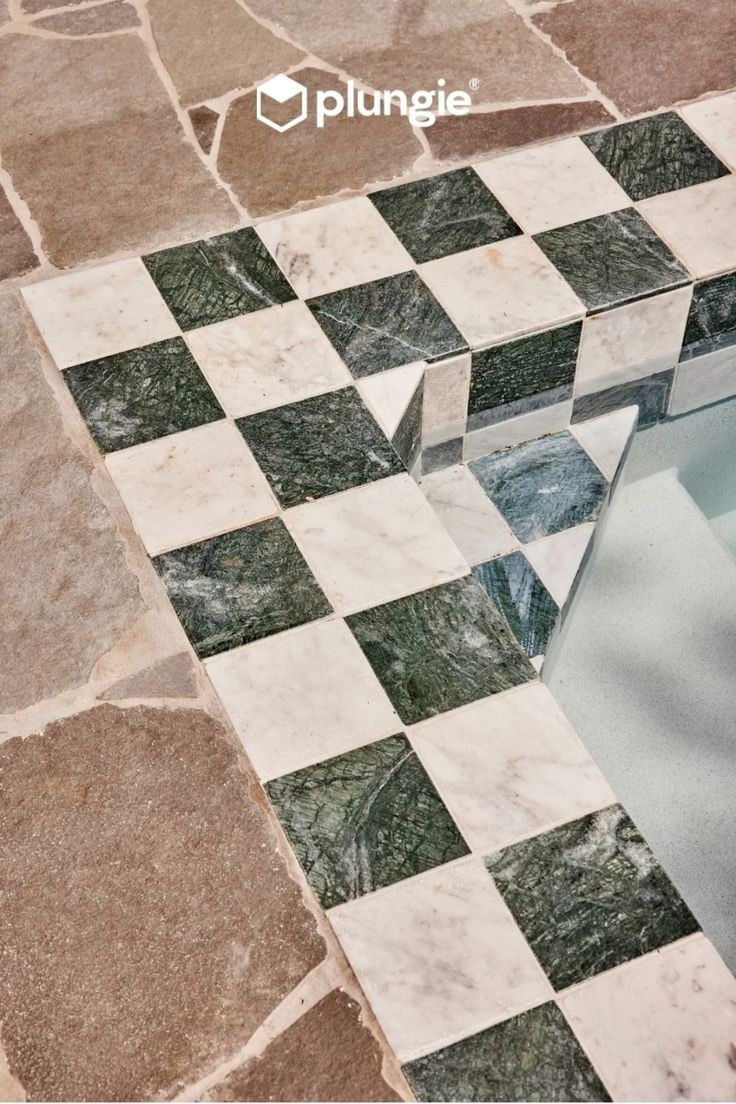
For something cleaner-lined, large-format porcelain or natural stone pavers give a more architectural feel. Travertine, granite and limestone all work, but always specify a slip-rated finish for pool surrounds.
5. Get The Coping And Tile Selection Right
Pool coping is the visible band around the pool edge, and pool tiles are the waterline trim. They are small-area materials that carry an outsized aesthetic load. Spend more here than you think you should.
For modern Australian backyards, three combinations tend to land well:
- Honed limestone or travertine coping with a deep blue glass tile waterline reads classic Mediterranean.
- Bullnose concrete coping with a dark grey or black tile waterline reads clean and architectural.
- Natural-edge stone with a pebble or mosaic waterline reads organic and resort-like.
The Plungie range comes in six ecoFinish colours, including Kona Coast, Sahara Sand, Blue Lagoon, Mediterranean Blue, Grey Reef and French Grey, which gives you a clean starting point for choosing the coping and surround materials that will sit alongside it.
6. Layer Pool Lighting For Evening Atmosphere
Pool lighting in Australia is a four-part conversation. Underwater pool lights make the water itself the focal point at night. Ambient lighting (in planting beds, along paths, and washing fence lines) gives depth to the space. Task lighting around outdoor cooking, lounges or seating makes the backyard usable after dark. And feature lighting (uplighting trees, accent lights on a sculptural plant or wall) adds a sense of theatre.
Warm white LEDs (2700K-3000K) are the safe choice for ambient and feature lighting. Underwater pool lights are typically colour-changing RGB now, but the soft-white setting is usually the most flattering for evening entertaining.
The trick is restraint. Three or four well-placed light sources at varying heights make the space feel considered. Ten ground spikes on a circuit make it feel like a service station.
7. Add A Water Feature That Earns Its Place
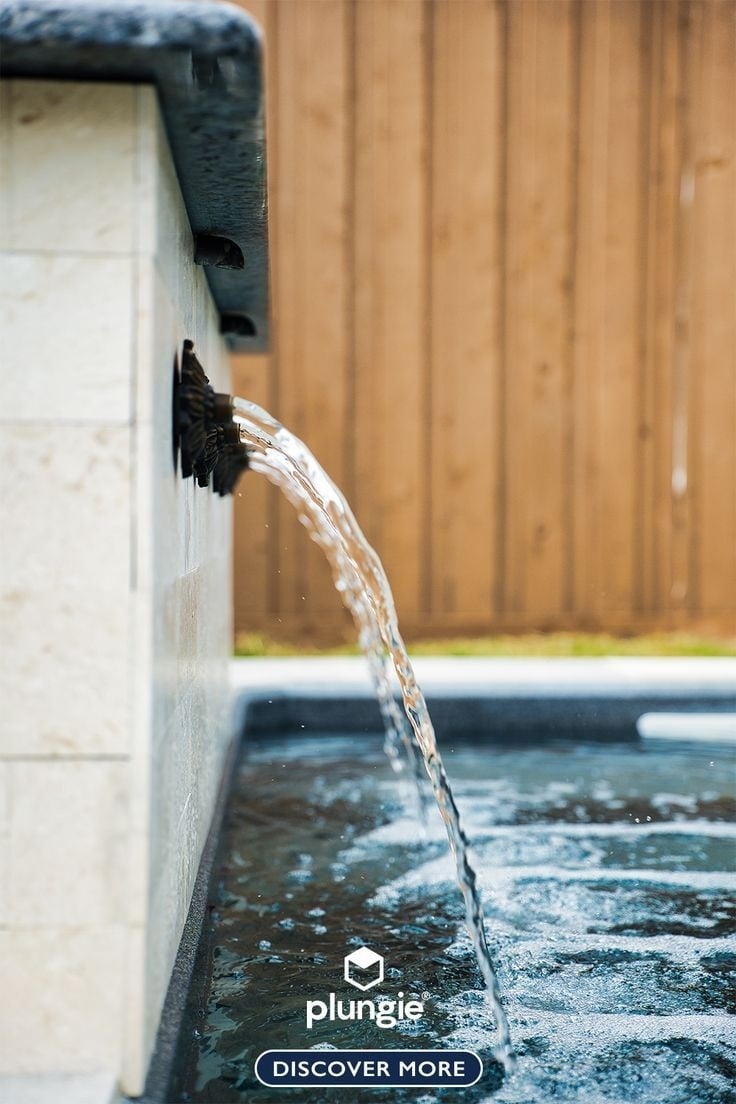
A water feature should do more than fill the space. It should add sound, movement or visual focus that the pool itself does not. A spillway from a raised planter into the pool delivers a soft cascading sound and a strong visual line. A sheer descent waterfall from a feature wall reads architectural. A small ceramic bowl fountain set into the planting brings movement at a low scale.
Avoid the temptation to over-feature. A pool with two waterfalls, a spa jet and an ornamental fountain reads busy. One well-considered feature is plenty.
8. Solve Privacy Without Closing In The Space
Pool zones are open by nature, but most backyards need some privacy treatment for neighbours, side fences and overlooking windows. The best privacy solutions add design value as well as blocking sightlines.
Horizontal slatted timber screens, modular block walls in white or grey render, or living screens of bamboo, lillypilly or murraya all work. For a softer look, layer a taller plant species (like clumping bamboo or feature trees) behind a lower hedge so the screen reads as planting.
If a solid wall is the right call, a feature finish (limewash, breeze blocks, stack stone) turns it into a design element.
9. Make Small Spaces Work Harder
Small backyards are where landscaping decisions earn the most. Every square metre is doing double duty, and the design has to work harder for it.
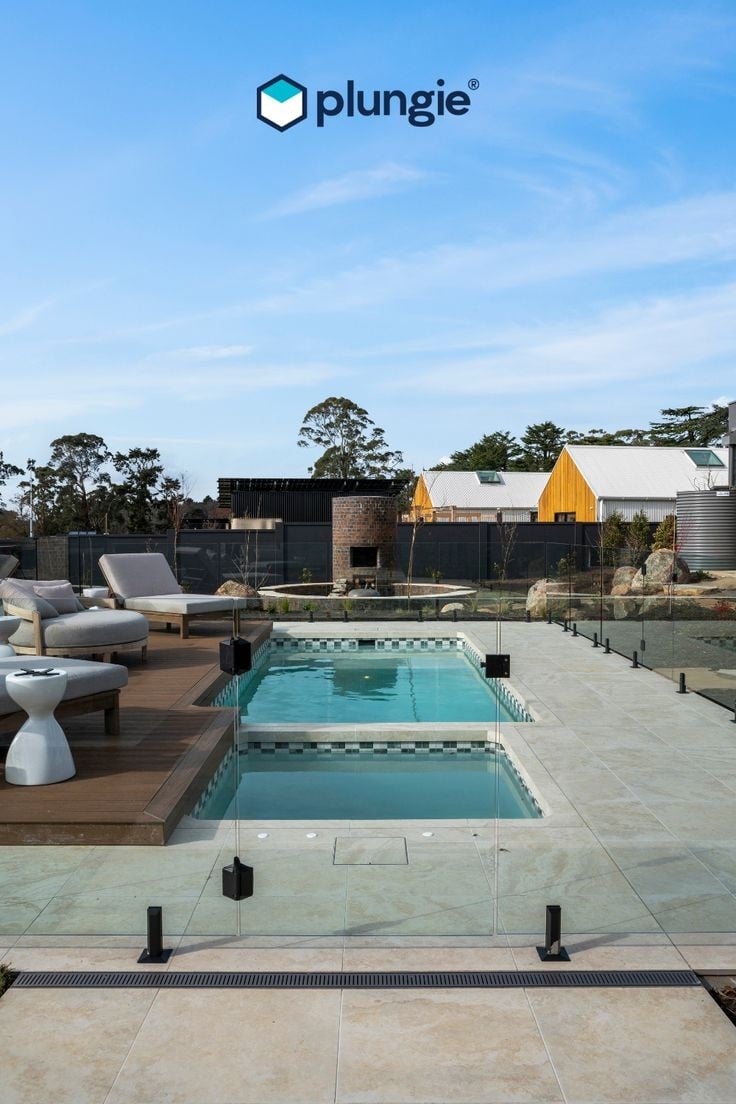
Container planting is the secret weapon: large statement pots with structural plants (yucca, agave, frangipani, olive) bring height and presence without demanding garden bed space. Vertical gardens turn a blank rendered wall into a planted feature. Built-in bench seating with hidden storage doubles as a planter edge. Stepping pads through a softscape area visually extend the usable space.
ThePlungie Quad (2.2m by 2.2m) andPlungie Studio (3.6m by 2.2m) are built for exactly these compact backyards, with footprints that leave room for the landscaping to breathe.
10. Finish With A Focal Point
Every pool zone benefits from one focal element that gives the eye somewhere to land. It might be a sculptural tree (frangipani, Japanese maple, multi-trunk crepe myrtle), a feature wall finish, a fire pit area, an outdoor bath, a sculptural pot, or a piece of outdoor art.
Sometimes the pool itself does the work. A round pool like thePlungie Arena (3.5m diameter) reads as a sculptural piece in its own right against square-cut paving and modern hardscape, which frees the surrounding planting and finishes to sit quietly around it.
The trick is to commit to one. Two focal points compete. A single focal point lets the rest of the landscaping play a supporting role, which is what produces the calm, considered feel that the best pool zones have.
Bringing It Together Around A Plunge Pool
The compact footprint of a precast plunge pool gives you more landscaping options than a traditional pool, with less water surface taking up the backyard and more room for considered planting, a generous deck, a feature wall, or all three.
Plungie pools are installed in around 14 days compared to 52 days for a traditional in-ground concrete pool, which means the landscaping trades can move in much sooner without long gaps in the build program. Every Plungie also comes with a 10-year structural warranty, so the design work built around the pool holds up over the same horizon as the pool itself. For new builds and renovations alike, that timeline saving is the difference between a backyard that comes together cleanly and one that drags on for months.
If you are weighing up landscaping around a plunge pool and want to talk through what fits the space, the Plungie team is happy to walk it through with you.


.jpg?width=325&height=163&length=500&name=plungie-1%20(1).jpg)
.jpg?width=325&height=163&length=500&name=Keats%20St%20-%20Project%20gallery%20page%20(4).jpg)
