<img height="1" width="1" style="display:none;" alt="" src="https://ct.pinterest.com/v3/?event=init&amp;tid=2612978883784&amp;pd[em]=<hashed_email_address>&amp;noscript=1">
— 07 May, 2026

Partial Inground Pools: What They Are, Costs and Why They're Worth It

A partial inground pool (also called a semi-inground pool) sits partly in the ground and partly above it. It's one of the most practical installation options available in Australia, especially if your block is sloped, has rocky soil, or doesn't suit a full excavation.

And yet, it's one of the most misunderstood. Some homeowners assume a semi-inground pool is just a cheap above-ground pool buried a few feet. Others think it's a compromise, something you settle for when you can't afford a "real" pool. Neither is true.

Here's what a partial inground pool actually is, what it costs, and why it's worth considering for your backyard.

What Is a Partial Inground Pool?

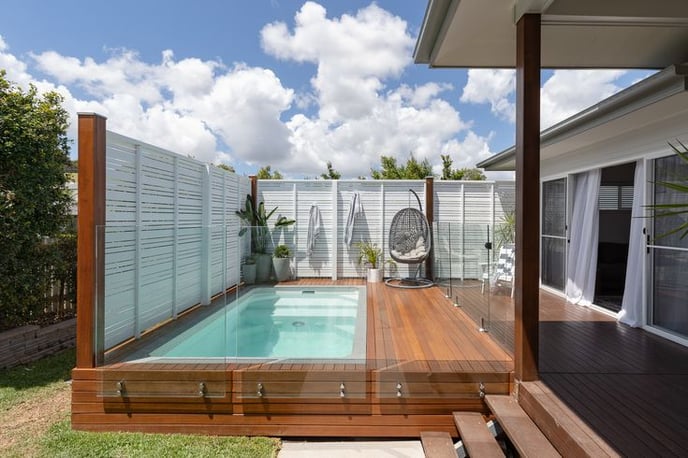
A semi-inground pool is any pool installed with part of its structure below ground and part above. How much sits above ground depends on your site and your design preference. Some are sunk with just 300mm to 500mm exposed. Others are raised a metre or more, with the exposed walls becoming a deliberate design feature.

In Australia, there are two broad categories:

  • Above-ground pool kits partially buried: These are standard above-ground pools (steel wall, vinyl liner) sunk into the ground to look more permanent. They're the cheaper option ($7,000 to $20,000), but they're not built to inground structural standards. Typical lifespan is 7 to 15 years, and design options are limited to round or oval shapes.

  • Inground-quality pools installed semi-recessed: These are concrete (custom or precast), fibreglass, or composite pools built to full inground standards but intentionally positioned with part of the structure above ground. The exposed walls are clad in stone, timber, tile, or rendered block. These are permanent, durable structures designed to last 25 to 50+ years.

Both are technically semi-inground pools, but they're very different products. The rest of this article focuses on the inground-quality version.

Why Choose a Semi-Inground Pool?

Plungie® Arena _ Concrete Plunge Pool


Your block makes full excavation difficult

This is the number one reason Australian home owners go semi-inground. Sloping blocks, rocky ground, high water tables, and sites with limited machine access all make digging a full-depth hole expensive and complicated. A semi-inground installation reduces how deep you need to excavate, which can save thousands.

On a sloping block, a semi-inground pool works with the natural grade. The uphill side sits at ground level while the downhill side is raised, with a retaining wall or cladding creating a finished look. This is far more cost-effective than cutting and filling an entire slope to create a level site for a fully inground pool.

You want the pool to be a design feature

A fully inground pool sits flush with the ground. Clean, but flat. A semi-inground pool has visible walls, and those walls become part of the design. Clad them in natural stone for a premium, architectural look. Wrap them in hardwood timber for a warm, coastal feel. Render and paint them to match the house.

The raised edge also creates natural built-in seating around the pool's perimeter. No separate bench or lounge chairs needed.

You want less disruption during construction

With a fully inground pool, you have an open excavation on your property for weeks. With a precast concrete plunge pool installed semi-recessed, the pool shell arrives on a truck and is craned into place in a single day. The construction cover goes on, and your builder can continue working around it safely. Less time as a construction site and less disruption to your household.

Plunge pools are naturally suited to semi-inground installation

Plunge pools and semi-inground installation go hand in hand. Because plunge pools are compact (typically 2m to 6m), the exposed wall heights are manageable, the cladding costs are proportional, and the finished result looks intentional rather than over-engineered. This is why semi-recessed plunge pools have become one of the most popular pool installations across Australian backyards in recent years.

What Does a Semi-Inground Pool Cost in Australia?

Type

Installed Cost (AUD)

Lifespan

Best For

Above-ground kit (partially buried)

$7,000 - $20,000

7 - 15 years

Budget projects, gentle slopes

Fibreglass (semi-recessed)

$35,000 - $65,000

25 - 30 years

Quick install, low maintenance

Precast concrete (semi-recessed)

$35,000 - $70,000

50+ years

Sloping blocks, design flexibility, durability

Custom concrete (raised with retaining walls)

$60,000 - $120,000+

50+ years

Fully custom shapes, complex sites

The costs specific to semi-inground installation

On top of the pool itself, semi-inground builds have some line items that fully inground installations don't:

  • Wall cladding or rendering on exposed sides: $3,000 to $15,000+, depending on material and height. Natural stone is the most expensive, rendered block is the most affordable, and timber sits in between.

  • Retaining wall (if needed on the buried side): $2,000 to $20,000+, depending on height and length. On a steep slope, this can be a high cost.

  • Decking: $10,000 to $25,000+. A timber or composite deck that wraps around a raised pool is one of the most popular semi-inground design approaches in Australia.

  • Fencing: Mandatory across every state and territory. Frameless glass from around $350 per linear metre, aluminium from around $180 per linear metre.

  • Council approval: Required for any pool with a depth of 300mm or more. Budget $200 to $500 for fees. Precast pool suppliers like Plungie provide pre-engineered specifications and preliminary engineering drawings to simplify the approval process.

Materials: What Works Best for Semi-Inground?

1. Fibreglass

Fibreglass pools are a popular mid-range option for semi-inground installation. The one-piece shell installs quickly, the smooth surface resists algae, and ongoing maintenance is lower than concrete. There is a structural caveat though. Standard fibreglass shells aren't self-supporting and rely on backfill or an engineered support system (retaining walls, bond beams, or rib frames) when installed semi-recessed or raised. Some manufacturers, including Compass Pools (Maxi Rib) and Nordic Plunge Pools, offer purpose-engineered shells that can be raised without backfill, but this is an upgrade rather than a default. The other limitation is shape: you're choosing from the manufacturer's available moulds.

2. Concrete (custom and precast)

Concrete is the most durable option and offers the most flexibility for semi-inground installation. Custom concrete (shotcrete) allows any shape and size, but takes 8 to 16 weeks and costs more. Precast concrete pools are manufactured in a factory and craned into place, making them particularly well-suited to semi-recessed installation because the pool shell arrives as a finished, structurally certified unit.

Our precast concrete pools are built in Australia and can be installed in-ground, above ground, or semi-recessed. For a semi-inground installation, the pool is craned onto a prepared base, partially backfilled on the buried side, and the exposed walls are finished with your choice of cladding. All five of our models, from the Quad (2.2m x 2.2m) through to the Max (6m x 3m), can be installed this way.

3. Steel wall with vinyl liner

The most affordable semi-inground option, but also the least durable. Steel-wall pools are above-ground kits designed to be partially buried. Not all are rated for semi-inground use, so check the manufacturer's specifications. The liner needs replacing every 7 to 10 years, and design options are limited to round or oval shapes.

Semi-Inground Pool Design Ideas

The deck-wrap

Build a timber or composite deck level with the top of the pool so it reads as a fully inground pool from deck height. From the garden below, the raised structure with cladding becomes an architectural feature. This is one of the most popular semi-inground designs in Australia, particularly on sloping blocks where the deck creates a level entertaining area.

The stone-clad retaining wall

Use natural stone or stacked stone veneer on the exposed pool walls. This looks particularly strong when the pool is raised 600mm to 1.2m above grade. Add LED lighting along the base of the wall or under the coping for a premium look after dark.

The rendered and planted wall

Render the exposed pool walls to match the house, then run a raised garden bed along one or more sides. The combination of the rendered wall and lush planting softens the look and integrates the pool into the garden rather than making it feel like a standalone structure.

The above-ground feature pool

Raise the pool fully above ground and clad all four sides. This eliminates excavation entirely and works on sites where digging is impractical (solid rock, tree root zones, easements). Timber or composite cladding with a wide timber cap on top gives you built-in seating on every side.

Installation: What to Expect

  • For precast concrete: The site is prepared with a partial excavation or a level base (depending on how much of the pool will sit below ground). The pool shell is craned into place, typically in a single day. The buried side is backfilled, the exposed side is clad, and plumbing and electrical are connected. Total project timeline: roughly two weeks.

  • For fibreglass: Similar to precast. The pre-manufactured shell is delivered and positioned by crane. Backfill, finish the exposed walls, and connect equipment. Timeline: one to three weeks.

  • For custom concrete: Excavation, retaining wall construction, steel reinforcement, shotcrete application, 28-day curing period, interior finish, equipment connection. Timeline: 8 to 16 weeks.

Frequently Asked Questions

What is the difference between a semi-inground pool and an inground pool?

The only difference is positioning. An inground pool is installed entirely below ground level. A semi-inground pool has part of its structure above ground, with the exposed walls finished in cladding, stone, timber, or rendered block. If built with the same materials (concrete or fibreglass), they share the same durability and lifespan.

Are semi-inground pools cheaper than fully inground pools?

Not always. Above-ground kits installed partially in the ground are significantly cheaper ($7,000 to $20,000). But a premium semi-inground pool built with concrete or fibreglass can cost the same as, or slightly more than, a fully inground pool because of the additional wall cladding and finishing required on the exposed sides. The savings typically come from reduced excavation on difficult sites.

Do I need council approval for a semi-inground pool in Australia?

Yes. Any pool or spa with a depth of 300mm or more requires a building permit and compliant safety fencing, regardless of how it's installed. Requirements vary by state and territory.

Which material is best for a semi-inground pool?

Concrete (including precast) is the most durable and offers the most flexibility in how you finish the exposed walls. Fibreglass is a strong mid-range option that installs quickly and requires less ongoing maintenance. Steel-wall pools are the most affordable but have a shorter lifespan and fewer design options. Your choice depends on budget, site conditions, and how long you plan to stay in the home.

Can any pool be installed semi-inground?

Not every pool is designed for it. Above-ground kits need to be specifically rated for semi-inground use. Precast concrete pools are particularly well-suited because the shell arrives as a finished, structurally certified unit that can be partially backfilled or raised without additional engineering. Fibreglass pools can also be installed semi-inground, but the shell typically needs supporting backfill or an engineered frame on the exposed side, so check the manufacturer's specs. Custom concrete can be built semi-inground but adds engineering complexity and cost.

Is a semi-inground pool good for a sloping block?

This is one of the best use cases. Rather than levelling the entire block (which is expensive and disruptive), a semi-inground pool works with the existing grade. The uphill side sits at ground level, the downhill side is raised, and the result often looks more natural than a fully inground pool on a levelled site.

See How It Looks in Practice

Browse our Project Gallery to see real semi-recessed installations across Australia, or compare all five pool models to see which size suits your space. Every Plungie can be installed in-ground, above ground, or semi-recessed.


In need of some inspiration for your next project?

JHMHF 2026 - landing page (16)

                                                                                                                                                                                    The James Hardie Modern Homes Forecast 2026 has arrived - the third annual research report designed to inspire homeowners and trade professionals alike with insights into the latest trends shaping modern home design.

At Plungie, we know great outdoor spaces start with great inspiration. That’s why we’re proud to partner with James Hardie to help our customers explore emerging design trends and bring contemporary backyard visions to life.

From modern materials and finishes to seamless indoor-outdoor living, we’re excited to see how these trends influence the next generation of home and backyard transformations.

Topics
Author
Binod
My biography

Media

For all media and advertising enquiries,
please contact:
media@plungie.com