

Above Ground Pools
Engineered precast concrete pools designed for permanent above-ground installation. Six models. Six ecoFinish colours. Made in Australia. Installed in days, not months.
Request Price List
Our Above Ground Pool Range
Most above-ground pools you see in Australian yards are seasonal kit pools with vinyl liners and steel frames. We build something different. Plungie pools are steel-reinforced precast concrete shells manufactured in Brisbane and delivered as finished products, ready to install above ground as permanent architectural features. Every model in our range can be installed fully above ground on a prepared base pad.
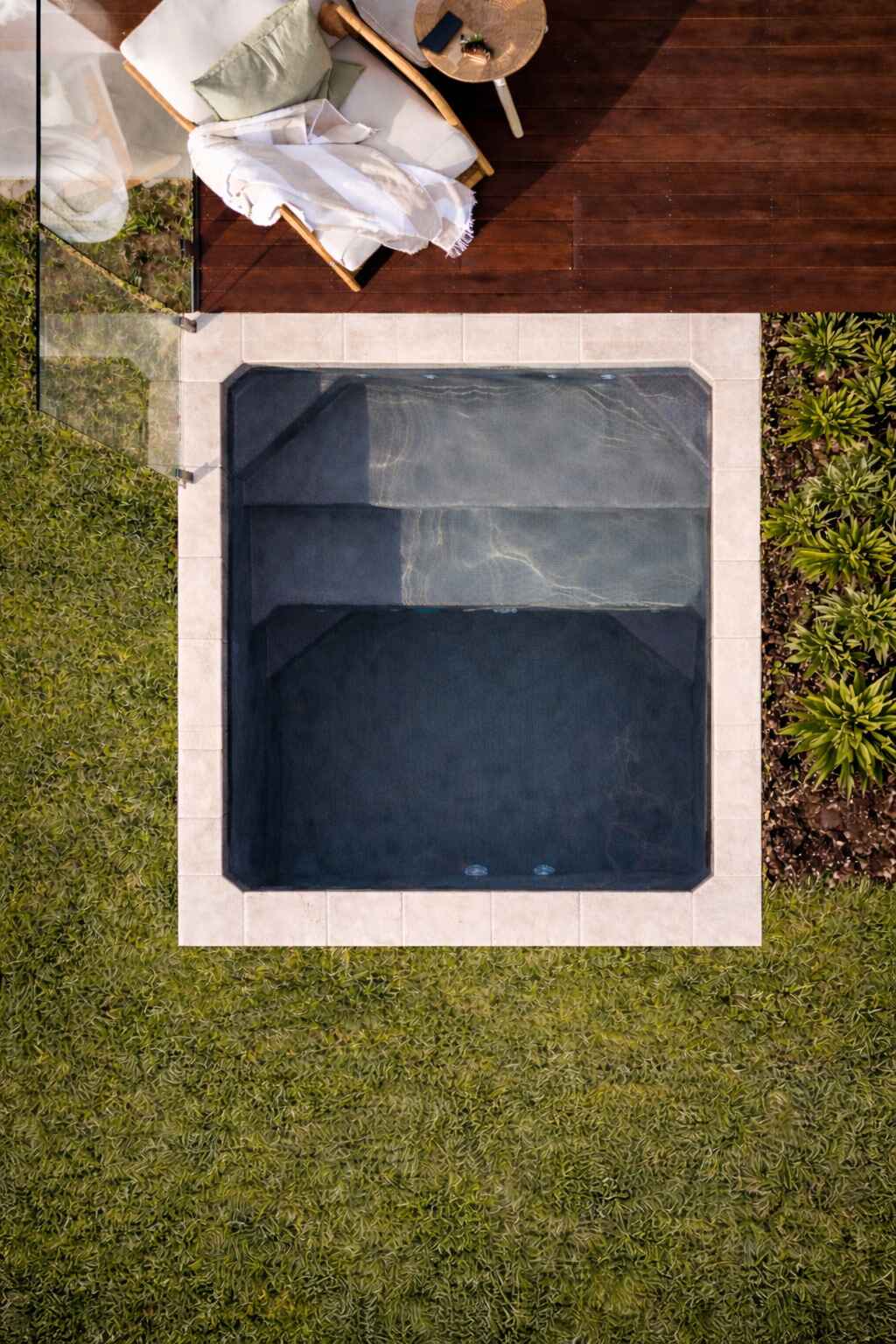
Plungie Quad
Dimensions: 2.2m x 2.2m
Depth: Suits hot or cold plunge configuration
Best for: Home wellness setups, cold plunge, courtyards, apartments
Plungie Orb
Dimensions: 2.4m round
Best for: Courtyards, small backyards, wellness setups, compact round design
Available: From December 2026

Plungie Arena
Dimensions: 3.5m round
Depth: 1.35m
Best for: Compact yards, contemporary round design, front yards, our largest round plunge pool

Plungie Studio
Dimensions: 3.6m x 2.2m
Depth: 1.35m
Best for: Inner-city blocks, side yards, first-time pool owners

Plungie Original
Dimensions: 4.6m x 2.5m
Depth: 1.35m
Best for: Family homes, everyday use, the classic Aussie plunge pool footprint

Plungie Max
Dimensions: 6m x 3m
Depth: 1.5m
Best for: Entertaining, larger blocks, 4m² of bench space, the world's largest monolithic precast concrete pool

Get the Full Plungie Info Guide
Every model, every option, every step.
Real Above Ground Plungie Installations
Every above-ground Plungie project starts with the same question: what will this actually look like on my block? The gallery is the fastest way to answer it.
 Ocean View Road (Plungie Quad x2)French Grey · QuadView project →
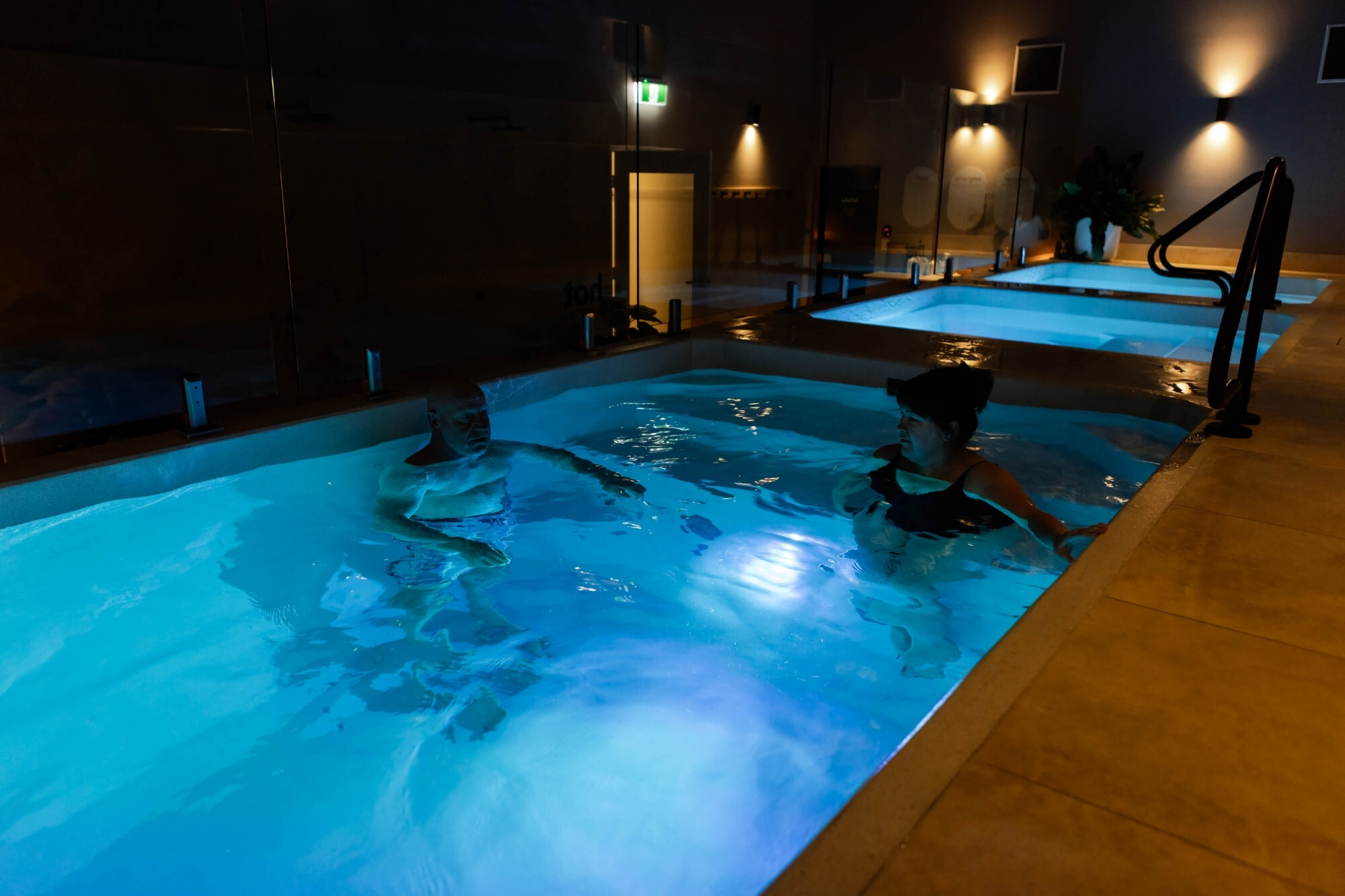 Epizõ, Wellness Hub (Plungie Quads + Studio)Kona Coast · QuadView project →
 The Block 2024, House 1 (Plungie Studio)Kona Coast · StudioView project →
 Casa Cove (Plungie Max)Grey Reef · MaxView project →
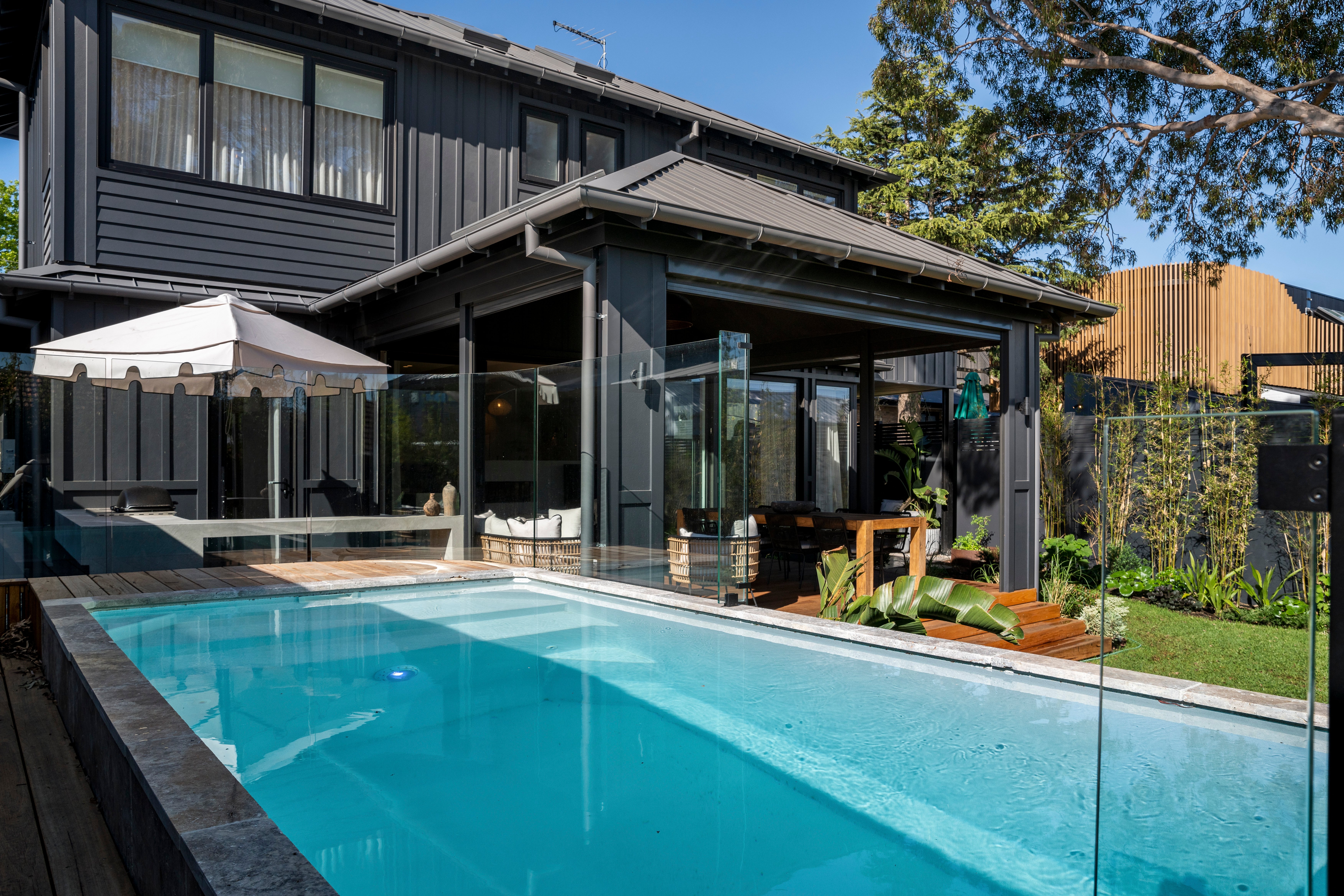 The Block 2023, House 4 (Plungie Original)Kona Coast · OriginalView project →
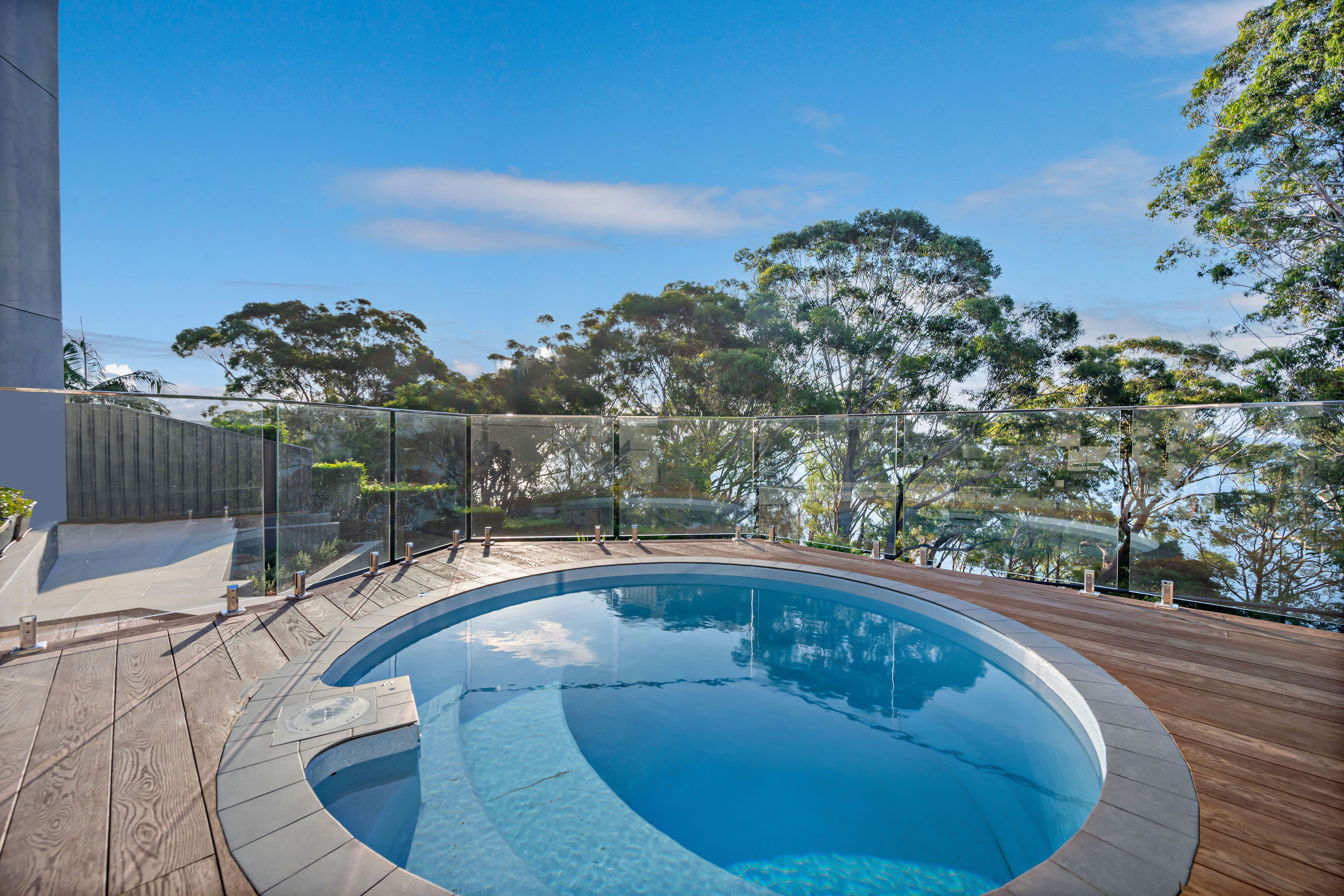 Custom Built Projects (Plungie Arena)Arena · Blue LagoonView project →
Hear From an Above Ground Plungie Installer
Karen from Quick Dip Pools walks through a Plungie Max installation on a rocky, sloping site at Mount Coolum. The block needed almost two weeks of rock breaking to prepare, and the finished install sits partially in-ground with the deck flush to the pool coping on two sides. It's an example of how above-ground and semi-recessed installation works on the sites that make traditional pool builds impractical.
Why Choose an Above Ground Pool?
Above ground isn't a compromise. For a lot of Australian homeowners, it's the right answer.
1. Sloped or Uneven Blocks
Sloped blocks are common across the Sunshine Coast hinterland, Gold Coast hinterland, Sydney's Hills District, Blue Mountains, and Adelaide Hills. Excavating and retaining a sloped block for an in-ground pool costs tens of thousands before you even break ground. An above-ground Plungie sits on a prepared base pad and works with the existing slope.
2. Reactive Soils and Rocky Sites
South East Queensland's reactive black soils, Sydney sandstone, and rocky blocks across the Adelaide Hills and Perth's outer suburbs all make in-ground excavation expensive and unpredictable. Above ground removes those variables and works with what's already on your block.
3. Preserving Mature Gardens and Protected Trees
Established Australian gardens, particularly those with council-protected trees or heritage-significant plantings, don't survive full excavation. Above-ground installation protects what's already there because the ground disturbance is limited to the base pad footprint.
4. Bushfire Zones and Setback Requirements
For properties in Bushfire Attack Level (BAL) zones, an above-ground precast concrete pool can serve as a defensible space feature and provide accessible water for emergency services. Concrete construction handles radiant heat far better than plastic or fibreglass alternatives. Always verify specifications with your local council and building certifier.
5. Rental Properties and Reversibility
An above-ground precast pool can be lifted and relocated. That reversibility matters for homeowners who might move, for rental properties, and for anyone unsure about committing to a permanent in-ground install. It's also increasingly relevant for dual-occupancy builds where site plans evolve.
6. Architectural Design Statement
An above-ground pool clad in timber, stone, or rendered walls reads as a designed feature rather than a hole in the ground. Australian architects and designers on The Block and beyond are increasingly specifying above-ground Plungies as intentional architectural elements rather than practical compromises.
Design and Cladding Options
The exterior of an above-ground Plungie is fully customisable. The shell is precast concrete. Everything you see around it is a design choice.
- Timber Cladding: Warm, natural, and popular in coastal and resort-style Australian outdoor spaces. Spotted gum, blackbutt, and composite timber options weather to different tones and pair well with pool decking in the same material.
- Stone or Tile Cladding: Architectural and permanent. Works with modern, Mediterranean, and Hamptons-style homes. Natural stone, porcelain tile, and cladding panels all work on the flat exterior walls of the Plungie shell.
- Rendered Walls: Clean and minimalist. Rendered concrete walls painted to match the house create a monolithic look that reads as part of the architecture rather than a separate object.
- Exposed Concrete: Deliberately unfinished. The precast shell can be left visible for a modern industrial aesthetic that's increasingly popular in contemporary Australian residential design.
- Integrated Deck Build: The surrounding deck is built up to meet the pool coping, so the pool sits flush with the outdoor living space. From standing height, it looks in-ground, but the pool itself is above the original grade.
- Interior Finish: Every above-ground Plungie comes with a choice of six ecoFinish interior colours: Kona Coast, Sahara Sand, Blue Lagoon, Mediterranean Blue, Grey Reef, and French Grey. The interior finish is factory-applied for consistency and longevity.
How Above-Ground Installation Works
Above-ground installation is faster and less disruptive than in-ground because there's no deep excavation involved. The full process runs around 14 days from site prep to swimming, over 74% faster than a traditional pool build.
Step 1: Site Preparation and Base Pad
The site is levelled, and a reinforced base pad is poured to support the weight of the pool shell and water. Council approval is required for any pool with a depth of 300mm or more, and Plungie provides pre-engineered specifications and preliminary engineering drawings to simplify the approval process.
Step 2: Delivery and Crane Placement
The finished pool shell is delivered from the Brisbane manufacturing facility by semi-trailer, then craned onto the prepared pad. This typically happens in a single day.
Step 3: Plumbing and Equipment
Filtration, pumps, heating, and any add-ons like swim jets are connected. Every Plungie includes a skimmer box and standard piping ready to connect, with an equipment package available direct from Plungie's trade partner, Reece.
Step 4: Cladding, Coping, and Pool Fencing
The exterior cladding, coping, and any surrounding decking or landscaping are built out around the shell. Pool fencing that meets your state's compliance requirements is installed at this stage.
Pool Fencing and Council Approval for Above Ground Pools
Australian pool safety regulations apply to above-ground pools the same way they apply to in-ground pools. Any pool capable of holding water 300mm or deeper needs compliant pool fencing under national standards, but requirements differ from state to state. It's best to check with your local council before you start.
Pool Fencing
Standard requirements across all Australian states include a minimum 1.2 metre fence height, self-closing and self-latching gates, and a 900mm non-climbable zone on the outside of the fence. For an above-ground Plungie, the fence needs to enclose the pool at the coping level, which is above the original ground level. Some installations use the pool wall itself as part of the barrier where the wall meets the 1.2m height requirement, but this depends on your local council's interpretation.
Council Approval
Council approval is required for pool installation, but the process, fees, and requirements differ by state and council. It's best to check with your local council early. Expect $200 to $500 in council fees plus separate certifier costs. Plungie's pre-engineered specifications and preliminary engineering drawings are designed to simplify this process for both homeowners and builders.
State-by-State Compliance
- NSW: Swimming Pools Act 1992 and pool fencing regulations
- VIC: Pool safety barrier regulations, Building Regulations 2018
- QLD: Building Act 1975 pool safety standards, mandatory pool safety certificates
- WA: Building Regulations 2012 pool barrier requirements
- SA: Development Regulations pool safety requirements
- ACT, TAS, NT: Individual state-based pool safety requirements
Always confirm requirements with your local council and pool safety inspector before finalising your build.
Find Your Above Ground Pool
Six models. Multiple cladding options. Three install types. The right combination depends on your block, your household, and how you plan to use the pool.
Talk to a Plungie specialist about your block, and we'll help you choose the model, install approach, and finish that fits your setup.
Frequently Asked Questions
For more detail, visit our FAQs page.
Yes. Any pool capable of holding water 300mm or deeper needs compliant pool fencing under Australian pool safety standards. This applies to above-ground pools the same way it applies to in-ground pools. Requirements include a minimum 1.2 metre fence height, self-closing and self-latching gates, and a 900mm non-climbable zone. Requirements differ by state, and council approval and pool safety certification are needed before use, so it's best to check with your local council.
Yes. Council approval is required for any pool with a depth of 300mm or more, regardless of whether it's installed in-ground, semi-recessed, or above ground. Approval fees typically range from $200 to $500 plus separate certifier costs. Plungie provides pre-engineered specifications and preliminary engineering drawings that simplify the approval process for both homeowners and builders. Requirements differ by state and council, so it's best to check with your local council before you start.
An engineered precast concrete pool has a lifespan of 50+ years when properly maintained. Plungie pools carry a 10-year structural warranty. This is significantly longer than kit-style above-ground pools with vinyl liners, which typically need liner replacement every 7 to 12 years and full replacement within 15 to 20 years. The precast shell itself is not affected by being above ground rather than below, because the structural integrity comes from the steel-reinforced concrete rather than the surrounding earth.
A precast concrete above-ground pool can be lifted and relocated because the shell is a self-contained unit. The process involves draining the pool, disconnecting plumbing and equipment, and lifting the shell with a crane. Kit-style above-ground pools with steel frames and vinyl liners are also removable but generally aren't relocatable in a meaningful way because the components are dismantled rather than moved as a unit. In-ground concrete pools built on-site cannot be relocated.
Engineered above-ground concrete pools can add value to an Australian home, particularly when the pool is clad and finished as a permanent architectural feature rather than a temporary installation. According to HouseLogic, a pool can add up to 7% to home resale value in warm-climate markets. Above-ground precast pools typically deliver a similar value uplift when installed as permanent features because the buyer's perception is closer to an in-ground pool than a kit pool. "Swimming pool" has consistently been the number one search term on realestate.com.au and Domain. Kit-style above-ground pools with vinyl liners do not typically add resale value and are sometimes seen as a negative by buyers.
Get a Quote for Your Above Ground Pool
Three ways to move forward. All of them start with your block and your household.