

You don't need a half-acre lot to have an inground pool. Some of the best pool installations we've seen sit on tight urban lots, narrow side yards, and compact suburban backyards where people assumed a pool would never fit.
A small inground pool is generally anything under 600 square feet of water surface. That includes plunge pools, cocktail pools, spools (spa-pool hybrids), and compact swimming pools that max out around 20 feet in length. They're big enough to cool off, relax, exercise, and entertain, just not built for Olympic training.
Here's what you need to know about sizing, costs, materials, and design if you're considering a small inground pool in 2026.
What Counts as a Small Inground Pool?
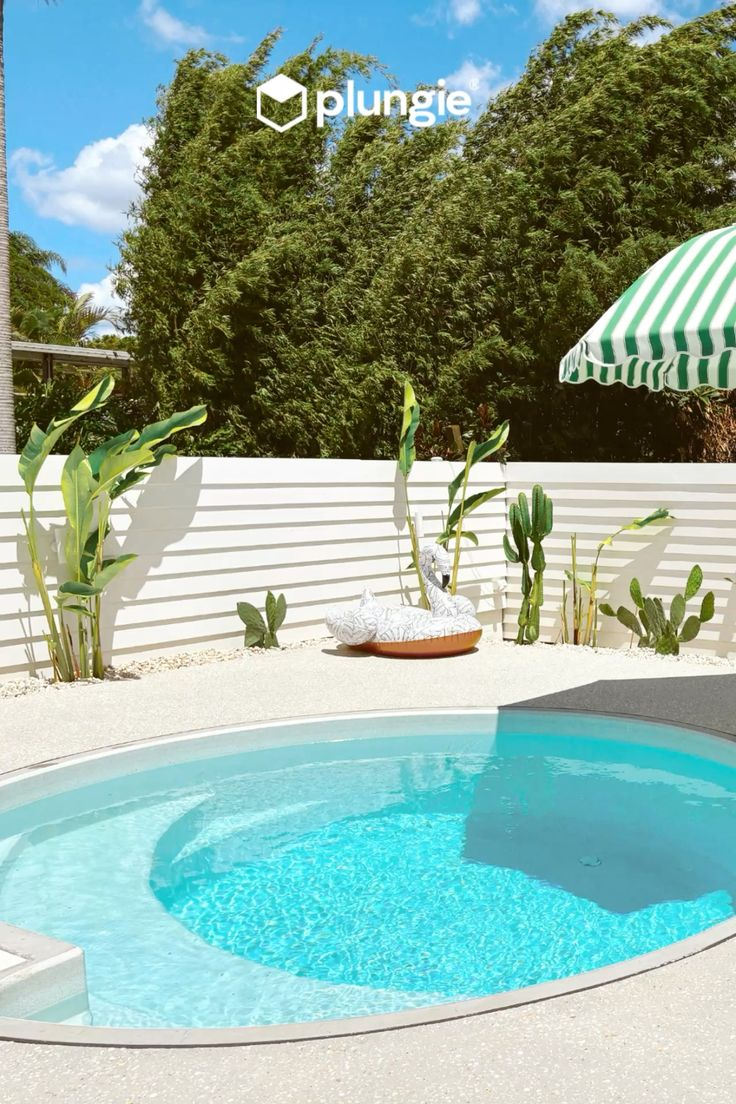
The industry typically defines a small inground pool as anything 600 square feet or under. In practice, that means pools ranging from around 8' x 10' at the compact end up to roughly 20' x 10' at the larger end. Within that range, there are a few distinct categories:
-
Plunge pools are the most compact option, typically 7' to 15' long and around 5' deep. They're designed for cooling off, relaxing, and light exercise rather than lap swimming. Precast concrete and fiberglass plunge pools are the most common types, and they can be installed in-ground, above ground, or semi-recessed.
-
Cocktail pools (sometimes called dipping pools) are similar in size to plunge pools but tend to be shallower with more built-in seating. They're designed around socializing: a place to stand in waist-deep water with a drink in hand. Think of them as the outdoor equivalent of a conversation pit.
-
Spools are a spa-pool hybrid, usually under 12' in length, with built-in seating, jets, and heating. They give you the hydrotherapy benefits of a hot tub with the cooling-off ability of a small pool. If you want one feature that works year-round, a spool is worth considering.
-
Compact swimming pools sit at the larger end of the small pool range (15' to 20' long) and offer enough room for casual swimming, water aerobics, or a family to spread out. Some homeowners add a swim jet system to get a lap-swimming experience in a shorter pool.
Small Inground Pool Sizes at a Glance
|
Pool Type |
Typical Size |
Depth |
Best For |
|
Plunge pool |
7' x 10' to 15' x 8' |
4' - 5' |
Cooling off, relaxing, compact yards |
|
Cocktail pool |
8' x 12' to 12' x 14' |
3' - 4.5' |
Socializing, entertaining, small patios |
|
Spool |
8' x 10' to 12' x 12' |
3.5' - 5' |
Year-round use, hydrotherapy, tight spaces |
|
Compact swimming pool |
15' x 8' to 20' x 10' |
4' - 6' |
Families, exercise, larger small backyards |
Materials: What's Your Small Pool Made Of?
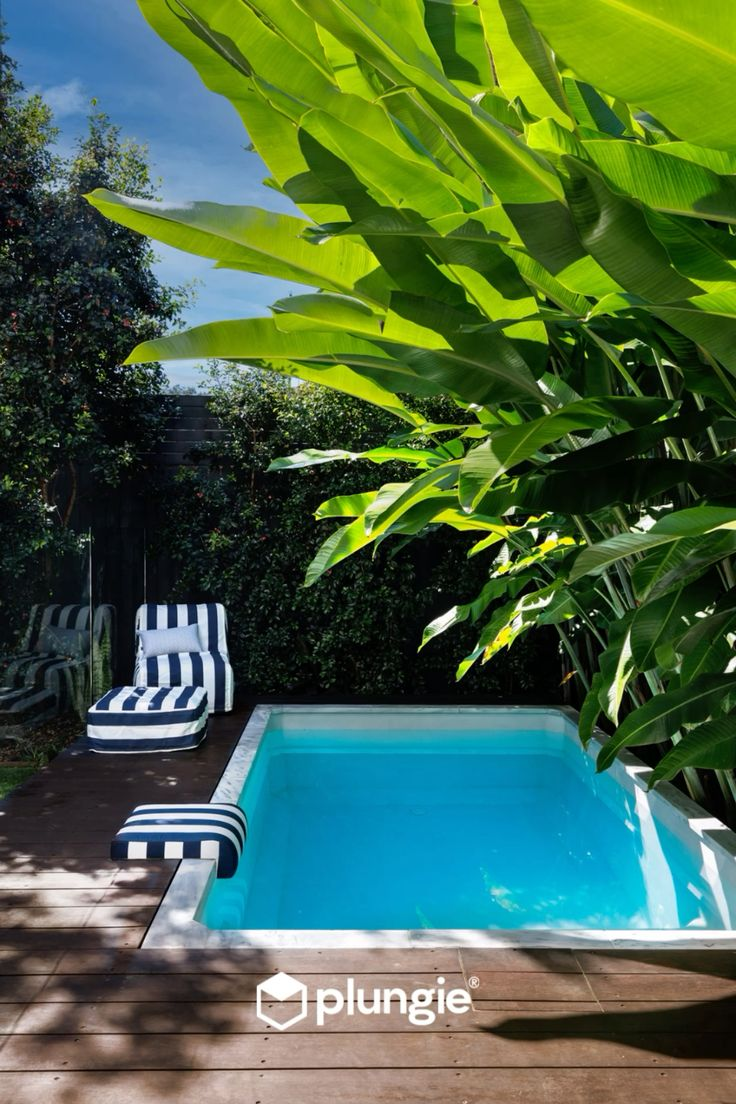
The three main material options for small inground pools in the US are fiberglass, concrete (including precast), and vinyl liner. Each has trade-offs.
1. Fiberglass
Fiberglass pools are pre-manufactured in a factory as a one-piece shell, then delivered and set into an excavated hole. They're the most popular option for small inground pools because they install fast (typically 1 to 3 weeks), require less maintenance than concrete, and have a smooth, algae-resistant surface that reduces chemical costs.
The limitation is design flexibility. You're choosing from the manufacturer's catalog of shapes and sizes. For small pools, that's usually fine since there are plenty of options, but you can't do a fully custom shape.
2. Concrete (custom and precast)
Custom concrete (gunite or shotcrete) pools give you total freedom in shape, size, and depth. If you want something unique for your yard, custom concrete can make it happen. The trade-off is cost (the most expensive option), build time (6 to 16 weeks on-site), and higher long-term maintenance (resurfacing every 10 to 15 years, acid washing every 3 to 5 years).
Precast concrete pools are a newer category in the US market. The pool shell is manufactured in a factory, delivered on a truck, and craned into your backyard. You get the durability and premium look of concrete without the long build time or the on-site construction mess. Our pools, for example, are made in Texas and come in four sizes ranging from 11'5" round to 20' x 10'. They install in a day, with the full project typically wrapped up in about two weeks.
3. Vinyl liner
Vinyl liner pools use a flexible liner over a steel or polymer frame. They're the most affordable inground option upfront, but the liner needs replacing every 7 to 10 years ($3,000 to $7,500), which adds up over time. They also offer less design flexibility than concrete and aren't as durable long-term.
How Much Does a Small Inground Pool Cost?
Costs vary widely depending on material, size, features, and your location. Here's where things stand in 2026:
|
Material |
Small Pool Installed Cost |
Build Time |
Lifespan |
|
Fiberglass |
$45,000 - $85,000 |
1 - 3 weeks |
25 - 30 years |
|
Custom concrete (gunite) |
$60,000 - $120,000+ |
6 - 16 weeks |
50+ years |
|
Precast concrete |
$40,000 - $75,000 |
~2 weeks |
50+ years |
|
Vinyl liner |
$35,000 - $65,000 |
2 - 3 weeks |
20+ years (liner replaced every 7-10 years) |
Costs reflect 2026 US industry averages. Actual pricing varies significantly by region, site conditions, and finish selections. For figures specific to your project, get a quote from a local installer.
What else to budget for
Beyond the pool itself, plan for:
-
Decking or patio: $7,000 to $25,000+, depending on material and area. Concrete is the most affordable, pavers are mid-range, and natural stone is premium.
-
Permits: $450 to $1,800, depending on your city.
-
Electrical: $1,500 to $4,000+ for a licensed electrician to connect equipment.
-
Heating: Heat pumps cost $3,000 to $6,000. Gas heaters are another option in colder climates.
Our Favorite Small Pool Design Ideas
1. The flush-mount minimalist
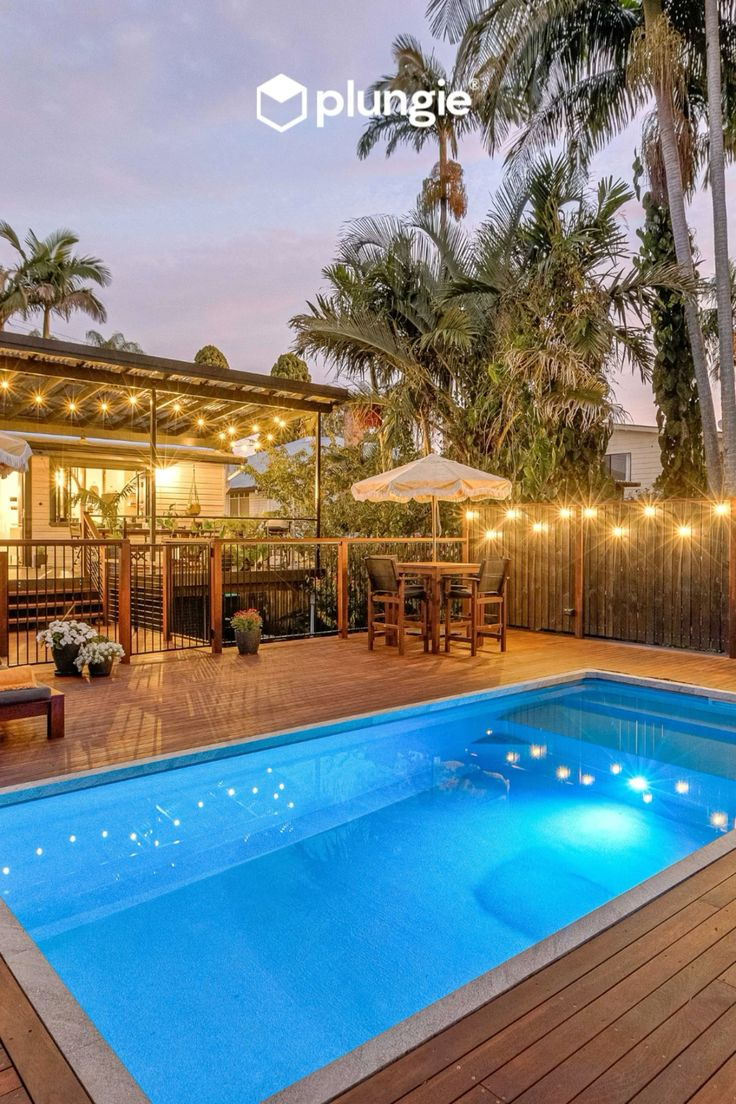
A rectangular pool set flush with a concrete or paver patio, no raised edges, clean lines, minimal planting. This works in almost any backyard because it doesn't fight for space. Keep the deck narrow on the sides, wider on one end for lounge chairs, and let the simplicity do the work.
2. The raised entertainer
A semi-recessed or above-ground pool with stone or wood cladding on the exterior creates built-in seating around the pool's edge and becomes an architectural feature. This is especially practical on sloped lots or where excavation is complicated.
3. The tanning ledge and lounge pool
A cocktail pool with a wide, shallow tanning ledge (sometimes called a Baja shelf) on one end gives you a spot to set up lounge chairs in 6 inches of water. It's one of the most popular small pool features in the US right now, and it works particularly well in warmer climates where the pool is as much about lounging as swimming.
4. The courtyard pool
For narrow side yards or enclosed courtyard spaces, a slim rectangular pool (as narrow as 7' wide) can run along one wall, with a deck on the opposite side.
5. The spa-pool combo
A spool with built-in jets, heating, and bench seating gives you a hot tub and a cool-down pool in one footprint. Smaller than either a standalone spa or pool, and more versatile than either alone.
How to Figure Out What Fits Your Yard
Before choosing a pool, measure your backyard and subtract these:
-
Setbacks: Most municipalities require 3 to 5 feet between the pool and any property line or structure. Check your local building codes.
-
Equipment pad: You'll need roughly a 3' x 6' concrete pad for the pump, filter, and heater, usually placed within 25 to 50 feet of the pool.
-
Walkways: You need to be able to walk around the pool for maintenance access, typically 3 feet minimum.
Once you've accounted for all of that, the remaining space is your usable pool zone. A yard that measures 20' x 30' might look generous, but the actual pool footprint might be closer to 12' x 16' once everything is factored in.
Running Costs: What a Small Pool Costs Per Year
One of the biggest advantages of a small inground pool is lower ongoing costs:
-
Chemicals: $400 to $900 per year (roughly half of a full-size pool).
-
Electricity: $800 to $1,800 per year for the pump, filter, and heating.
-
Maintenance: $1,000 to $2,000 per year with a professional service.
-
Resurfacing (concrete only): $8,000 to $10,000 every 10 to 15 years.
-
Liner replacement (vinyl only): $3,000 to $7,500 every 7 to 10 years.
Less water means less everything: fewer chemicals, less energy to heat, and less time to clean.
Frequently Asked Questions
What is the smallest inground pool you can build?
The smallest inground pools are around 6' x 8' (roughly 48 square feet), though most homeowners go slightly larger for comfort. Compact plunge pools and spools in the 8' x 10' to 12' x 12' range are the most popular "smallest" option because they're large enough to actually use while still fitting very tight yards. Our smallest pool, the Plungie Arena, is an 11'5" round pool that fits spaces where most rectangular pools wouldn't work.
How much does a small inground pool cost in 2026?
Total installed costs for a small inground pool range from $35,000 for a basic vinyl liner pool to $120,000+ for a fully custom concrete build. Fiberglass pools fall in the $45,000 to $85,000 range, and precast concrete pools are typically $40,000 to $75,000. Add $10,000 to $30,000 for decking, landscaping, and permits.
Is a small inground pool worth it?
For most homeowners with compact yards, yes. You get the lifestyle benefits of a pool, including a space for relaxing, entertaining, and exercise, plus a potential boost to property value. The National Association of Realtors estimates a pool can increase home value by up to 8%. Running costs are significantly lower than those of a full-size swimming pool, and a well-designed small pool can make your backyard feel larger, not smaller.
What's the difference between a plunge pool, a cocktail pool, and a spool?
All three are types of small inground pools. Plunge pools are deeper (4' to 5') and designed for full-body immersion and cooling off. Cocktail pools are shallower with more seating, designed for socializing. Spools are heated spa-pool hybrids with jets, designed for year-round use. There's overlap between all three, and the terms are sometimes used interchangeably.
Can you put a small inground pool in a sloped yard?
Yes. Semi-recessed and above-ground installations work well on sloped properties. A retaining wall on the downhill side and decking on the uphill side can create a leveled pool area. Precast concrete and fiberglass pools are both good options for slopes because the pool shell is pre-built and can be positioned without full excavation.
Do small pools need the same fencing as full-size pools?
In most US jurisdictions, yes. Any permanent inground pool, regardless of size, requires compliant safety fencing with self-closing, self-latching gates. Check your local building codes for specific height and distance requirements.
Find the Right Small Pool for Your Space
If you're exploring precast concrete as an option, compare our four pool models to see which size fits your yard, or browse our Project Gallery to see our recent small pool installations across the country.


